
In This Article
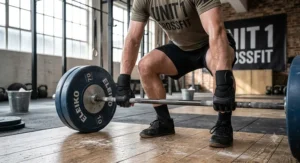
Here’s the uncomfortable truth nobody tells you at your first CrossFit class: the workout isn’t what wrecks your hands. It’s the bar. Kipping pull-ups, muscle-ups, cleans, snatches, farmer’s carries — every single one of them drags rough, calloused skin across knurled steel, and your palms lose that argument every time. If you’ve ever peeled off a sock-like flap of skin after “Fran” or watched a blister balloon up mid-WOD, you already know why so many athletes go hunting for the best crossfit gloves rather than just gritting their teeth and hoping for the best.

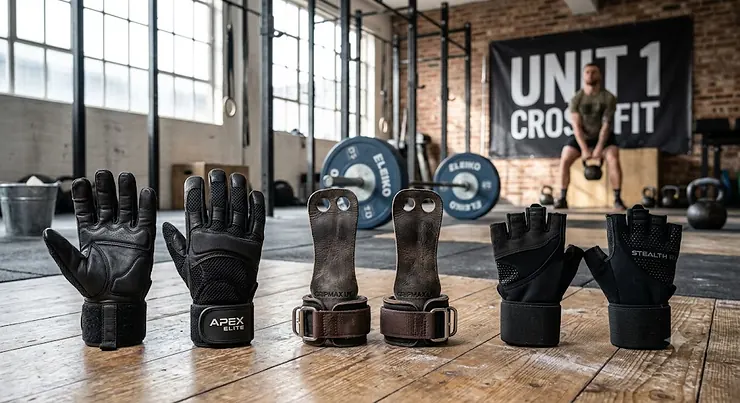
For the uninitiated, CrossFit is a high-intensity fitness methodology that blends Olympic weightlifting, gymnastics and cardio into short, varied daily workouts, a format that consistently rewards athletes who can move seamlessly between the bar, the rig and the floor. That constant switching between grip types is exactly why generic gym mitts fall apart under CrossFit’s demands. This guide covers seven genuinely available products, spanning full leather grips to lightweight breathable gloves, so you can match your hands to your training rather than the other way round. We’ll also dig into how crossfit gloves vs weightlifting gloves actually differ, why grip versatility matters more than padding thickness, and how to stop pull-up bar friction before it stops your workout.
Quick Comparison: The 7 Best CrossFit Gloves at a Glance
Before the deep dive, here’s the shortlist. Every product below has genuine specs, real UK availability, and its own personality — some are built like tanks, others disappear on your hand.
| Product | Style | Best For | Price Range |
|---|---|---|---|
| Bear KompleX 3-Hole Leather Hand Grips | Leather palm grips | Rig work & pull-up volume | £25-£35 |
| Bear KompleX Carbon Comp Grips | Carbon fibre grips | Slick, powder-coated bars | £30-£42 |
| JerkFit WODies | Hybrid grip-glove | Beginners wanting all-round protection | £25-£35 |
| Harbinger Power Non-Wristwrap Gloves | Half-finger glove | Budget all-rounders | £15-£25 |
| RIMSports Premium Leather Gloves | Full wrist-wrap glove | Heavy pulls needing wrist support | £12-£20 |
| RDX Weight Lifting Gloves | Padded half-finger glove | Daily WODs & mixed training | £10-£18 |
| STONELIGHT Gym Gloves | Lightweight breathable glove | Hot gyms & long metcons | £8-£15 |
Look closely and a pattern appears: the leather grips dominate pure rig work, while the padded gloves earn their keep in barbell-heavy sessions. Nobody in this table is a bad buy, but the “best” pick genuinely depends on whether your programming leans gymnastics, strength, or the classic CrossFit blend of both. Budget shoppers should note that price rarely tracks durability in a straight line — the mid-range RDX gloves outlast some pricier full-finger gloves simply because there’s less material to tear.
💬 Already got a favourite from the table? Jump straight to it below and check current pricing before it changes.
Top 7 CrossFit Gloves: Expert Analysis
1. Bear KompleX 3-Hole Leather Hand Grips — official grip of the CrossFit Games
The standout feature here isn’t marketing fluff: Bear KompleX genuinely holds the “Official Hand Grip of the CrossFit Games” designation, which tells you these were built for exactly the rig-heavy chaos you’re training for. The grips come in genuine tan or grey leather (a slightly thinner suede in the black colourway), with three finger holes, triple-stitched seams, and a custom wrist strap positioned to sit under the buckle rather than dig in. On paper this means a grip that moulds to the bar over repeated use rather than staying rigid and slippery like cheaper synthetic alternatives. Based on the spec comparison with pull-up-specific gear on this list, the three-hole design gives more surface coverage than two-hole grips, which matters once you’re 20 reps deep into a chipper and your grip starts to fail. Reviewers consistently report that the leather “breaks in like a baseball glove,” with several longtime CrossFitters noting no bunching or slipping even during high-volume kipping sets, while a handful mention the straps run slightly thick compared with older versions.
Pros:
- ✅ Three-hole design spreads pressure across the whole palm
- ✅ Leather moulds to the bar for a more secure grip over time
- ✅ Multiple sizes and two leather finishes to choose from
Cons:
- ❌ Break-in period means early sessions feel stiffer than expected
- ❌ Not designed for barbell work — grip section only covers the palm
Typically priced around £25-£35, these sit in the mid-range and represent strong value if pull-ups and toes-to-bar dominate your programming.
2. Bear KompleX Carbon Comp 3-Hole Hand Grips — best for slick, powder-coated bars
The standout feature on this premium pick is the carbon-fibre material itself, engineered to stay tacky on modern powder-coated rigs where leather can feel greasy. Key specs worth noting: a lighter carbon-composite construction than the standard leather version, the same three-hole layout and reinforced wrist strap, and triple stitching throughout for durability. What most buyers overlook about this model is that “carbon fibre” here doesn’t mean rigid or unyielding — it’s a flexible material that’s simply grippier than leather straight out of the packet, without needing a break-in period. That’s a genuine advantage for athletes who compete on unfamiliar rigs and don’t have weeks to condition a new pair. Reviewers consistently describe a noticeable performance boost on hanging movements, with several noting they could push out more reps than usual once they switched over, though a minority felt the grip texture needed a session or two before reaching its full tackiness.
Pros:
- ✅ Immediate tackiness on slick, powder-coated bars
- ✅ Lighter feel than leather without sacrificing durability
- ✅ Wrist strap sits comfortably away from the wrist bone
Cons:
- ❌ Costs noticeably more than the standard leather version
- ❌ Some reviewers want more initial grip texture out of the box
Expect to pay around £30-£42 — a premium over the leather grips, but justified if you regularly train on rigs with fresh powder coating or compete away from your home gym.
3. JerkFit WODies — best hybrid grip-glove for beginners
The standout feature of JerkFit WODies is the hybrid design: part grip, part glove, with an open-back structure that ventilates far better than a full mitt. Key specs include a silicone gel palm insert for slip resistance, a soft interior mesh lining, an integrated adjustable wrist strap, and small finger-hole tabs specifically added so you can peel them off quickly once your hands are dripping mid-WOD. Based on the spec comparison with pure leather grips, the silicone gel palm gives WODies an edge in sweaty summer sessions where leather can turn slick, while still offering the palm coverage that fingerless lifting gloves lack. This is honestly the pick for someone newer to CrossFit who isn’t sure yet whether they’ll gravitate toward grips or gloves — it borrows the best of both. Reviewers consistently praise the towel panel on the back of the hand for wiping sweat mid-set, and multiple mention a real reduction in friction and pressure points during pull-up-heavy workouts, though a few flag that the wrist wrap isn’t substantial enough for genuinely heavy barbell lifts.
Pros:
- ✅ Silicone gel palm resists slipping even when sweaty
- ✅ Finger-hole tabs make removal fast between movements
- ✅ Towel panel doubles as a built-in sweat wipe
Cons:
- ❌ Wrist wrap isn’t substantial enough for heavy barbell work
- ❌ Open-back design offers less coverage than a full glove
Priced roughly £25-£35, WODies land in the same bracket as the standard Bear KompleX grips, making the choice largely about preference for ventilation versus pure leather durability.
4. Harbinger Power Non-Wristwrap Gloves — best budget all-rounder
The standout feature is the StretchBack Lycra panel that runs across the back of the hand and between the fingers — a detail that sounds minor until you’re mid-burpee and realise your gloves aren’t fighting your knuckles. Key specs: a double-leather palm backed with foam for abrasion resistance, a reinforced thumb wrap, an adjustable wrist closure, and a short half-finger cut that keeps natural bar feel intact rather than smothering your fingertips. What the spec sheet won’t tell you, but reviewers note, is that fit is everything with this model — the sizing runs narrower through the fingers than some competitors, so a snug fit for one person is uncomfortably tight for the next. Harbinger has been making lifting gear since 1988, and the StretchBack line is one of its longest-running products, which speaks to a design that’s been refined rather than rushed to market. Aggregated review sentiment is genuinely mixed here: several long-term users report the gloves stopped their pull-up and equipment blisters entirely and held up for months of near-daily use, while others describe a poorly fitted pair causing a blister on first wear and stitching that felt inconsistent between batches.
Pros:
- ✅ StretchBack Lycra keeps flexibility through burpees and cleans
- ✅ Double-leather palm with foam backing resists abrasion well
- ✅ Half-finger cut preserves natural barbell feel
Cons:
- ❌ Sizing runs narrow — check the size chart carefully
- ❌ No wrist wrap on this specific model for heavy pulls
At around £15-£25, this is the most budget-friendly full glove on the list, and a genuinely solid entry point if you’re not yet sure gloves are for you.
5. RIMSports Premium Leather Weight Lifting Gloves — best wrist support for heavy lifts
The standout feature here is the integrated wrist wrap, which sets this apart from the half-finger, wrapless gloves earlier on this list. Specs include a genuine leather palm with padding, a thumb protection panel, and a wrist wrap designed specifically to stabilise the joint during heavy pulling movements like deadlifts and weighted pull-ups. On paper this means RIMSports is aiming less at gymnastics-style rig work and more at the barbell side of CrossFit programming — think heavy cleans, deadlift-focused strength days, and Olympic lifting complexes where wrist stability genuinely affects your bar path. Reviewers consistently note the padding strikes a reasonable balance: enough cushioning to blunt knurling without the numb, disconnected feeling some overly padded gloves produce. A recurring theme in aggregated feedback is that the wrist wrap, while appreciated, isn’t as rigid as a dedicated wrist wrap you’d buy separately, so lifters doing genuinely heavy singles sometimes pair these with additional wrist support.
Pros:
- ✅ Built-in wrist wrap adds stability during heavy pulls
- ✅ Padded leather palm blunts knurling without killing feel
- ✅ Thumb protection reduces rope-burn-style abrasion
Cons:
- ❌ Wrist wrap isn’t as rigid as a standalone wrap
- ❌ Full-finger design reduces rig-work dexterity
Priced roughly £12-£20, RIMSports gloves undercut most wrist-wrap competitors while still delivering the support that pure grips simply don’t offer.
6. RDX Weight Lifting Gloves — best padded protection for daily WODs
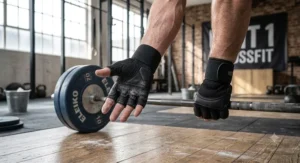
The standout feature is genuine cross-discipline versatility — RDX markets these explicitly across weightlifting, calisthenics, cycling and climbing, and the spec sheet backs that up. Key details: anti-slip padded palm construction, an elasticated half-finger cuff for a snug fit without a separate wrist strap, and adult and kids sizing options, which matters if you’re kitting out a family that trains together. Here’s what to weigh: the elasticated design trades some of the adjustability you get from a Velcro wrist strap for a faster, simpler on-off experience — genuinely useful when you’re transitioning between five different movements in a single WOD and don’t have time to fiddle with straps. What most buyers overlook about padded gloves like this is that the padding thickness is a double-edged sword; it protects brilliantly against barbell knurling but can make it harder to feel a rig or gymnastics ring precisely. Aggregated review sentiment leans strongly positive on durability and comfort for general gym and CrossFit-style training, with the padded palm repeatedly singled out as the standout feature for reducing hand fatigue across long sessions.
Pros:
- ✅ Genuinely versatile across weights, calisthenics and cycling
- ✅ Elasticated cuff means fast on-off between movements
- ✅ Available in adult and kids sizing
Cons:
- ❌ Thicker padding reduces feel on rings and pull-up bars
- ❌ No wrist strap for lifters wanting extra joint support
At an accessible £10-£18, these are among the cheapest genuinely versatile options on this list, and a sensible pick if your training mixes barbell days with bodyweight conditioning.
7. STONELIGHT Gym Gloves — best lightweight breathable pick
The standout feature is straightforward: STONELIGHT prioritises breathability above almost everything else, with a design built around full palm protection that doesn’t trap heat the way thicker leather gloves can. Specs include an anti-slip grip surface, integrated wrist support, and a construction explicitly aimed at weightlifting, CrossFit, cycling and general training rather than one narrow discipline. Based on the spec comparison with heavier leather options earlier in this list, the lighter build here trades some long-term durability for comfort in hot, sweaty conditions — a fair trade if you train in a non-air-conditioned box through a British summer heatwave, rare as those are. Reviewers consistently highlight the breathable back panel as the reason they reach for this pair over bulkier alternatives, particularly for shorter, high-intensity metcons where overheating hands become their own kind of distraction. The honest caveat, echoed across aggregated feedback, is that the lighter materials show wear faster under genuinely heavy daily use than the leather-based grips at the top of this list.
Pros:
- ✅ Excellent breathability for hot, sweaty sessions
- ✅ Full palm protection without excessive bulk
- ✅ Works across weightlifting, cycling and general training
Cons:
- ❌ Lighter materials wear faster under daily heavy use
- ❌ Less padding than dedicated barbell-focused gloves
Sitting around £8-£15, this is the cheapest full glove on the list — a smart low-commitment way to test whether gloves suit your training style before investing in something premium.
Practical Usage Guide: Breaking In, Cleaning and Extending Glove Life
Buying the best crossfit gloves is only half the job — how you treat them in the first thirty days determines whether they last a season or fall apart by March. Leather grips like the Bear KompleX pair genuinely benefit from a deliberate break-in: wear them for shorter, lighter sessions first, letting the leather flex and mould around your palm rather than forcing full-intensity WODs on day one. Skipping this step is the single most common mistake new owners make, and it’s why so many first-week reviews complain about stiffness that simply isn’t there by week three.
Sweat is the enemy of longevity regardless of material. After every session, wipe down leather grips with a dry cloth and let them air-dry away from direct heat — a radiator will crack leather faster than almost anything else. Fabric-backed gloves like RDX or STONELIGHT can generally handle a gentle hand wash in cool water, but always check the specific product care label before machine washing, since aggressive cycles can degrade silicone palm coatings. A light application of leather conditioner every few months keeps grips supple; skip it and you’ll notice cracking along the finger holes far sooner than expected. Storage matters too — a gym bag that never gets emptied is a breeding ground for bacteria and odour, so give your gloves five minutes outside the bag after every session rather than zipping them straight back in while still damp.
Real-World Scenarios: Which CrossFit Gloves Fit Your Training
If you’re a beginner three weeks into your first CrossFit membership and mostly worried about surviving pull-ups without shredding your palms, the JerkFit WODies or Harbinger Power Non-Wristwrap Gloves make the most sense — both offer genuine protection without demanding you relearn your grip technique from scratch. If you’re training five or six days a week with heavy barbell cycles mixed into your programming — think regular deadlift and clean-and-jerk sessions — the wrist support on RIMSports Premium Leather Gloves earns its keep, protecting a joint that takes real cumulative load over a training block. Competitive athletes who travel to different boxes and unfamiliar rigs, where bar coating varies wildly from one gym to the next, are the clearest use case for the Bear KompleX Carbon Comp Grips — that immediate tackiness on unfamiliar equipment removes one more variable on competition day. And if your budget is genuinely tight and you just want to test whether gloves suit you at all before spending more, the STONELIGHT or RDX options let you find out for under £20 without much risk.
Problem → Solution: Fixing the Most Common CrossFit Hand Issues
Problem: Blisters forming mid-workout. This is almost always a friction issue rather than a strength issue — the skin is moving against the bar rather than staying still against a grip. Switching to a three-hole leather grip like the Bear KompleX pair, which moulds to the bar surface, directly addresses this by reducing that relative movement.
Problem: Sweaty hands slipping on the bar. Silicone gel palms, as found on JerkFit WODies, are specifically engineered for this scenario, maintaining tack even when leather would turn slick.
Problem: Wrist discomfort during heavy pulls. A wrist-wrap-equipped glove such as RIMSports stabilises the joint far better than a bare wrist or a grip with no support structure at all.
Problem: Gloves feel too hot during long metcons. Swap to a breathable, lightweight option like STONELIGHT, which trades some raw durability for genuinely better ventilation.
Problem: Losing bar feel on gymnastics movements. Thick padded gloves like RDX are brilliant for barbell protection but can dull rig feel — pairing them with a thinner grip option for gymnastics-heavy days, or switching entirely for those sessions, solves the disconnect.
How to Choose the Best CrossFit Gloves
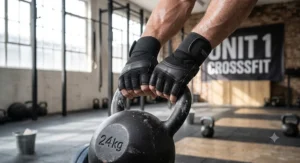
What is a CrossFit glove? A CrossFit glove (or hand grip) is protective handwear designed specifically to reduce friction and cushion the palm during the mixed barbell, gymnastics and rig-based movements found in CrossFit training, differing from standard gym gloves by prioritising grip feel and pull-up-bar compatibility over pure lifting cushioning.
- Identify your dominant movement type. If your programming leans gymnastics-heavy (pull-ups, muscle-ups, rope climbs), prioritise grips over padded gloves.
- Check for wrist support if you lift heavy. Anyone doing regular heavy deadlifts or cleans should weigh up a wrist-wrap-equipped option like RIMSports.
- Consider your gym’s bar coating. Slick, powder-coated rigs favour tackier materials like carbon fibre; well-worn steel bars work fine with standard leather.
- Factor in climate and sweat levels. Hot, humid training environments favour breathable options like STONELIGHT over heavier leather.
- Decide between full-finger and half-finger. Full-finger protects more skin but reduces dexterity for barbell grip adjustments; half-finger designs like Harbinger preserve natural feel.
- Set a realistic budget for testing. Starting around £10-£20 lets you establish your preferences before investing in a premium pair.
- Read aggregated review themes, not star counts alone. Look specifically for recurring comments about sizing and durability rather than a single average score.
CrossFit Gloves vs Weightlifting Gloves: What’s Actually Different
The crossfit gloves vs weightlifting gloves question comes up constantly, and the honest answer is that the two categories overlap more than marketing suggests, but the priorities diverge in meaningful ways. Traditional weightlifting gloves, historically designed for bodybuilding-style barbell and dumbbell work, tend to prioritise thick palm padding and full finger coverage, because the primary goal is cushioning against repetitive barbell knurling during isolated lifting sessions. CrossFit gloves, by contrast, have to survive kipping pull-ups, rope climbs, box jumps and burpees within the same twenty-minute window as a heavy clean — which means excessive padding actively works against you by dulling the tactile feedback needed for gymnastics movements. This is why products like the Bear KompleX grips deliberately expose the fingers entirely, sacrificing some barbell cushioning in exchange for the dexterity a muscle-up demands. Weightlifting gloves also rarely account for the rapid on-off cycling that CrossFit workouts require between stations; features like the finger-hole tabs on JerkFit WODies exist specifically because CrossFit athletes need to strip gloves off mid-WOD far more often than a traditional lifter does. If your training is genuinely barbell-only, a classic weightlifting glove may serve you fine — but the moment pull-ups, rings or rope work enter the picture, purpose-built CrossFit gear starts pulling ahead.
Multi-Movement Training Gear and Grip Versatility
CrossFit’s entire identity is built around unpredictability — you might not know today’s workout until you walk into the box — which makes multi-movement training gear a genuinely different design problem to solve than single-purpose equipment. Grip versatility, in this context, means a product that performs adequately across barbell grip, false grip on rings, and open-hand contact on a pull-up bar, rather than excelling at just one. The RDX gloves lean hardest into this brief, explicitly built to transition between weightlifting, calisthenics and even cycling without a change of gear, and that adaptability is precisely why they show up so often in mixed-training reviews. Reviewers consistently note that versatility comes with trade-offs, though — a glove optimised for everything rarely dominates any single category the way a specialist grip does. What most buyers overlook is that grip versatility isn’t purely about the product; it’s also about technique adaptation, since the same glove will feel different on a false grip ring dip than it does gripping a barbell in a hook grip. For athletes who own just one pair and need it to survive an entire unpredictable programming cycle, prioritising versatility over specialisation, as RDX and STONELIGHT both do, is generally the smarter long-term call.
CrossFit Gloves for Pull-Ups and Pull-Up Bar Friction
Ask any CrossFit veteran what actually causes hand damage and pull-up bar friction sits near the top of the list every time. The repetitive contact of skin sliding — not just gripping — against a fixed steel or powder-coated surface during kipping and butterfly pull-ups is what tears open calluses and raises blisters, and it’s precisely why crossfit gloves for pull ups need a different design brief to gloves meant purely for static lifting. The three-hole leather construction on Bear KompleX‘s standard grips exists specifically to counter this: the leather grips the bar rather than sliding against it, transferring the friction to the glove-bar interface instead of your skin. Reviewers consistently highlight this exact benefit, noting dramatically reduced tearing during high-volume kipping sets compared to bare hands or standard gym gloves. The trade-off is that a full-finger glove, while protective for barbell work, often performs worse on pull-up bar friction specifically, because extra material between your fingers and the bar can actually increase slippage on certain grip styles like the false grip needed for muscle-ups. If pull-ups dominate your weak points, a dedicated grip — not a general-purpose glove — is genuinely the better investment.
Common Mistakes When Buying CrossFit Gloves
The most frequent mistake is buying based on price alone rather than movement pattern — a cheap padded glove that’s brilliant for deadlifts can actively hinder your rig work, and vice versa. Second, many buyers skip checking sizing charts, and given that several reviewers across this list flagged narrow or inconsistent fit as their main complaint, this single oversight causes more returns than any material defect. Third, people frequently assume more padding always equals better protection, when in reality excessive cushioning can reduce the tactile feedback needed for safe, controlled gymnastics movements. Fourth, some buyers overlook maintenance requirements entirely, then wonder why a leather grip cracked within two months — a five-minute conditioning routine every few weeks would have prevented it. Finally, plenty of athletes buy a single pair expecting it to handle every training style, when the honest answer, as covered above, is that dedicated grips and dedicated gloves each have a lane where they clearly outperform the other.
Long-Term Cost and Maintenance: Is a Premium Pair Worth It
Cost-per-use is the fairest way to judge value here rather than sticker price alone. A £35 pair of Bear KompleX Carbon Comp Grips that lasts eighteen months of regular training works out cheaper per session than a £10 budget glove replaced every two months because the palm material wore through. That said, premium doesn’t automatically mean longer-lasting — durability depends heavily on training frequency, sweat exposure, and how consistently you follow basic maintenance like drying and conditioning. Total cost of ownership should also factor in versatility: buying one £20 pair that handles both barbell and rig work, like RDX, may beat owning two specialist products at £15 each if your budget only stretches to one purchase per season. According to general UK product-safety standards for protective gloves, materials and construction quality are directly tied to how well gear withstands repeated mechanical stress — which tracks with what aggregated CrossFit glove reviews consistently show: reinforced stitching and genuine leather simply outlast synthetic budget alternatives under the same training load, even if the upfront cost stings more.
Safety and Hand-Care Guide
CrossFit gloves are sports accessories rather than certified personal protective equipment in the formal sense, so don’t expect UKCA or CE safety markings on a pair of gym grips the way you would on industrial work gloves — that certification framework covers a different category of product entirely. What does matter is genuine hand hygiene and injury awareness. Calluses themselves aren’t harmful and actually help prevent blisters by toughening the skin, but excessive, uneven callus build-up can eventually crack painfully if left unmanaged. If a blister does form despite your gloves, official NHS advice on treating blisters recommends keeping the area clean and dry, avoiding picking at the skin, and covering it to prevent infection rather than bursting it yourself. Understanding how calluses form also helps explain why gloves work in the first place — they reduce the repeated friction that triggers thickened skin, protecting you before damage builds up rather than treating it afterwards. If you notice persistent redness, swelling or pus around a blister or torn callus, that’s a signal to seek medical advice rather than pushing through another session.
✨ Don’t Miss These Exclusive Deals!
🔍 Take your grip game to the next level with these carefully selected picks. Click through to check current pricing and availability before your next session, and give your hands the protection they’ve earned. 🧤💪
Frequently Asked Questions
❓ Are CrossFit gloves worth it, or should I just use chalk?
❓ What size CrossFit gloves should I buy?
❓ Can I use weightlifting gloves for CrossFit pull-ups?
❓ How long do CrossFit gloves usually last?
❓ Do CrossFit gloves reduce grip strength?
Conclusion
Choosing the best crossfit gloves ultimately comes down to matching the product to your programming rather than chasing the single “best” option on paper. If pull-ups and rig work dominate your sessions, the leather grips from Bear KompleX earn their reputation honestly. If you’re mixing heavy barbell days with gymnastics, a hybrid option like JerkFit WODies or a wrist-supported glove like RIMSports covers more bases. Budget-conscious beginners genuinely don’t need to overspend — STONELIGHT and RDX both offer a legitimate way to test whether gloves suit your training before committing to a premium pair. Whatever you choose, remember that gloves are one part of a broader hand-care routine that includes proper callus management and giving damaged skin time to heal. Your training will only improve once your hands stop being the limiting factor.
✨ Ready to Protect Your Hands for Good?
🔍 Compare current prices on today’s top picks and pick the pair that matches how you actually train — your palms will thank you by tomorrow’s WOD. 🚴♂️⚡
Recommended for You
- 7 Best Crossfit Gloves Under £25 in 2026
- 7 Best Wrist Support Gloves for Wrist Pain in 2026
- Wrist Support Gym Gloves: 7 Best Picks Tested for 2026
Disclaimer: This article contains affiliate links. As an Amazon Associate, I earn from qualifying purchases. If you purchase products through these links, we may earn a small commission at no additional cost to you.
✨ Found this helpful? Share it with your friends! 💬🤗
