In This Article
Your hands are one of only three places where you touch a bike, and they do a lot of the suffering. Every crack in the tarmac, every pothole-patched lane between here and Land’s End travels up the bars and straight into your palms. That’s why finger road gloves with gel padding have become the quiet workhorse of British club rides, sportives and Sunday chaingangs.

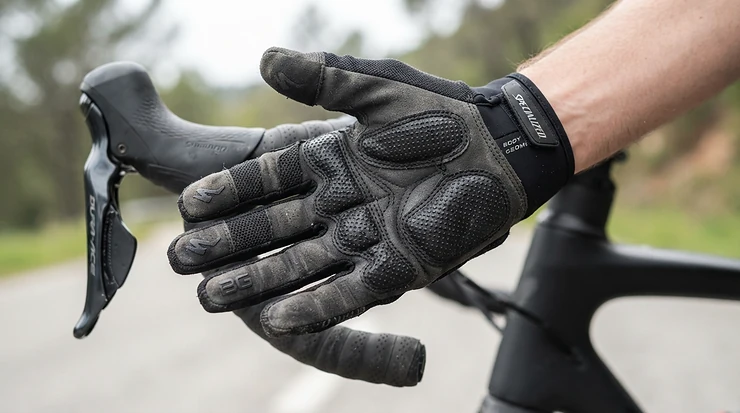
What are they? Finger road gloves with gel padding are short-fingered (half-finger) cycling mitts that put shock-absorbing gel pads under the palm, at the base of the fingers and over the heel of the hand. They damp road buzz, ease pressure on the nerves behind numb fingers, and leave your fingertips free for shifting and braking.
The nerve part matters. Prolonged pressure at the wrist can compress the ulnar nerve, a problem described on Wikipedia as ulnar tunnel syndrome and nicknamed “handlebar palsy” by cyclists. Gloves aren’t a cure, but sensible padding in the right places is a cheap first line of defence.
Here’s the catch: “gel padding” on a label tells you almost nothing. Some gloves have a generous cushion, others a token dab. So this guide compares seven real pairs, explains what each spec means on the road, and leans on published expert reviews and retailer feedback rather than marketing copy. It also covers the best fingerless road cycling gloves for different riders, grip surface, and what “racing fit” should feel like.
Quick Comparison: Finger Road Gloves with Gel Padding at a Glance
| Product | Padding Style | Standout Trait | Best For |
|---|---|---|---|
| Castelli Arenberg Gel 2 | CDS gel inserts | Most cushioning here | Castelli Arenberg Gel 2 suits rough-road, long-day riders |
| Endura Xtract Mitt | Gel palm padding | Budget all-rounder | Endura Xtract Mitt suits value seekers |
| Altura Progel Mitts | Gel plus silicone grip | Keenly priced | Altura Progel Mitts suit new riders and commuters |
| Giro Monaco II Gel | Technogel, leather palm | Durability | Giro Monaco II Gel suits endurance riders |
| Giro Bravo II Gel | 3mm gel, three-piece palm | Snug, tailored fit | Giro Bravo II Gel suits riders wanting a close fit |
| Pearl Izumi Elite Gel | 3D gel pads | Nerve-zone placement | Pearl Izumi Elite Gel suits numbness-prone hands |
| Gore Wear C3 Short Finger | Minimal foam-gel | Direct bar feel | Gore Wear C3 Short Finger suits racers and bar-feel fans |
Read the table as a spectrum. At one end, the Castelli Arenberg Gel 2 prioritises cushioning; at the other, the Gore Wear C3 Short Finger prioritises feel. The middle is where most riders will be happiest, and where the Giro Bravo II Gel and Pearl Izumi Elite Gel sit.
💬 Just one click — help others make better buying decisions too!😊
Top 7 Finger Road Gloves with Gel Padding: Expert Analysis
1. Castelli Arenberg Gel 2 — best padding for rough roads
Named after the roughest cobbled sector of Paris-Roubaix, this is the glove for riders whose local lanes feel like a pavé section.
Castelli’s CDS (Castelli Damping System) uses gel inserts to filter road vibration before it reaches your hand. In practice that means more cushioning under the palm than anything else on this list, plus a mesh back for breathability and a microsuede nose-wipe on the thumb. Cyclingnews calls it the brand’s most padded glove; Cycling Weekly rates it best for padding.
More padding isn’t automatically better. Extra cushioning slightly dulls bar feel, so this suits endurance riders and rough-surface regulars more than criterium racers. Its most repeated drawback is sizing: Cycling Weekly notes the gloves run small, so consider sizing up if you sit between sizes.
Pros:
- ✅ Generous gel inserts damp road chatter well
- ✅ Breathable mesh back keeps hands cooler
- ✅ Useful microsuede nose-wipe panel
Cons:
- ❌ Runs small, so sizing needs care
- ❌ Extra padding slightly reduces bar feel
Expect the mid-£30s to around £50; check current price. For long, battered-road days, the value verdict is strong.

2. Endura Xtract Mitt — best budget all-rounder
Sometimes the sensible pair is the one that doesn’t need a second mortgage.
Cyclingnews named the Xtract its best budget option, praising the ample gel palm padding, Velcro wrist closure and terry-cloth thumb panel. The pull tabs sound trivial but matter: sweaty gloves fight back when you peel them off after a hot ride.
My analysis: this is the glove that proves you don’t need to pay premium money for functional gel padding. The trade-off is refinement. You shouldn’t expect the buttery palm materials or precision cut of the pricier pairs, but for weekly club runs it covers the essentials.
Reviewers across the cycling press consistently frame it as excellent value rather than class-leading luxury. That’s a fair reading of the spec sheet, which favours features per pound over exotic materials.
Pros:
- ✅ Solid gel padding for the money
- ✅ Soft thumb wipe panel included
- ✅ Pull tabs make removal easy
Cons:
- ❌ Less refined materials than premium options
- ❌ Not the lightest, most minimal feel
Typically in the £15-£25 range; check current price. Verdict: excellent value for beginners and bargain hunters.
3. Altura Progel Mitts — best keenly priced British pick
Altura is a British brand, and the Progel has been a familiar sight on commuter and sportive bars for years.
The latest version has fewer seams in the palm, which matters more than it sounds: seams are what turn “slightly annoying” into “blister” at mile 60. Cycling Weekly reports increased gel padding, a silicone grip surface, a stretch Lycra upper and a synthetic suede palm.
Who’s it for? Riders who want proper gel cushioning and grip without premium spend. Just remember the honest caveat from the same test: build quality doesn’t match the pricier gloves, and durability may be the compromise. Treat these as a smart entry point rather than a five-season heirloom.
Reviewers describe good padding and grip for the price, with durability the recurring question mark.
Pros:
- ✅ Good grip and padding for the price
- ✅ Fewer palm seams for comfort
- ✅ Silicone grip aids control
Cons:
- ❌ Build quality trails pricier gloves
- ❌ Durability may be limited
Usually under £20; prices may vary. Verdict: hard to beat as a low-risk first pair.
4. Giro Monaco II Gel — best for durability and long days
There’s something reassuring about a leather palm. It moulds to your hand and outlives synthetics.
Cycling Weekly praised the soft sheep-leather palm, perforated for ventilation, paired with Technogel padding that absorbed road vibration effectively. In the same test, the durability rating stood out, and the reported downside was reduced breathability compared with mesh-heavy rivals.
Analytically, that trade-off tells you who should buy. Riders in cooler British summers, or those covering long mixed-surface distances, will appreciate the luxurious feel and longevity. Riders who overheat in July heatwaves may find better ventilation elsewhere on this list.
Because it’s a heritage-style design, it also pairs nicely with classic kit. Expect it to reward careful washing (see the maintenance section below).
Pros:
- ✅ Soft leather palm moulds to your hand
- ✅ Technogel padding absorbs vibration well
- ✅ Durable, high-quality construction
Cons:
- ❌ Less breathable than mesh-backed rivals
- ❌ Leather needs gentler care
Typically in the £35-£45 range; check current price. Verdict: pricier but built to last.
5. Giro Bravo II Gel — best for a snug, tailored fit
If your last gloves bunched up under the palm like a wrinkled sock, this is the fit-focused answer.
Giro specifies 3mm gel padding, a recycled AX Suede palm, a stretch-woven back of hand and hidden finger pullers. The three-piece palm construction is designed to reduce bunching, which improves both grip and bar feel. In plain English: less fabric slack means fewer hot spots.
Retailer reviews paint a consistent picture: the fit is snug, some buyers recommend sizing up, and most describe the padding as decent and not overdone. One reviewer reported a tight fit even in XL, so check the size chart against your hand measurement rather than guessing.
It’s a sensible middle-ground option: gel padding you’ll notice, without deadening the bar.
Pros:
- ✅ Three-piece palm reduces bunching
- ✅ 3mm gel padding balances comfort and feel
- ✅ Finger pullers speed up removal
Cons:
- ❌ Runs snug, so sizing up may help
- ❌ Padding is moderate, not plush
Around £25-£35; prices may vary. Verdict: great all-rounder if you size carefully.
6. Pearl Izumi Elite Gel — best for numbness-prone hands
Pearl Izumi’s pitch is placement rather than volume: put the gel where the nerves need relief.
The brand describes strategically placed 3D gel pads that reduce bulk while easing pressure on key nerves, with an AX Suede Uno synthetic leather palm and a mesh back. That nerve-zone thinking targets the ulnar-pressure problem covered earlier, which is why riders with tingly little fingers often shortlist it.
Feedback is genuinely mixed, and it’s worth knowing before you buy. Some retailer reviewers rated the gel and comfort highly, while others complained that the padding felt thin, the wrist strap seemed flimsy, or the sizing ran small. Try before you commit, or buy from somewhere with easy returns.
Pros:
- ✅ Gel positioned around key nerve zones
- ✅ Soft, grippy synthetic leather palm
- ✅ Breathable mesh back
Cons:
- ❌ Reviewers report thin padding and small sizing
- ❌ Wrist strap durability questioned
Typically £25-£35; check current price. Verdict: promising for numbness, but check fit first.
7. Gore Wear C3 Short Finger — best for racing feel and bar contact
Not every rider wants a pillow. Some want to feel exactly what the front tyre is doing.
Gore Wear pairs a single-layer palm with light foam-gel padding beneath the knuckles for a “direct contact” feel, plus pull-off loops and a reflective logo. Cyclist’s reviewer found the grip good and seams soft, but noted pinching between the fingers on longer rides and suggested sizing up.
That makes it a natural candidate for the racing crowd. Crit riders and short-race regulars often prefer less bulk, and this is the most minimal glove here. The catch is comfort on rough, long days, where thicker padding wins.
Pros:
- ✅ Direct bar feel with light protection
- ✅ Soft seams and good grip
- ✅ Pull loops ease removal
Cons:
- ❌ Minimal padding for long rough rides
- ❌ Reported finger pinching if too tight
Typically in the £25-£35 range; prices may vary. Verdict: ideal if bar feel matters more than cushioning.
Top 7 Compared Side by Side
| Product | Approx. Price Range | Palm / Grip Surface | Closure | Best For |
|---|---|---|---|---|
| Castelli Arenberg Gel 2 | £35-£50 | Gel inserts, suede-style palm | Velcro | Rough roads |
| Endura Xtract Mitt | £15-£25 | Gel-padded palm | Velcro | Budget buyers |
| Altura Progel Mitts | Under £20 | Synthetic suede, silicone grip | Velcro | Beginners |
| Giro Monaco II Gel | £35-£45 | Perforated sheep leather | Velcro | Durability |
| Giro Bravo II Gel | £25-£35 | Recycled AX Suede | Velcro | Snug fit |
| Pearl Izumi Elite Gel | £25-£35 | AX Suede Uno | Hook-and-loop | Nerve relief |
| Gore Wear C3 Short Finger | £25-£35 | Single-layer palm | Pull-on with loops | Racing feel |
Prices are approximate ranges at the time of research and may vary.
Looking at the data, the Endura Xtract Mitt and Altura Progel Mitts deliver the best cost-to-padding ratio, while the Giro Monaco II Gel justifies its premium through materials. If cushioning is your priority, the Castelli Arenberg Gel 2 is the clear leader; if you’d rather sacrifice comfort for feedback, the Gore Wear C3 Short Finger is the outlier.

How to Choose Finger Road Gloves with Gel Padding
Follow these seven steps and you’ll narrow the field fast:
- Measure your hand. Wrap a tape around the widest part of your palm, excluding the thumb. Sizing varies wildly between brands, and several gloves above are reported as running small.
- Decide on padding thickness. Long rides and rough roads favour more cushioning; short, fast rides favour less. Cycling Weekly notes that riders with smaller hands can find heavy padding interferes with grip.
- Check palm placement. Look for gel under the heel of the hand and the base of the fingers, where pressure builds.
- Inspect the palm material. Perforated leather, suede-style synthetics and single-layer fabrics each behave differently in the wet and the heat.
- Consider the closure. Velcro adds security; a pull-on cuff saves weight and looks tidy under a race jersey.
- Look for practical extras. Nose-wipe panels and pull tabs sound minor until you need them.
- Buy with returns in mind. Because fit is so individual, easy returns beat any spec sheet.
Best Fingerless Road Cycling Gloves: Why Half-Finger Wins on the Road
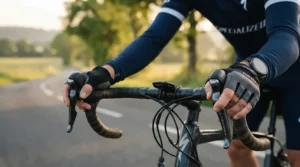
Cycling Weekly notes that fingerless mitts tend to be favoured by road cyclists because they run cooler, interfere less with controls and make eating on the move easier. That verdict matches most club-run reality.
The best fingerless road cycling gloves balance three things: ventilation, dexterity and protection. Ventilation matters because British summer afternoons can be muggy. Dexterity matters because Di2 buttons and mechanical levers demand fingertip precision. Protection matters because, as Cyclingnews points out, a crash can take skin off palms fast, and gloves are one of the few pieces of protective kit a road cyclist can wear.
So when should you go full-finger instead? Cooler mornings, cyclocross, gravel with undergrowth, or wet spring rides. For everything else on tarmac, fingerless remains the sensible default, and every glove on this list follows that logic. If you want a deeper independent perspective on the whole category, Cyclingnews’ cycling glove guide is worth a read.
Best Short Finger Gloves for Road Racing: What Actually Matters
Racing changes the brief. Comfort matters, but so does precision, weight and how little the glove gets in the way of sprinting, cornering and shifting.
For the best short finger gloves for road racing, prioritise a single-layer or thin palm, a close cuff, minimal seams and a secure but light closure. The Gore Wear C3 Short Finger leans into exactly this philosophy, while the Giro Bravo II Gel offers a tailored fit that doesn’t bunch when you’re out of the saddle. Aero-specific gloves with longer cuffs exist too, but Cyclingnews’ wind tunnel test found the aero gloves it tested marginally slower in a standard upright position, so the benefit depends on your position and wrist angle.
The takeaway: race gloves are about feel and fit, not maximum padding. If your events run past two hours over rough roads, a middle-ground padded pair like the Pearl Izumi Elite Gel may deliver better real-world comfort than a bare-bones racer.
Grip Surface: What Your Palm Material Tells You
The grip surface is where glove and handlebar actually meet, and it shapes control more than most riders realise.
Synthetic suede palms, such as those reported on the Altura Progel Mitts and Giro Bravo II Gel, offer consistent tack in dry and damp conditions and are easy to wash. Perforated leather, as on the Giro Monaco II Gel, moulds over time and lasts, though it can run warmer. Single-layer palms, like the Gore Wear C3 Short Finger‘s, prioritise bar feel over cushioning. Silicone print on the palm adds extra stick when hands get slippery.
Here’s what the spec sheet won’t say: grip surface interacts with your bar tape. Tacky tape plus tacky palms is a happy marriage; slick tape plus a smooth palm is not. If you regularly ride in drizzle, choose a textured grip surface and remember that sweat is the more common enemy in summer than rain.
Racing Fit: How a Glove Should Actually Feel
“Racing fit” is marketing shorthand for a close cut that eliminates excess fabric. Done well, it prevents bunching under the palm and stops the glove shifting during braking.
A proper racing fit should feel snug across the palm without squeezing between your fingers, and the cuff should sit flat without cutting circulation at the wrist. The wrinkles you can see when you make a fist are the wrinkles that will annoy your palm on the ride. Retailer reviewers of the Giro Bravo II Gel note that the tighter fit reduces bunching, while Cyclist’s reviewer of the Gore Wear C3 Short Finger found the fit snug enough to cause some finger pinching.
The practical lesson: if you’re between sizes, gloves from Castelli Arenberg Gel 2 to Pearl Izumi Elite Gel are often reported as running small, so consider the larger option, especially since gel-padded gloves stretch less than thin race mitts. A racing fit that hurts isn’t a racing fit; it’s a mistake.
Gel Padding vs Traditional Alternatives
| Option | Vibration Damping | Bar Feel | Ventilation | Best For |
|---|---|---|---|---|
| Gel-padded mitts (e.g. Castelli Arenberg Gel 2) | High | Medium | Medium-High | Long rides, rough roads |
| Foam-padded mitts (e.g. Endura Xtract Mitt) | Medium | Medium-High | Medium-High | All-round training |
| Unpadded race mitts | Low | Very High | High | Short races, hot days |
| No gloves plus thick bar tape | Low-Medium | High | Highest | Minimalists |
Categories are general characterisations, not lab measurements.
The pattern is a trade-off curve: more damping, less feel. Gel-padded mitts win on comfort over distance, unpadded mitts win on precision, and thick bar tape can partly substitute for padding, as Cycling Weekly points out. For riders prone to numbness, gel padding remains the most practical compromise.
Long-Term Cost and Maintenance
A £15 pair replaced every season costs more over five years than a £40 pair that survives. Durability varies: leather palms such as the Giro Monaco II Gel are reported as long-lasting, while budget pairs like the Altura Progel Mitts carry a durability question mark from reviewers.
| Glove Tier | Typical Price Range | Likely Lifespan Trend | Value Angle |
|---|---|---|---|
| Budget | Under £25 | Shorter | Low upfront cost |
| Mid-range | £25-£35 | Moderate | Balanced |
| Premium | £35-£50 | Longer | Materials and fit |
Prices are approximate and may vary; lifespan trends reflect general reviewer commentary.
The cost-per-ride logic favours mid-range gloves for most riders, and budget gloves make sense as a spare or first pair. To extend life, rinse gloves after sweaty rides, avoid tumble dryers, and never leave them balled up in a hot bag.
Practical Guide: Setting Up and Caring for Your Gloves
Break-in: Wear new gloves around the house first. Synthetic suede stretches a little, and a snug pair often relaxes after a few rides.
Fit check: Grip your handlebars in the drops and on the hoods. Bunching in either position means the wrong size or shape.
Hand positions: Move between the tops, hoods and drops regularly. Physiotherapists quoted by 220 Triathlon emphasise that changing hand position shifts pressure and helps blood flow to the nerve.
Washing routine: Hand wash in lukewarm water with mild detergent, squeeze rather than wring, and air dry away from radiators. Heat degrades gel, adhesives and elastic.
First-30-days mistakes: Buying too small, ignoring seam rub, and expecting gloves to fix a poor bike fit. If your reach or saddle height is wrong, gloves only mask the problem.
Simple habits and thoughtful care let even a budget pair like the Endura Xtract Mitt punch above its price.
Real-World Scenarios: Matching Gloves to Riders
The weekend sportive rider (60-100 miles, mixed roads, mid-budget). The Castelli Arenberg Gel 2 or Giro Monaco II Gel makes sense here. Hours of vibration argue for generous gel, and the durability of leather pays back over many events.
The Tuesday-night crit racer (short, fast, tactile). Bar feel wins. The Gore Wear C3 Short Finger matches a “feel the road” philosophy, with the Giro Bravo II Gel as the padded fallback.
The commuter on a tight budget (daily short rides, all weathers). The Altura Progel Mitts or Endura Xtract Mitt provide gel comfort at a friendly price, and their grip helps in damp conditions.
The rider with tingly little fingers. Consider the Pearl Izumi Elite Gel, with its nerve-focused pad placement, but also see a professional if numbness persists.
Choose by ride type, not by brand cachet. The right glove is the one that disappears while you ride.
Problem to Solution: Numb Hands, Slippery Bars, Sweaty Palms
Problem 1: Numb little and ring fingers. Change hand position often, check bike fit, and try gloves with gel over the heel of the palm, such as the Pearl Izumi Elite Gel. Persistent numbness or weakness deserves a medical check.
Problem 2: Bar slippage in the wet. Choose a textured or silicone-printed grip surface, like the one on the Altura Progel Mitts.
Problem 3: Sweaty, overheated hands. Pick mesh backs and perforated palms; the Castelli Arenberg Gel 2 pairs gel with a breathable back.
Problem 4: Blisters between fingers. Usually a sizing or seam issue. Size up, especially with snugger models like the Gore Wear C3 Short Finger.
Problem 5: Gloves that won’t come off. Look for pull tabs or finger loops, standard on the Endura Xtract Mitt and Giro Bravo II Gel.
Safety, Regulations and Kit Guidance
Cycling gloves aren’t legally required in the UK, and there’s no glove-specific regulation for road riders. The official Highway Code guidance is broader: Rules for cyclists 59 to 82 on GOV.UK advises clothing that won’t tangle in the chain and light-coloured or reflective items to boost visibility, and recommends a correctly fitted helmet.
That means reflective details, like those on the Gore Wear C3 Short Finger, are a genuine visibility bonus rather than decoration. For riders on darker commutes, choosing a glove with hi-vis or reflective trim adds a small but real safety margin.
Gloves also protect against abrasion in a fall. Cycling Weekly notes they can reduce the risk of gravel rash, which can mean days or weeks off the bike. Add a helmet, lights and sensible visibility, and your hands are one less thing to worry about.

FAQ
❓ Are finger road gloves with gel padding worth it for short rides?
❓ How should short finger gloves fit for road racing?
❓ Do padded fingerless gloves help with numb hands?
❓ Can I wash gel-padded cycling gloves in the machine?
❓ How often should I replace gel padded cycling gloves?
Conclusion
Finger road gloves with gel padding are one of the most affordable comfort upgrades in cycling, and the right pair depends on how you ride rather than how much you spend. For maximum cushioning on rough roads, the Castelli Arenberg Gel 2 leads the pack. For durability, the Giro Monaco II Gel justifies its premium. For value, the Endura Xtract Mitt and Altura Progel Mitts are hard to argue with. For a snug, tailored fit, look at the Giro Bravo II Gel; for nerve-focused padding, the Pearl Izumi Elite Gel; and for racers who crave bar feel, the Gore Wear C3 Short Finger is the minimalist pick.
Whatever you choose, measure your hand, respect the sizing quirks reviewers flag, and match padding to ride length. Then go and enjoy your ride with happier hands. For more guidance, Cycling Weekly’s summer glove buyer’s guide is a useful second opinion.
🚴♂️ Ready to upgrade your hand comfort? Click any highlighted glove above to check current pricing and availability, then pick the pair that fits your riding style. Your next long ride starts with happier palms! ✨
Recommended for You
- Short Finger Road Cycling Gloves: 7 Best UK Picks for Summer (2026)
- Waterproof Long Finger Road Cycling Gloves: 7 Best Picks (2026)
- Long Finger Road Cycling Gloves: 7 Top UK Picks for Autumn 2026
Disclaimer: This article contains affiliate links. As an Amazon Associate, I earn from qualifying purchases. If you purchase products through these links, we may earn a small commission at no additional cost to you.
✨ Found this helpful? Share it with your friends! 💬🤗
