
In This Article
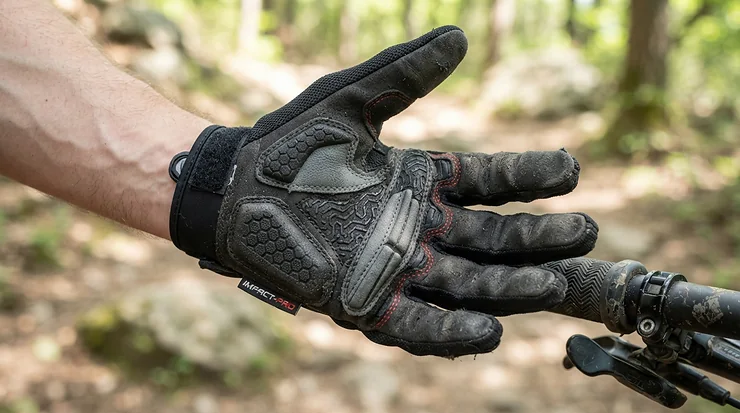
Your hands do most of the talking on a bike. They signal turns, squeeze the brakes, swipe a phone mount and take the first hit from every pothole. Yet most riders spend longer choosing a bell than choosing commuter cycling gloves. Then November arrives, a 7:40am wind finds the gap at your wrist, and the cheapest item in your wardrobe becomes the most important.
The market for commuter cycling gloves in 2026 is better than it has ever been, and you don’t need to spend triple figures. This guide compares seven real pairs, from the best commuter gloves under £15 to a fully waterproof premium option. It explains what each spec means once it meets a wet Tuesday on a roundabout. Everything is based on manufacturer specifications, published expert tests and aggregated reviewer sentiment. I haven’t claimed hands-on testing, and where review data is thin, I say so.
Commuting is a different sport from Sunday-club riding. You stop and start through traffic, ride in low light, glance at a phone and wear the same pair day after day. That pushes reflective detailing, touchscreen use and daily commute durability ahead of racing-style features. The Highway Code (Rule 59) recommends reflective clothing or accessories in the dark. Reflective gloves put that material exactly where drivers look when you signal.
All prices below are ranges from the time of research, so treat them as a guide rather than a promise.
Quick Comparison Table: Commuter Cycling Gloves at a Glance
| Glove | Best For | Price Range |
|---|---|---|
| Oxford Bright Gloves 1.0 | Budget autumn and spring commutes | Around £13-£15 |
| WESTWOOD FOX Thermal Cycling Gloves | Cold-morning warmth on a budget | Budget band, check listing |
| ROCKBROS Winter Cycling Gloves | Phone-heavy winter commutes | Around £15-£20 |
| Oxford Bright Gloves 2.0 | Windy, dark, cold commutes | £17-£25 range |
| Madison Zenith 4-Season DWR Gloves | Year-round, one-pair simplicity | Around £25 |
| Endura Strike Waterproof Gloves | Wet, cold UK winters | High-£30s to around £40 |
| Proviz Reflect360 Waterproof Gloves | Maximum night-time visibility | Around £50 |
Looking at the table, the real split is between gloves that resist weather and gloves that merely insulate. The Oxford Bright Gloves 1.0 and WESTWOOD FOX Thermal Cycling Gloves are shoulder-season and dry-cold tools, while the Endura Strike Waterproof Gloves and Proviz Reflect360 Waterproof Gloves are built for rain. If your commute is short and mostly dry, the cheaper end gives you most of the benefit. If you ride through sleet at 6am, paying for a membrane is the best money you’ll spend.
💬 Just one click — help others make better buying decisions too!😊
Top 7 Commuter Cycling Gloves: Expert Analysis
Each pair below is judged on what the specs mean in practice, what reviewers keep repeating, and who it suits. Where I couldn’t verify detailed independent reviews, I’ve said so rather than papering over the gap.
1. Oxford Bright Gloves 1.0 — best under £15 for crisp mornings
The standout is simple: this is the one pair on the list that reliably sits under £15, yet it still offers reflective detailing and touchscreen use on the thumb and index finger.
The thermal 4-way stretch upper means fabric follows your knuckles rather than bunching under the bars. The silicone-textured palm adds grip, and the full-length thumb sweat-wipe saves your sleeve on cold mornings. The wristgripper cuff is quick to pull on, though it seals less tightly against wind than a hook-and-loop strap.
Based on the spec sheet, this is a shoulder-season glove for autumn and spring, not a January one. It suits new commuters on 20-40 minute rides and anyone who loses gloves regularly. Reviews on retailer listings I found rate it very highly, with ratings around 4.9 stars from roughly 90 buyers. That is the seller’s own review pool, so check the live Amazon page for current feedback.
Pros:
- ✅ Reflective print plus fluorescent detailing for visibility
- ✅ Touchscreen-ready thumb and index finger
- ✅ Genuinely sits under £15
Cons:
- ❌ Not waterproof, so heavy rain soaks through
- ❌ Too thin for properly cold, frosty rides
Price: around £13-£15 at the time of research. Value verdict: excellent entry point for the best commuter gloves under £15 hunt.

2. WESTWOOD FOX Thermal Cycling Gloves — budget warmth for cold commutes
The hook here is warmth per pound. Listings describe a thermal fleece lining, with some variants advertising Thinsulate-style insulation.
Specs on these listings include touchscreen-compatible fingertips, an anti-slip grip, windproof fabric and elastic cuffs. The “slightly waterproof” wording is marketing shorthand for splash resistance, so treat a proper downpour as a no-go. Elastic cuffs tuck under a jacket sleeve neatly, which matters more than it sounds when you’re buttoned into a winter coat.
My analytical take: these suit riders who want a glove that works as a commuter cycling glove and as everyday winter wear, such as walking or driving. One UK buying guide labels them a commuter pick, but I couldn’t verify detailed independent test data. Variants also differ between listings, so confirm reflective detailing and padding before buying.
Pros:
- ✅ Fleece lining for properly cold mornings
- ✅ Touchscreen-compatible fingertips
- ✅ Anti-slip grip for bars and phone
Cons:
- ❌ Splash-resistant only, not fully waterproof
- ❌ Reflective detailing varies between listings
Price: budget band, typically around £12-£20 depending on variant, so check whether your size lands under £15. Value verdict: strong if you prioritise warmth over visibility.
3. ROCKBROS Winter Cycling Gloves — most generous touchscreen fingertips
This pair stands out for touchscreen use. The S091-4BK listing describes conductive fabric on the thumb, index and middle fingers, so you aren’t hunting for the one “live” fingertip.
Brand specs describe a fleece lining, a water-repellent outer that is explicitly not waterproof, a silicone grip pattern and an extended cuff. Reflective elements and a clip that links the pair together round things off. That clip is more useful than it sounds, because it stops one glove vanishing in your bag.
The brand’s quoted low-temperature rating sounds optimistic for a thin commuting glove, so read it as “cold but dry” rather than “arctic”. These suit riders who check navigation or answer calls mid-commute. One UK buying guide reports well over 3,000 positive Amazon UK reviews, but I couldn’t verify that figure independently, so check the live count. Model numbers vary between listings.
Pros:
- ✅ Multi-finger touchscreen compatibility
- ✅ Reflective elements and extended cuff
- ✅ Handy clip keeps the pair together
Cons:
- ❌ Water-repellent but not waterproof
- ❌ Sizing varies between listings, so check charts
Price: around £15-£20 at the time of research. Value verdict: good for phone-reliant winter riders.
4. Oxford Bright Gloves 2.0 — windproof reflective upper for cold, dark rides
The standout is a windproof, highly reflective upper that targets the real winter-commute problem: wind chill at 25mph downhill.
The padded Amara palm and silicone grip improve comfort and bar feel. A touchscreen finger and thumb, plus a thumb sweat-wipe, keep it practical. The hook-and-loop cuff seals better than the elastic cuff on the Oxford Bright Gloves 1.0. Oxford quotes a range of roughly 5°C down to -15°C. That lower figure is brand marketing, and I’d read it as comfortable in the single digits rather than deep freeze.
My take: this is the sweet spot for riders who commute home in the dark by October. It adds wind protection without the bulk of a waterproof glove. If you need rain protection, the Oxford Bright Gloves 3.0 adds a Hipora waterproof lining at around £20-£25. Retailer listings show high ratings, but I couldn’t find independent expert tests, so I’m treating that as a retailer signal only.
Pros:
- ✅ Windproof reflective upper cuts wind chill
- ✅ Hook-and-loop cuff seals out draughts
- ✅ Padded palm with silicone grip
Cons:
- ❌ Not waterproof, unlike the 3.0 version
- ❌ Brand temperature claim looks optimistic
Price: £17-£25 range. Value verdict: very good for dark winter evenings.
5. Madison Zenith 4-Season DWR Gloves — one-pair versatility
The hook is the name’s promise: a durable water-repellent finish aimed at spring, summer, autumn and mild winter.
BikeRadar rated it well for its price, praising its wet, chilly-ride performance and touchscreen compatibility, while noting that the lack of padding might not suit everyone. In practice, a thin, unpadded glove means better bar feel and easier phone use, but less cushioning on rough tarmac. For commutes under an hour, that is a fair trade.
Based on the specs, this is the closest thing here to a genuine best all-season commuter cycling gloves option for riders who want one pair. It won’t keep you warm in a hard frost, but it handles drizzle and cool mornings without cooking your hands in September. A DWR finish also fades over time, so expect to reproof it after many washes.
Pros:
- ✅ DWR finish handles drizzle and light rain
- ✅ Touchscreen-compatible fingertips
- ✅ Thin design keeps good bar feel
Cons:
- ❌ Minimal padding for rough roads
- ❌ Not warm enough for deep winter
Price: around £25 at the time of research. Value verdict: good value for year-round riders who hate swapping gloves.

6. Endura Strike Waterproof Gloves — waterproof without the cardboard feel
The standout is that these are genuinely waterproof yet keep decent dexterity. Reviewers keep praising that balance.
The road.cc test report calls them reliable and well detailed, with a long terry thumb wipe and a snug fit that doesn’t need a size up. Specs include a windproof stretch rear panel, a waterproof breathable membrane, a brushed lining, a hook-and-loop cuff and reflective piping. Cycling Weekly rated the insulation-to-dexterity balance highly. BikeRadar’s older review noted that bulkier, warmer gloves exist for dedicated commuting.
My analysis: if your commute involves a 40-minute ride in sleet, a waterproof membrane stops the slow cold creep that starts when wet fabric sits against skin. These are best for riders whose commute is rain-heavy, and less ideal for mild days when they’ll feel warm.
Pros:
- ✅ Genuinely waterproof, breathable membrane
- ✅ Good dexterity for brake and gear control
- ✅ Reflective piping and long thumb wipe
Cons:
- ❌ Snug fit may not suit larger hands
- ❌ Too warm for mild autumn days
Price: high-£30s to around £40. Value verdict: worth it if you commute through proper UK winters.
7. Proviz Reflect360 Waterproof Gloves — the 100% reflective shell
The standout is the outer shell, built from material containing tiny reflective glass beads that bounce headlight beams straight back to drivers.
Beyond reflective detailing, specs include a waterproof Hipora insert, a silicone web grip, a padded palm, touchscreen compatibility and a brushed micro-fleece lining. The hook-and-loop cuff seals out wind, and the brand says they’re machine washable. Road.cc praised the reflectivity and fit but advised double-checking sizing, which matches wider reviewer advice to consult the size chart carefully.
My take: this is the glove for riders who commute on unlit lanes, because your hand signals become small, bright beacons. Cycling Weekly’s review rated it highly for its reflectivity, warmth and practicality. It’s the most expensive pair here, so it’s overkill for a lit city route.
Pros:
- ✅ 100% reflective outer shell for hand signals
- ✅ Waterproof, windproof and breathable insert
- ✅ Padded palm with silicone web grip
Cons:
- ❌ Highest price on the list
- ❌ Sizing needs careful checking
Price: around £50 at the time of research. Value verdict: worthwhile for dark, rural or wet commutes.
Side-by-Side Specs for Commuter Cycling Gloves
| Glove | Weather Handling | Reflective Detailing | Touchscreen Use | Best For |
|---|---|---|---|---|
| Oxford Bright Gloves 1.0 | Cool, dry | Print + fluo | Thumb + index | Entry-level riders |
| WESTWOOD FOX Thermal Cycling Gloves | Cold, splash-resistant | Varies | Yes | Cold-morning warmth |
| ROCKBROS Winter Cycling Gloves | Cold, water-repellent | Reflective elements | Multi-finger | Phone-heavy commuters |
| Oxford Bright Gloves 2.0 | Windproof | Reflective upper | Thumb + index | Dark, windy rides |
| Madison Zenith 4-Season DWR Gloves | Showers, cool | Subtle | Yes | One-pair riders |
| Endura Strike Waterproof Gloves | Waterproof | Piping | Yes | Wet winters |
| Proviz Reflect360 Waterproof Gloves | Waterproof | 100% reflective shell | Yes | Unlit routes |
This table shows a clear trade-off: visibility and weather protection both rise with price, but touchscreen compatibility is nearly universal. For most riders, paying more buys membrane quality and reflective coverage, not better phone control. Review evidence is thickest for the Endura Strike Waterproof Gloves and Proviz Reflect360 Waterproof Gloves, which have published expert tests, and thinnest for the budget pairs.
Practical Usage Guide: Your First 30 Days With New Commuter Cycling Gloves
New gloves need a short settling-in period, and a few habits will extend their life.
Week one: fit and break-in. Wear them on a short ride first. Check that fingertips don’t bunch, because excess fabric at the end of a finger creates friction and numbness. Confirm the cuff overlaps your jacket sleeve rather than leaving a gap at the wrist. For waterproof pairs such as the Endura Strike Waterproof Gloves, a snug fit is normal, as reviewers note, so don’t size up unless fingers feel pinched.
Week two: test your touchscreen use. Try unlocking your phone and opening a map before you ride off. Conductive fingertips work best with a light, flat touch rather than the tip of a nail.
Week three: set a drying routine. Never leave damp gloves in a bag overnight. Turn them inside out, loosen the cuff and dry them away from direct heat, which can crack membranes and warp grip prints.
Week four: check wear points. Inspect palm seams and fingertip stitching. This is where daily commute durability shows up first. If a seam is fraying, repair it now with a few stitches before a small tear becomes a hole.
Common first-month mistakes: buying a size too small for a thicker winter lining, washing at high temperatures, and forgetting to reproof a DWR coating such as the one on the Madison Zenith 4-Season DWR Gloves. Check each care label, because washing instructions differ.
Real-World Scenarios: Which Pair Suits Which Rider?
Specs mean little until they meet a real route. Here are three typical commuter profiles and the pairs that fit them best.
The student on a tight budget. A 20-minute ride to campus, mostly lit streets, and a real risk of losing a glove by Friday. The best commuter gloves under £15 conversation starts and ends with the Oxford Bright Gloves 1.0. You get reflective print and touchscreen use at a price that won’t hurt if one goes missing. Pair it with a cheap spare in your bag.
The suburban office worker. A 45-minute ride, partly on unlit lanes, in a thick winter coat. The Oxford Bright Gloves 2.0 adds wind protection and strong reflective detailing, while the Endura Strike Waterproof Gloves make more sense if rain is common. With a bulky coat, check that the cuff overlaps the sleeve cleanly, because coat cuffs and glove cuffs can fight each other.
The year-round rural commuter. An hour each way on dark country roads. The Proviz Reflect360 Waterproof Gloves are the logical premium choice, since a fully reflective shell makes hand signals visible from a distance. If you want a lighter option for summer, the Madison Zenith 4-Season DWR Gloves can handle shoulder seasons.
The pattern across all three: match the glove to your worst regular conditions, not your best, then add a lighter spare for warm weeks.
Problem → Solution Guide: Five Glove Headaches, Fixed
Problem 1: Cold fingertips despite thick gloves. Often it’s sizing, not insulation. Tight gloves squeeze out the air that keeps fingers warm. Try a slightly roomier fit, or choose a fleece-lined pair like the WESTWOOD FOX Thermal Cycling Gloves.
Problem 2: Soaked hands in the rain. Water-repellent is not waterproof. The ROCKBROS Winter Cycling Gloves are explicitly water-repellent only, so for sustained rain step up to a membrane glove such as the Endura Strike Waterproof Gloves.
Problem 3: Touchscreen won’t respond. Clean the conductive fingertips with a damp cloth, since grease and grit reduce sensitivity. Wet or very cold fingertips also respond poorly. Wipe both the glove and the screen dry, and consider a screen protector that doesn’t fight conductivity.
Problem 4: Numb little finger. This points to pressure on the ulnar nerve, which runs along the little-finger side of your palm. Check handlebar position and grip, add padded bar tape, and choose a glove with palm padding.
Problem 5: Gloves that smell after a month. Sweat and damp are the culprits. Air them out nightly, wash according to the care label, and rotate between two pairs.
What Are Commuter Cycling Gloves?
Commuter cycling gloves are hand coverings designed for daily urban or suburban riding. They typically combine a grippy palm, weather protection suited to the season, reflective detailing for visibility and touchscreen-compatible fingertips. Unlike racing gloves, they prioritise warmth, dryness and durability over aerodynamics.
Think of them as the work boots of the glove world. A road racer’s glove is a sprinter’s shoe: light, minimal and built for two hours of effort. A commuter glove has to survive 200 or more rides a year, shrug off rain, and still let you use a phone at a red light.
That job description explains why the features are different. You want grip that works when wet, cuffs that overlap a jacket sleeve, and fabric that dries by morning. The categories usually split into fingerless summer mitts, lightweight shoulder-season gloves, windproof or waterproof winter gloves, and hybrid pairs sold as all-season. Most riders eventually need at least two of those categories, which is why the best all-season commuter cycling gloves question deserves its own section below.
How to Choose Commuter Cycling Gloves
- Match the glove to your worst regular weather. A glove that handles November drizzle will cope with October. The reverse is rarely true.
- Decide how much rain you really ride in. If it’s occasional, water-repellent is enough. If it’s frequent, pay for a waterproof membrane.
- Check reflective detailing. Look for reflective material on the back of the hand and fingers, where your signals are seen. Tiny logos don’t count.
- Test touchscreen use. At least the thumb and index finger should be conductive. If you use your phone often, look for three or more fingers.
- Prioritise fit over everything else. Check the size chart, because brands vary. Review comments often hint at whether a model runs small or large.
- Consider padding. Light gel or foam suits longer commutes. Heavy padding can reduce bar control.
- Think about cuff style. Hook-and-loop seals better; elastic is faster to get on. Choose based on your jacket.
Best Commuter Gloves Under £15: What Your Money Really Buys
The best commuter gloves under £15 can be surprisingly capable. In my reading of the specs, the Oxford Bright Gloves 1.0 is the standout, offering reflective detailing and touchscreen use at a price that keeps replacement painless.
The honest trade-offs at this price are warmth, weather protection and padding. Budget gloves usually rely on a thin thermal lining rather than a waterproof membrane. They also tend to skip substantial palm padding, which matters less on a 20-minute commute than on a long ride. Remember too that several budget pairs in this guide, including the WESTWOOD FOX Thermal Cycling Gloves and ROCKBROS Winter Cycling Gloves, hover around £15 depending on size, colour and season, so check the live listing.
| Price Tier | What You Typically Get | Best For |
|---|---|---|
| Under £15 | Thermal fabric, reflective print, touchscreen tips (Oxford Bright Gloves 1.0) | Short, mostly dry commutes |
| £15-£25 | Windproofing, better cuffs, padded palms (Oxford Bright Gloves 2.0) | Cold, dark commutes |
| £25-£40 | Waterproof membranes or DWR finishes (Madison Zenith 4-Season DWR Gloves, Endura Strike Waterproof Gloves) | Wet, year-round riding |
| £40+ | Full reflective shells, premium membranes (Proviz Reflect360 Waterproof Gloves) | Unlit, rainy routes |
This table shows that value rises steeply up to about £25, then flattens. Past that, you’re paying for specific problems solved, such as waterproofing or full reflectivity, rather than general improvement.
Best All-Season Commuter Cycling Gloves: Why Two Pairs Beat One
Let’s be blunt: a single glove that is ideal in July and January doesn’t exist. The best all-season commuter cycling gloves approach is really a two-pair system, or one versatile mid-weight pair like the Madison Zenith 4-Season DWR Gloves for the shoulder seasons.
Here’s the logic. A glove warm enough for -2°C will be uncomfortably hot at 10°C, and sweaty hands get cold faster once you stop. A light pair for 8-16°C plus a waterproof winter pair for everything colder covers nearly every UK commute. In that setup, the Oxford Bright Gloves 1.0 could handle autumn and spring, and the Endura Strike Waterproof Gloves could take over for the wet months.
Coat choice matters too. BikeRadar’s winter glove tests highlight that commuting in a non-riding winter coat changes the fit equation, because bulkier sleeves need longer, roomier cuffs. If you wear a hefty jacket, prioritise a cuff that tucks over the sleeve or under it with ease.
A final tip: swap gloves by temperature, not by calendar. Check the forecast the night before and keep both pairs by the door.

Reflective Detailing: What Actually Gets You Seen
Reflective detailing isn’t decoration; it’s the glove’s most important safety feature after the grip. The Highway Code recommends reflective clothing or accessories in the dark, but it says nothing about where to put them. Hands are an excellent place, because they move, and movement attracts attention.
Not all reflective detailing is equal. A tiny logo on a cuff does almost nothing. Large reflective panels on the back of the hand and fingers do far more, and the Proviz Reflect360 Waterproof Gloves take this to the extreme with a 100% reflective shell. The Oxford Bright Gloves 2.0 and Oxford Bright Gloves 1.0 use reflective prints plus fluorescent accents, which help in daylight and dusk as well as at night.
Remember that reflective material only works when light hits it, so it complements lights rather than replacing them. Fluorescent colours help during the day but don’t glow at night. For the best result, combine reflective gloves with a reflective jacket or ankle bands, so drivers see your whole outline moving.
When shopping, ask two questions: how much of the glove is reflective, and is it on the back of the hand, where signals are seen?
Touchscreen Use: Making Gloves and Phones Get Along
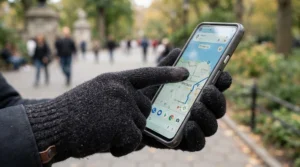
Touchscreen use sounds like a gimmick until you try to change a podcast at a red light with frozen fingers. Conductive fibres in the fingertips let your skin’s electrical charge pass through the glove. The trade-off is that sensitivity varies widely.
Most gloves in this guide offer at least thumb and index finger compatibility. The ROCKBROS Winter Cycling Gloves extend this to three fingers according to the S091-4BK listing, which is handy if you tap with different fingers. The Madison Zenith 4-Season DWR Gloves and Endura Strike Waterproof Gloves are both described as touchscreen-compatible too, though thicker membranes can slightly reduce precision.
Practical advice: don’t expect typing speed. Touchscreen use in gloves is best for skipping tracks, answering calls and glancing at maps, so mount your phone and use voice controls where you can. If your commute involves a lot of navigation, prioritise a thin glove with good conductivity over a bulky one.
If fingertips stop responding, clean them gently and make sure both the glove and screen are dry. Wet fabric spreads charge unpredictably, which is why the feature often fails in the rain, exactly when you want it most.
Daily Commute Durability: Long-Term Cost and Maintenance
Daily commute durability is where cheap gloves and premium gloves really diverge, and it’s worth doing some simple maths. Suppose a pair costing around £14 lasts one winter of roughly 100 commutes. That works out at about 14p per ride. A premium pair costing around £50 that lasts three winters, or 300 rides, comes to roughly 17p per ride. These are illustrative assumptions rather than measured lifespans, but they show how close the economics can be.
The failure points are predictable: palm abrasion, split finger seams, tired grip prints and degraded waterproofing. Cheap gloves tend to fail at stitching, while premium gloves tend to fail at the membrane or DWR coating. Both can be slowed by sensible care.
Maintenance checklist:
- Dry gloves fully between rides, away from direct heat.
- Wash only as the care label allows; the brand says the Proviz Reflect360 Waterproof Gloves are machine washable.
- Re-treat DWR finishes, such as on the Madison Zenith 4-Season DWR Gloves, when water stops beading.
- Repair small seam splits early.
The bottom line on daily commute durability: buy cheap if you lose gloves often, buy better if you hold onto them.
Features That Actually Matter (And Those That Don’t)
What matters: fit, grip, a cuff that works with your jacket, appropriate weather protection and reflective detailing. These affect safety and comfort every single ride.
What matters a little: palm padding. For commutes under an hour, modest padding is plenty. The American Society for Surgery of the Hand notes in its cyclist’s palsy guidance that gloves with foam or gel padding can help reduce pressure over the nerves in the palm. A biomechanics study found padded gloves reduced peak pressure over the ulnar nerve by roughly 10-28%. But over-padding can muddy bar feel, and good bike fit matters more than any glove.
What doesn’t matter much: extreme temperature ratings, flashy branding and bulky “tactical” styling. A quoted -15°C rating tells you little unless you know the test conditions. Equally, “waterproof” without a described membrane deserves scepticism.
What’s often overlooked: the thumb sweat-wipe, a clip to keep pairs together and easy pull-on tabs. These small things improve your daily experience more than a dozen spec-sheet headlines. The Oxford Bright Gloves 1.0 and Endura Strike Waterproof Gloves both include thumb wipes, which is one small reason they feel considered.
Commuter Cycling Gloves vs Alternatives
Do you really need cycling-specific gloves? Here’s how they compare with the usual substitutes.
| Option | Grip on Bars | Reflective Detailing | Touchscreen Use | Best For |
|---|---|---|---|---|
| Commuter cycling gloves | Excellent | Often built in | Common | Daily riders |
| Ski gloves | Poor, bulky | Rare | Rare | Standing in snow |
| Running gloves | Moderate | Sometimes | Often | Short, mild rides |
| Bare hands | Variable | None | Perfect | Warm, dry days |
The key trade-off is dexterity. Ski gloves keep you warm but make braking clumsy, and running gloves rarely have the grip or cuffs for handlebars. Commuter cycling gloves are designed around the handlebar, so the palm grip, finger length and cuff all make sense for the job.
That said, running gloves can work as a budget liner on cold mornings, and bare hands are fine in summer. For anything from October to March, cycling-specific gloves are worth having.

FAQ
❓ Are cheap commuter cycling gloves worth buying?
❓ Do I need waterproof commuter cycling gloves in the UK?
❓ How often should I replace my gloves?
❓ Can I wash commuter cycling gloves in a washing machine?
❓ Are fingerless gloves suitable for commuting?
Conclusion
Choosing commuter cycling gloves comes down to three questions: how cold and wet is your worst regular ride, how dark is your route, and how long do you want the pair to last? Answer those honestly and the shortlist shrinks quickly.
If budget is tight, the Oxford Bright Gloves 1.0 is the clear pick among the best commuter gloves under £15. For colder, darker rides, the Oxford Bright Gloves 2.0 adds windproofing and stronger reflective detailing. Riders who want a single pair for most of the year should look at the Madison Zenith 4-Season DWR Gloves, while wet-weather commuters will appreciate the Endura Strike Waterproof Gloves. If you ride unlit roads, the Proviz Reflect360 Waterproof Gloves make your hand signals impossible to miss. The WESTWOOD FOX Thermal Cycling Gloves and ROCKBROS Winter Cycling Gloves round out the list for warmth and touchscreen use on a budget.
The best all-season commuter cycling gloves strategy is often two pairs, a light one and a waterproof one, rather than one compromise. And keep reflective detailing, touchscreen use and daily commute durability in mind whichever you choose. Check current prices and sizing before buying, because both change often.
✨ Ready to Upgrade Your Commute?
🚴♂️ Pick the pair that matches your worst weather, click through to check current pricing and availability, and ride with warmer, safer, more visible hands!
Recommended for You
- Trail Gloves For Hot Weather: 7 Best Picks For UK Riders (2026)
- Enduro MTB Gloves: 7 Best Tough Picks For UK Riders (2026)
- Full Finger Gloves For Cold Weather MTB: 7 Best Picks (2026)
Disclaimer: This article contains affiliate links. As an Amazon Associate, I earn from qualifying purchases. If you purchase products through these links, we may earn a small commission at no additional cost to you.
✨ Found this helpful? Share it with your friends! 💬🤗
