
In This Article
Nobody tells you about the Tuesday-morning problem. It’s 7:40, the drizzle has turned serious, and your fingers have gone from “a bit nippy” to “someone else’s hands” before you’ve left the second set of lights. You can brake. You can’t feel the brake. That’s when the right commuter gloves for rain stop being an accessory and become a piece of safety kit.
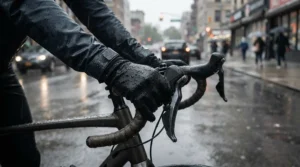
This guide compares seven real pairs, from budget neoprene to premium membrane gloves. Based on the spec sheets and published reviews, we’ve interpreted what each feature means on an actual wet ride. We’ve also covered the three things that decide whether a glove earns its place in your bag: how it keeps water out, whether you can use your phone without stripping it off, and how well drivers can see your hands when you signal. The Highway Code’s advice on clothing and being seen notes that reflective clothing and accessories help in the dark. Hands are the part of you that moves, so they matter more than most riders realise.
If you ride all year, you’ll also want commuter cycling gloves for cold weather. Several of these pairs double up nicely. Let’s get into it.
Quick Comparison: Commuter Gloves for Rain at a Glance
| Product | Waterproofing | Touchscreen | Price range | Best For |
|---|---|---|---|---|
| Sealskinz Waterproof All Weather Cycle Gloves | Full membrane | Yes | Around £45-£50 | Soaking, year-round commutes |
| Proviz Reflect360 Waterproof Cycling Gloves | Full waterproof | Index finger only | Around £50 | Dark winter mornings |
| Endura Strike Waterproof Gloves | Seam-sealed membrane | Not a strong point | Around £40-£45 | Faster-paced, mild-winter riders |
| Altura Nightvision Insulated Waterproof Gloves | 8K/8K membrane | Yes | Around £45 | Reliable all-rounder |
| Rapha Winter Gloves | Water-resistant (DWR) | Yes | Around £80 | Style-conscious, drizzle-only riders |
| dhb Neoprene Cycling Gloves | Water-tolerant, not waterproof | Limited | Mid-£20s | Wet-but-warm, tight budgets |
| Elite Cycling Project Malmo Waterproof Gloves | Waterproof (per listing) | Index finger only | Budget tier; check current price | Entry-level winter protection |
Looking at the table, the Sealskinz Waterproof All Weather Cycle Gloves and the Altura Nightvision Insulated Waterproof Gloves are the safest all-round bets on waterproofing and phone use. The Proviz Reflect360 Waterproof Cycling Gloves win decisively on being seen, but only the index finger is touchscreen-ready. Budget buyers should note that the dhb Neoprene Cycling Gloves trade true waterproofing for a warm-when-wet approach.
💬 Just one click — help others make better buying decisions too!😊
Top 7 Commuter Gloves for Rain: Expert Analysis
1. Sealskinz Waterproof All Weather Cycle Gloves — best overall for soaking commutes
The standout here is a genuinely sealed membrane. That’s not a spray-on promise, it’s a waterproof layer sandwiched inside the glove.
The construction is a polyester-blend outer, a polyurethane membrane in the middle and a soft inner. The membrane is what stops water, while the outer shell merely sheds it. In practice, that means the glove keeps working after twenty minutes of proper rain, not just the first five. Gel pressure padding cushions the palm on rough tarmac, and a longer, adjustable cuff gives better wrist coverage than the Proviz Reflect360 Waterproof Cycling Gloves.
Based on the spec comparison, this is the glove for anyone whose commute can’t be rescheduled when it pours. Reviewers at Discerning Cyclist reported that a deliberate pool dunk left their hands dry, and they praised the comfort and dexterity. The recurring criticisms are the price and a modest reflective strip.
Pros:
- ✅ Fully waterproof and windproof membrane construction
- ✅ Touchscreen-friendly fingertips for phone and GPS
- ✅ Good wrist coverage with adjustable cuff
Cons:
- ❌ Reflective detailing is fairly subtle
- ❌ Premium price for a glove
Expect around £45-£50. For daily riders in rainy regions, the value holds up, because a membrane glove that keeps working beats replacing cheaper pairs every winter.

2. Proviz Reflect360 Waterproof Cycling Gloves — loudest visibility on the market
If being seen is your priority, this is the pair. The outer is covered in highly reflective panels that bounce headlights back from nearly every angle.
The fleece-lined, windproof and waterproof build comes with silicone web grips on the palm and padding underneath. The grips matter in the wet, because slick brake levers are where grip fails first. Reviewers also note the gloves are warm and reasonably dexterous. The catch is that touchscreen use is limited to the index finger, which is fine for a quick swipe but not for typing.
Here’s what to weigh: wrist coverage is shorter than the Sealskinz Waterproof All Weather Cycle Gloves, so a snug jacket cuff does half the work. The cuff adjuster material can also bunch when tightened. Reviewer verdicts are positive overall, with Discerning Cyclist’s pool test reporting complete waterproofing, and the price is the most common complaint.
Pros:
- ✅ Reflective panels visible from almost every angle
- ✅ Waterproof, windproof and fleece-lined
- ✅ Silicone web grips help on wet bars
Cons:
- ❌ Short cuff leaves wrist exposed
- ❌ Cuff adjuster material can bunch up
Around £50 for the fully reflective version, with colourful variants typically a little cheaper. For dark-morning commuters on unlit roads, it’s money well spent.
3. Endura Strike Waterproof Gloves — low-bulk winter all-rounder
Endura’s best-selling glove is built around a seam-sealed, waterproof and breathable membrane. The practical result is a glove that doesn’t feel like wearing oven mitts.
A windproof stretch outer, fleece lining, gel palm padding and an extended Velcro cuff round out the package. The extra-long terry thumb wipe is a small detail commuters appreciate on a streaming-nose morning. BikeRadar’s review rates the Strike highly but suggests it suits medium-to-high intensity riding better than gentle commuting, where bulkier, warmer gloves exist. Cycling Weekly noted that using a phone meant removing the gloves.
So this is a fit for brisk commuters in the UK’s typically mild, wet winters, not for sub-zero crawls. One reader comment on a road.cc review reported soaked gloves after a long, steady downpour, which is a reminder that very long exposure tests any waterproof glove.
Pros:
- ✅ Low bulk keeps good brake-lever feel
- ✅ Seam-sealed waterproof breathable membrane
- ✅ Extra-long terry wipe for noses
Cons:
- ❌ Not touchscreen-friendly
- ❌ Less warmth for very cold days
Expect roughly £40-£45. As a benchmark do-it-all winter glove it’s strong value.
4. Altura Nightvision Insulated Waterproof Gloves — dependable commuter staple with touchscreen fingertips
Altura built these for exactly this job: wet rides to work. The headline spec is an 8K/8K waterproof and breathability rating.
What does 8K/8K mean for you? Roughly, the membrane resists about 8,000mm of water pressure and lets moisture vapour out at a comparable rate. That’s comfortably above ordinary UK rain, though not designed for hours of heavy downpour. You also get a stretch back-hand fabric, a silicone-gripped synthetic palm, a longer cuff, reflective print and touchscreen-compatible fingertips. These touchscreen compatible commuter cycling gloves are a rare mix at this price.
An earlier iteration of the Night Vision Waterproof glove passed a canal-water immersion test at road.cc. Be aware that road.cc’s review of the Evo version criticised its reflective coverage, so check the specific model you’re buying.
Pros:
- ✅ 8K/8K waterproof, breathable membrane
- ✅ Touchscreen-compatible fingertips
- ✅ Insulated lining suits cold wet rides
Cons:
- ❌ Reflective print is modest on some versions
- ❌ Fit and cuff length vary by version
Around £45 range. It’s an easy recommendation for riders who want dependable protection without paying premium-brand prices.
5. Rapha Winter Gloves — stylish and warm, but only water-resistant
Here’s the honest catch up front: these are DWR-treated, which means water-resistant, not waterproof. That’s a significant distinction on a wet commute.
The outer is a polyester, leather and elastane mix with a soft fleece lining and a merino cuff to hold in heat. Insulation on the back of the hand cuts wind. A reflective logo helps when signalling, and the fingertips work on touchscreens. Drizzle and short showers are fine. A sustained downpour will eventually find its way through, since a waterproof coating on the surface sheds water but doesn’t make a sealed barrier.
So the analysis is simple. Buy these for style, warmth and good dexterity on dry-to-damp days. Don’t buy them as your only commuter gloves for rain if your route is long and exposed.
Pros:
- ✅ Fleece lining and merino cuff for warmth
- ✅ Touchscreen-compatible fingertips
- ✅ Smart styling that works off the bike
Cons:
- ❌ Water-resistant only, not fully waterproof
- ❌ Premium price tag
Expect around £80. It’s a nice glove, but for pure rain performance it’s poor value next to membrane rivals.

6. dhb Neoprene Cycling Gloves — warm even when wet
Neoprene works like a wetsuit: water gets in, your body warms it, and it stays warm. That’s the whole trick.
These are 100% neoprene with a close, stretchy fit, reflective detailing and reinforced palms. Good dexterity is the benefit of the close fit. They aren’t waterproof, and they’re not meant to be. The upside is drying quickly and staying comfortable in constant wet. The downside is that touchscreen use is limited, and on a cold, windy ride, wet neoprene can feel clammy.
If your commute is short, wet and fairly mild, this is clever, low-cost thinking. For long, cold rides, a membrane glove is the safer choice.
Pros:
- ✅ Stays warm even when soaked
- ✅ Close fit gives excellent dexterity
- ✅ Very affordable
Cons:
- ❌ Not truly waterproof
- ❌ Limited touchscreen performance
Mid-£20s range. For wet-but-mild city riding, it’s strong value.
7. Elite Cycling Project Malmo Waterproof Gloves — entry-level waterproof winter option
This is the budget pick. The listing promises windproof and waterproof protection, gel padding across the palms and knuckles, and 3M Thinsulate insulation.
Thinsulate gives warmth without much bulk, and knuckle padding is a nice extra if you ride in traffic. Touchscreen use is limited to the index finger. One caveat: independent reviews of this model were thin when we researched it, so we can’t summarise customer sentiment reliably. Read the latest buyer reviews before purchasing.
It’s an affordable way to get waterproof-rated gloves into your commuting kit, particularly as a spare pair.
Pros:
- ✅ Waterproof and windproof construction per listing
- ✅ Thinsulate insulation adds warmth
- ✅ Gel padding on palms and knuckles
Cons:
- ❌ Limited independent review coverage
- ❌ Index-finger-only touchscreen use
Price wasn’t confirmable at the time of research, but it sits in the budget tier, so check current price.
Top 7 Head-to-Head: Technology, Visibility and Warmth
| Product | Waterproof tech | Visibility features | Cold-weather suitability | Reviewer consensus |
|---|---|---|---|---|
| Sealskinz Waterproof All Weather Cycle Gloves | Sealed membrane | Subtle reflective strip | Strong; reviewers report sub-zero comfort | Comfortable, pricey |
| Proviz Reflect360 Waterproof Cycling Gloves | Waterproof, fleece-lined | Full reflective panels | Strong; reviewer cites very low temperatures | Brilliant visibility, pricey |
| Endura Strike Waterproof Gloves | Seam-sealed membrane | Reflective piping and prints | Moderate; best for mild winters | Versatile, value |
| Altura Nightvision Insulated Waterproof Gloves | 8K/8K membrane | Reflective print | Good; insulated | Dependable commuter staple |
| Rapha Winter Gloves | DWR water-resistant | Reflective logo | Good warmth, limited wet protection | Stylish, drizzle-only |
| dhb Neoprene Cycling Gloves | Neoprene (water-tolerant) | Reflective detailing | Good when wet and mild | Cheap and cheerful |
| Elite Cycling Project Malmo Waterproof Gloves | Waterproof per listing | Check listing | Thinsulate lined | Limited review data |
The table highlights how differently these gloves solve the same problem. Membrane gloves (Sealskinz Waterproof All Weather Cycle Gloves, Altura Nightvision Insulated Waterproof Gloves, Endura Strike Waterproof Gloves) keep water out, while the dhb Neoprene Cycling Gloves let it in and make peace with it. For visibility alone, nothing here matches the Proviz Reflect360 Waterproof Cycling Gloves.
Practical Guide: Setting Up and Caring for Your Commuter Gloves for Rain
Most glove failures aren’t manufacturing faults. They’re care mistakes. Here’s a first-30-days routine.
Day one: Wear them around the house for ten minutes. Membrane gloves often have liners that need a little wiggling to sit properly, and fixing a bunched liner at your desk beats fixing it at a red light.
Every wet ride: Turn them inside out when you arrive, or at least pull the liners out where the design allows. Dry them at room temperature, never on a radiator, because direct heat can damage membranes and glue.
Weekly: Check the palm grip and stitching. Wipe grime from reflective panels, because dirty reflectives reflect less.
Monthly: Follow the care label for washing, and don’t use fabric softener, which can clog water-repellent finishes.
Common first-month mistakes: buying a size too small (a tight membrane glove restricts circulation and feels colder), skipping a spare pair, and storing damp gloves in a sealed bag.
Real-World Scenarios: Which Pair for Which Commute?
The 4-mile city dash. You’re riding 20 minutes through stop-start traffic with a phone-based route. The Altura Nightvision Insulated Waterproof Gloves make sense, with insulated warmth and touchscreen fingertips, at a mid-range outlay.
The 12-mile suburban slog on unlit lanes. Long, dark and exposed. The Proviz Reflect360 Waterproof Cycling Gloves or the Sealskinz Waterproof All Weather Cycle Gloves are the logical choices. The first prioritises visibility, the second wrist coverage and comfort.
The student on a tight budget. Rain is constant, but rides are short. The dhb Neoprene Cycling Gloves are a smart, cheap solution, perhaps paired with the Elite Cycling Project Malmo Waterproof Gloves as a colder-day backup.
The brisk road-style commuter. You ride fast, run warm and hate bulky gloves. The Endura Strike Waterproof Gloves give you low-bulk protection and keep brake feel intact.
Problem → Solution Guide: Common Wet-Glove Headaches
Problem: gloves feel wet inside but the outside looks dry. That’s often sweat, not leakage. Choose breathable membranes (the Endura Strike Waterproof Gloves and Altura Nightvision Insulated Waterproof Gloves both advertise breathability) and remove the gloves at long stops.
Problem: cold hands even in waterproof gloves. Waterproof doesn’t mean warm. Add thin liners or go insulated. The Sealskinz Waterproof All Weather Cycle Gloves and Proviz Reflect360 Waterproof Cycling Gloves are the warmest here, according to reviewers.
Problem: phone won’t respond. Not all fingertips are equal. Pick touchscreen compatible commuter cycling gloves such as the Sealskinz Waterproof All Weather Cycle Gloves, Altura Nightvision Insulated Waterproof Gloves or Rapha Winter Gloves, and keep your fingertips clean.
Problem: water runs down your wrist. Tuck the glove cuff under your jacket sleeve (or over, depending on the jacket design) so rain can’t funnel inside.
Problem: damp gloves each morning. Rotate two pairs, or dry them properly overnight.
✨ Don’t Miss These Exclusive Deals!
🔍 Ready to upgrade your wet-weather rides? Click on any highlighted product above to check current pricing and availability. A good pair of commuter gloves for rain pays for itself in comfort every single soggy morning!
What Are Commuter Gloves for Rain?
Commuter gloves for rain are cycling gloves designed to keep your hands dry, warm and in control during wet journeys to work. They typically combine a waterproof or water-resistant outer, a warm lining, grippy palms, and features such as reflective detailing and touchscreen-friendly fingertips. Unlike regular winter gloves, they’re shaped for handlebars and cold-weather riding.
What separates them from sport gloves is the everyday-use brief. You need to sign for a parcel, unlock a bike lock and check a map without stripping off. That’s why features such as touchscreen compatibility and low-bulk padding matter more here than in racing gloves.
How to Choose Commuter Gloves for Rain
- Decide how waterproof you need. For short commutes, water-resistant gloves may do. For anything over 20 minutes in steady rain, a membrane is the safer choice.
- Check the cuff. A longer, adjustable cuff stops water entering at the wrist, the most common leak point.
- Prioritise grip. Silicone prints on the palm matter more than brand names when levers are wet.
- Test touchscreen claims. “Compatible” can mean only the index finger. If you use your phone at junctions, look for multi-finger support.
- Think about warmth. If you’re after commuter cycling gloves for cold weather, choose insulation (Thinsulate or fleece) as well as waterproofing.
- Look for visibility. Reflective panels beat tiny logos.
- Get the fit right. Snug but not tight, because compression kills warmth.
Waterproof Coating vs Membrane: What Really Keeps Water Out
The phrase waterproof coating gets used loosely in product listings, so here’s the distinction. A durable water repellent (DWR) finish is applied at the factory to make fabric hydrophobic, so water beads and rolls off. It’s often used alongside waterproof breathable membranes to stop the outer fabric from becoming saturated.
A waterproof coating alone isn’t a sealed barrier. It wears with use and washing, though it can usually be refreshed with a spray-on or wash-in treatment. A membrane, by contrast, sits inside the glove and does the real blocking.
That’s why the Rapha Winter Gloves (DWR-treated) are described as water-resistant, while the Sealskinz Waterproof All Weather Cycle Gloves, Endura Strike Waterproof Gloves and Altura Nightvision Insulated Waterproof Gloves use membranes. The simple rule: for light drizzle, a good waterproof coating is enough. For sustained rain, insist on a membrane.

Touchscreen Compatible Commuter Cycling Gloves: What to Expect
Touchscreen compatible commuter cycling gloves use conductive threads or treated fingertips so your phone registers your touch. In reality, the quality varies enormously.
Among our seven, the Sealskinz Waterproof All Weather Cycle Gloves, Altura Nightvision Insulated Waterproof Gloves and Rapha Winter Gloves are listed as touchscreen-friendly. The Proviz Reflect360 Waterproof Cycling Gloves and Elite Cycling Project Malmo Waterproof Gloves are index-finger only. Cycling Weekly’s review of the Endura Strike Waterproof Gloves noted that messaging meant removing them.
Tips for better results: keep fingertips clean and dry (water droplets confuse screens), use voice commands when possible, and mount your phone in a holder so you only need quick taps. If you rely on your phone for navigation, touchscreen compatibility should be a deciding factor.
Visibility: Why Reflective Gloves Matter More Than You Think
Your hands are the most animated part of you on a bike. When you signal a turn, they’re what drivers actually notice. That’s why visibility isn’t a gimmick.
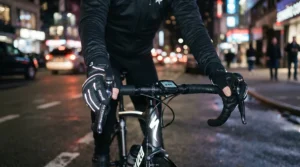
Highway Code rule 59 recommends light-coloured or fluorescent clothing in daylight and poor light, and reflective clothing or accessories in the dark. Gloves with reflective panels turn each hand signal into a moving beacon.
Among our seven, the Proviz Reflect360 Waterproof Cycling Gloves lead by a wide margin, with panels visible from almost every angle. The Altura Nightvision Insulated Waterproof Gloves, Endura Strike Waterproof Gloves, Rapha Winter Gloves and dhb Neoprene Cycling Gloves offer smaller reflective prints. The Sealskinz Waterproof All Weather Cycle Gloves carry a modest strip.
Rain and spray also reduce visibility generally, so extra reflectivity is cheap insurance. Pair reflective gloves with good lights, not instead of them.
Commuter Cycling Gloves for Cold Weather: Staying Warm in Wet Conditions
Wet and cold are a nasty combination, because water conducts heat away from your skin far faster than air does. The best commuter cycling gloves for cold weather therefore combine waterproofing, insulation and a snug cuff.
For below-freezing mornings, the Sealskinz Waterproof All Weather Cycle Gloves and Proviz Reflect360 Waterproof Cycling Gloves are the warmest here, according to reviewers. The Altura Nightvision Insulated Waterproof Gloves add Thinsulate-style insulation at a friendlier price. In milder weather, the Endura Strike Waterproof Gloves keep dexterity high.
A quick note on health: if your fingers regularly turn white or blue in the cold, the NHS explains Raynaud’s and recommends keeping hands warm and seeing a GP if symptoms are severe. For those riders, warmer gloves aren’t a luxury.
Commuter Gloves for Rain vs Everyday Alternatives
| Option | How it handles rain | Best For |
|---|---|---|
| Membrane commuter gloves | Blocks water for long rides | Sealskinz Waterproof All Weather Cycle Gloves, Altura Nightvision Insulated Waterproof Gloves |
| DWR water-resistant gloves | Sheds light rain only | Rapha Winter Gloves |
| Neoprene gloves | Let water in, retain heat | dhb Neoprene Cycling Gloves |
| Everyday knit or leather gloves | Soak up water quickly | Short walks, not cycling |
Everyday gloves look cheaper but fail fast on a bike, lacking palm grip and padding, and soaking through in minutes. Membrane gloves cost more upfront yet stay usable all winter. Neoprene is the budget compromise, and water-resistant gloves like the Rapha Winter Gloves suit riders who dodge the worst weather.
Common Mistakes When Buying Commuter Gloves for Rain
The first mistake is trusting the word “waterproof” without checking whether it means a membrane or just a coating. The second is ignoring the cuff, which is where most leaks begin. A third is choosing thick gloves that kill brake feel, and a fourth is overlooking sizing, since a tight glove restricts blood flow and feels colder.
Another common slip is buying on looks alone. Stylish gloves such as the Rapha Winter Gloves are lovely, but they’re water-resistant rather than waterproof. Finally, many riders forget a spare pair. Even the best membrane glove gets saturated eventually, and swapping to a dry pair mid-journey (or at the office) feels like a luxury.

FAQ: Commuter Gloves for Rain
❓ Are neoprene cycling gloves waterproof?
❓ How much should I spend on waterproof commuter gloves?
❓ Can I use my phone with waterproof cycling gloves?
❓ How do I dry wet cycling gloves overnight?
❓ Are hi-vis cycling gloves worth it for commuting?
Conclusion
There’s no single perfect pair, but there’s a right pair for your commute. If you want the most dependable all-rounder, the Sealskinz Waterproof All Weather Cycle Gloves and Altura Nightvision Insulated Waterproof Gloves cover waterproofing, touchscreen use and warmth. For maximum visibility on dark mornings, the Proviz Reflect360 Waterproof Cycling Gloves stand alone. The Endura Strike Waterproof Gloves suit brisk riders in mild winters, while the dhb Neoprene Cycling Gloves and Elite Cycling Project Malmo Waterproof Gloves keep costs low. The Rapha Winter Gloves are for style-minded riders who can dodge heavy rain.
Whatever you choose, remember the basics: a membrane for sustained rain, a snug cuff, reflective detail and a spare pair. Your hands do a lot of work on every ride, so look after them.
✨ Ready to ride dry?
🔍 Click any highlighted product above to check current pricing and availability, and make your next wet commute a comfortable one! 🚴♂️
Recommended for You
- Commuter Cycling Gloves: 7 Best UK Picks For Every Season (2026)
- Trail Gloves For Hot Weather: 7 Best Picks For UK Riders (2026)
- Enduro MTB Gloves: 7 Best Tough Picks For UK Riders (2026)
Disclaimer: This article contains affiliate links. As an Amazon Associate, I earn from qualifying purchases. If you purchase products through these links, we may earn a small commission at no additional cost to you.
✨ Found this helpful? Share it with your friends! 💬
