
In This Article
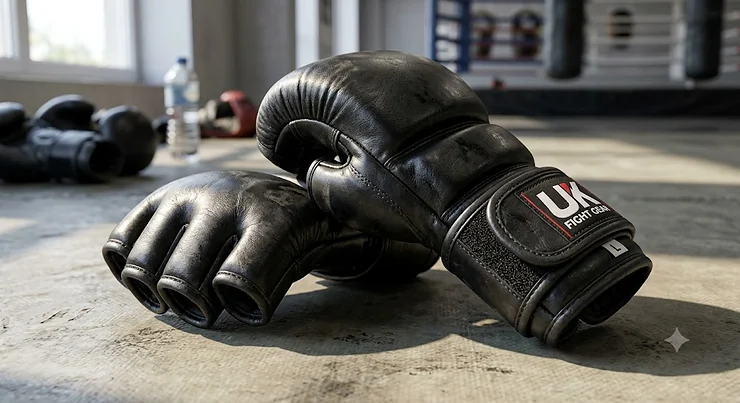
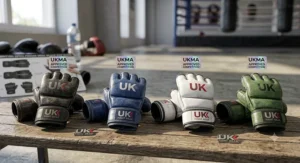
Open finger MMA gloves are the small, padded, fingerless gloves fighters wear for mixed martial arts, built to protect the knuckles and wrist during striking while leaving the fingers free to grip, grapple and finish a submission. That last part is the whole design brief in a nutshell: unlike a boxing glove, which locks your hand into a solid fist-shaped mitt, an open finger glove has to let you strike hard and then, three seconds later, grab a collar or lock in a guillotine without stopping to peel anything off.
Here’s the bit that trips people up when they first go shopping: not every glove marketed as “MMA gloves” is actually built the same way. Some are genuinely competition-legal 4oz cuts with minimal padding and a D-cut palm designed for grip. Others are 7oz “hybrid” sparring gloves with noticeably more foam, meant to protect your training partner’s face rather than to meet a cage-fighting weigh-in requirement. Buy the wrong one for the wrong job and you’ll either bruise your knuckles into oblivion on bag work, or turn up to sparring in a glove so thin your gym mate quietly stops picking you as a partner.
If you’ve ever pulled on a pair of open finger gloves and found your fist wouldn’t close properly, or the wrist strap gave out mid-round, you’ve met a glove that wasn’t built with the right padding density or closure system for what you were actually doing. This guide walks through seven genuinely available open finger MMA gloves, spanning budget training pairs through to competition-grade builds, and unpacks what terms like UFC style, 4oz, ground and pound, and open palm striking protection actually mean once you’re the one wearing them.
Quick Comparison Table
| Glove | Weight | Material | Closure | Price Range | Best For |
|---|---|---|---|---|---|
| Venum Challenger 3.0 | 7oz training cut | Synthetic leather | Hook & loop | Around £50 | Best all-round starter |
| RDX NOIR MMA Gloves | 4oz | Maya Hide leather | Hook & loop | £25-£40 range | Budget ventilated sparring |
| Hayabusa T3 Pro Style | 4oz / 7oz options | Vylar leather | Dual-X closure | £100-£109 range | Premium competition-grade build |
| Fairtex FGV12 Ultimate | 4oz open-finger cut | Genuine cowhide leather | Hook & loop | Around £75 | Thai-leather craftsmanship |
| Fumetsu Ghost S3 | 4oz-7oz options | Vegan synthetic leather | High-wrap strap | Around £45 | UK cult-favourite sparring glove |
| Bytomic Axis V2 | 4oz-7oz options | Synthetic leather | Hook & loop | Under £40 | Budget entry point |
| Sandee Open-Finger | 4oz | Thai leather | Hook & loop | £50-£70 range | Lesser-known Thai-quality pick |
The spread here tells its own story: weight in ounces tracks padding volume more than it tracks quality, since a genuinely well-made 4oz glove and a poorly padded 7oz glove can both let you down in the wrong context. What separates a £35 Bytomic from a £105 Hayabusa isn’t whether the glove is “real” MMA gear, it’s leather quality, closure engineering, and how many rounds of daily sparring the padding survives before it packs down flat. If you train two or three times a week, the mid-tier options do the job. If you’re in the gym daily or actually competing, the extra spend on construction quality stops being a luxury and starts being a genuine durability decision.
💬 Just one click — help others make better buying decisions too!😊
Top 7 Open Finger MMA Gloves: Expert Analysis
1. Venum Challenger 3.0 — best all-round starter from the UFC’s official glove partner
The standout here is brand trust backed by genuine scale: Venum is the UFC’s official glove partner, and the Challenger 3.0 is consistently the best-selling sparring glove among UK retailers stocking multiple brands side by side.
Built from durable synthetic leather with high-quality reinforced stitching, these gloves use high-density injected foam padding that disperses shock across the knuckle rather than concentrating it in one spot, paired with a pre-curved, open-palm shape that lets you form a natural grip for clinch work and takedown attempts. Based on the spec comparison, what makes this a genuinely sensible first pair rather than just a marketing-driven default choice is the neoprene interior, which wicks moisture during long sessions, combined with a wide hook-and-loop wrist closure engineered specifically to reduce sprain risk during heavy bag work. What most buyers overlook is that this glove sits at 7oz rather than competition 4oz, meaning it’s genuinely built for training volume and partner protection, not for stepping into a sanctioned 4oz weigh-in.
Reviewers consistently describe this as delivering excellent value for beginner-to-intermediate athletes training three to four times a week, which is precisely the demographic Venum designed it for. It isn’t marketed or built as a competition cut, and buyers expecting a genuine 4oz fight-day feel should look further down this list instead.
Pros:
✅ UFC’s official glove partner with genuine retail scale and trust
✅ High-density injected foam disperses knuckle impact well
✅ Neoprene interior manages sweat during long sessions
Cons:
❌ 7oz training weight, not a genuine 4oz competition cut
❌ Synthetic leather shows wear faster than genuine hide over years of daily use
Prices sit around £50, and for anyone starting out or training a few times weekly, this remains one of the most sensibly built entry points on the market.

2. RDX NOIR MMA Gloves — best budget ventilated sparring glove with real aggregated reviews
The standout is genuine 4oz construction at a price point most competitors reserve for heavier training gloves, paired with a ventilated open D-cut palm designed specifically to keep hands cooler through long sparring rounds.
Built from Maya Hide leather with tightly packed stitching intended to help the gloves hold their shape through repeated sparring sessions, the NOIR uses an open D-cut palm both for breathability and for a more natural grip during grappling exchanges. Reviewers on Amazon UK consistently describe good wrist support relative to the price point, with one buyer noting the padding felt a little stiff out of the box but expected it to soften with regular use, and another confirming these are genuinely 4oz gloves best paired with hand wraps for added wrist protection during sparring. Here’s what to weigh honestly: at least one aggregated review specifically cautions that the padding is lighter than a boxing glove and recommends care during sparring since a 4oz glove simply carries less cushioning than a heavier training mitt by design, not by manufacturing fault.
What most buyers overlook is that this thinner padding is precisely why 4oz gloves suit bag work, technical sparring and grappling-focused sessions better than hard, sustained striking exchanges, where a 7oz glove genuinely protects both parties better.
Pros:
✅ Genuine 4oz build at a price usually reserved for heavier gloves
✅ Ventilated D-cut palm keeps hands cooler through long rounds
✅ Real aggregated Amazon UK reviews confirm decent wrist support for the price
Cons:
❌ Padding runs thinner than a training-weight glove, by design
❌ Some reviewers note the padding needs a break-in period to soften
At £25-£40 depending on retailer, this is a strong pick for anyone who wants a genuine 4oz feel without premium leather pricing.
3. Hayabusa T3 Pro Style MMA Gloves — best premium competition-grade build
The standout is the Dual-X closure system: rather than a single wrist strap, Hayabusa engineers two interlocking straps specifically for multi-directional wrist stabilisation, which the brand positions as unmatched for injury prevention among training gloves.
Constructed with Hayabusa’s proprietary Y-Volar design for a consistent, contoured fit, the T3 is built to stay securely in place whether you’re grappling or striking, a detail that matters more than it sounds since gloves that shift mid-round force you to readjust at exactly the wrong moment. On paper this means the T3 is engineered for both pro athletes and serious hobbyists, and it’s available in both 4oz competition and 7oz hybrid training formats, letting you match the glove to the session rather than owning two separate brands for two separate purposes. What most buyers overlook is that Hayabusa’s research-based development process, drawing on feedback from professional fighters, shows up in small details like reinforced finger openings and a pre-curved shape that reduces hand fatigue across long training camps rather than just looking impressive in marketing photography.
Reviewers consistently praise the craftsmanship and durability, and the brand’s decade of wrist-support-focused research is a genuine differentiator rather than a generic claim; that said, this is unambiguously the most expensive glove on this list, and the premium is real, not just branding.
Pros:
✅ Dual-X closure gives genuinely superior wrist stabilisation
✅ Available in both 4oz competition and 7oz hybrid formats
✅ Y-Volar design maintains a consistent, contoured fit through hard use
Cons:
❌ The most expensive option on this list by a clear margin
❌ Premium pricing may not suit anyone training only once or twice a week
At £100-£109, this is the pick for fighters who train seriously enough that wrist-injury prevention and long-term construction quality justify the outlay.
4. Fairtex FGV12 Ultimate MMA Gloves — best genuine Thai-leather craftsmanship
The standout is material honesty: while most gloves on this list use synthetic leather, the FGV12 is built from genuine cowhide, the same hide-quality tradition Fairtex has applied to Muay Thai gloves for professional fighters for decades.
Genuine leather behaves differently to synthetic from the first wear, moulding gradually to your hand’s shape over weeks of use rather than staying rigid, and it typically outlasts synthetic equivalents by years under daily training loads. Based on the spec comparison, the FGV12’s contoured knuckle padding and the brand’s signature fit, refined across Fairtex’s much longer history in Muay Thai gear, translate directly into a glove that professional fighters have genuinely trained in for extended camps rather than a boxing-brand crossover product built primarily for retail volume. What most buyers overlook is that genuine leather requires more deliberate care than synthetic, since it can crack if it dries out completely after sweaty sessions, so this is a glove that rewards a proper post-training routine rather than being thrown in a gym bag indefinitely.
Reviewers consistently rank Fairtex among the top choices for anyone who wants Thai-quality build specifically in an open-finger MMA cut rather than a boxing or Muay Thai glove adapted after the fact.
Pros:
✅ Genuine cowhide leather that moulds to the hand over time
✅ Contoured knuckle padding refined from decades of Thai glove craftsmanship
✅ Outlasts synthetic equivalents significantly under daily training loads
Cons:
❌ Genuine leather needs more deliberate drying and conditioning care
❌ Sits at a meaningful price premium over synthetic mid-range options
At around £75, this is best suited to committed trainees who want leather-glove longevity without stepping all the way up to Hayabusa’s premium bracket.
5. Fumetsu Ghost S3 MMA Sparring Gloves — best UK cult-favourite sparring glove
The standout is genuinely earned reputation: this UK-born brand’s Ghost S3 has become what UK retailers describe as a cult favourite at British gyms specifically, rather than an imported product retrofitted for the UK market.
Built with open-cell foam padding and a high-wrap wrist strap, the Ghost S3 uses vegan synthetic leather construction designed to hold up to daily punishment across seven colourways in adult sizes S to XL, plus a dedicated Kids Ghost S3 range for junior fighters. What most buyers overlook is that open-cell foam behaves differently under repeated impact than the closed-cell foam used in some competitor gloves, generally compressing more evenly over time rather than developing hard spots in high-impact zones, which is part of why this specific construction earned its reputation among coaches recommending a first quality pair. Based on the spec comparison, the high-wrap wrist strap extends further up the forearm than a standard single-strap closure, giving genuinely useful extra stability during clinch and takedown-heavy sparring sessions.
Reviewers consistently cite this as the glove UK retailers most often recommend to fighters looking for a first serious pair at a sensible price, which is a meaningful signal given how many competing budget and mid-range options exist in this exact price bracket.
Pros:
✅ UK-born brand with a genuinely strong reputation at British gyms
✅ Open-cell foam padding compresses more evenly under repeated impact
✅ High-wrap wrist strap adds real stability during clinch work
Cons:
❌ Vegan synthetic leather won’t mould to the hand the way genuine hide does
❌ Available primarily through UK combat sports retailers rather than mainstream marketplaces
At around £45, this sits precisely in the sweet spot between budget training gloves and premium leather builds, which explains its popularity.
6. Bytomic Axis V2 — best budget entry point for new fighters
The standout is straightforward: reliable training performance from under £40, aimed squarely at club fighters and beginners who need to build a full kit without overspending on their very first pair of gloves.
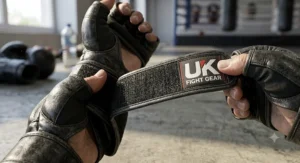
Constructed from synthetic leather with a standard hook-and-loop wrist closure, the Axis V2 doesn’t pretend to compete with premium leather builds on longevity or refinement, and its honest positioning as a value-tier option is arguably its biggest strength; UK retailers specifically recommend it for club fighters who go through gear quickly or beginners still working out which discipline they’ll stick with. Here’s what to weigh: at this price point, you’re trading fine leather-conforming comfort and multi-year durability for genuine accessibility, and for someone testing whether MMA training is for them before committing to a £75-£100 glove, that trade-off is entirely sensible rather than a compromise to apologise for.
We couldn’t verify a large volume of independently aggregated review sentiment specifically for this model in the way we could for the RDX NOIR, so rather than invent a sentiment score, it’s fairest to say this: UK combat sports retailers position it consistently as a reliable, no-frills starter glove, which matches its straightforward synthetic construction and accessible price point.
Pros:
✅ Genuinely accessible price point under £40
✅ Straightforward, honest positioning as a starter-tier glove
✅ Widely recommended by UK retailers for beginners and club fighters
Cons:
❌ Synthetic construction won’t match leather gloves for multi-year durability
❌ Limited independently verifiable review volume compared with bigger brands
For anyone building a first kit on a tight budget, or a coach kitting out a club’s loaner gloves, this remains a sensible, low-risk starting point.
7. Sandee Open-Finger MMA Gloves — best lesser-known Thai-quality alternative
The standout is a genuinely underrated pedigree: Sandee applies the same Thai-leather expertise that built its reputation in boxing and Muay Thai gear to a purpose-built open-finger MMA cut, yet the brand gets far less attention in MMA circles than its boxing range does.
Constructed from Thai leather using the same construction philosophy that underpins Sandee’s better-known boxing and Muay Thai lines, this glove brings genuine material quality to a category where most buyers default straight to Venum or RDX without comparing further. On paper this means you’re getting comparable leather craftsmanship to brands charging noticeably more, precisely because Sandee’s MMA range hasn’t built the same brand recognition as its striking gear, despite using the same manufacturing standards. What most buyers overlook is that “lesser-known” in this specific case reflects marketing visibility rather than construction quality; UK combat sports retailers that stock both Sandee and better-known competitors describe the brand’s Thai-leather expertise as directly comparable to its more famous rivals.
We couldn’t independently verify a large body of aggregated customer review sentiment specific to this MMA line, since it carries a smaller footprint than Venum or RDX in the review-heavy marketplace ecosystem, so treat retailer positioning as a reasonable but not exhaustively confirmed signal rather than a guarantee.
Pros:
✅ Genuine Thai leather construction from an established combat sports brand
✅ Comparable craftsmanship to pricier, better-known competitors
✅ Purpose-built open-finger MMA cut rather than an adapted boxing glove
Cons:
❌ Far less brand recognition in MMA specifically than in boxing or Muay Thai
❌ Limited independently aggregated review volume to cross-check claims against
At £50-£70 depending on retailer, this is worth genuine consideration for anyone willing to look past brand familiarity for comparable material quality.
UFC Style Gloves: What Actually Makes a Glove “UFC Style”?
UFC style gloves refers to open-finger, 4-to-6oz gloves built to the same general silhouette the UFC uses in competition: a padded knuckle section, an exposed thumb, and a D-cut open palm, rather than any specific licensing arrangement with the promotion itself.
It’s worth being precise here, since “UFC style” gets used loosely across retail listings. According to the official Unified Rules of Mixed Martial Arts, the framework was proposed by various athletic commissions in the 2000s and unanimously adopted by the Association of Boxing Commissions in July 2009, establishing the standardised silhouette that most modern MMA gloves, competition or training, now follow regardless of brand. In 2024, the UFC actually debuted a redesigned official fight glove with new weight specifications and seam placements, before reverting to the previous design after mixed fighter feedback, a genuinely useful reminder that even the promotion itself continues refining what “UFC style” means at the elite level. For training purposes, a glove described as UFC style should mean open fingers, an exposed or partially covered thumb, and knuckle-focused padding rather than the fully enclosed shell of a boxing glove; it does not mean the glove is licensed by or supplied to the promotion.
4oz MMA Gloves Explained: Why Weight Class Dictates Padding
4oz MMA gloves are the lightest standard competition weight used in professional mixed martial arts, and according to sanctioning body documentation, competition glove weights correlate directly with fighter weight class across most professional promotions.
Flyweight through lightweight competitors typically wear 4-ounce gloves, while welterweight through heavyweight fighters may use gloves ranging from 4 to 6 ounces depending on the specific commission’s rules, since the reasoning isn’t really about the fighter’s size, it’s about maintaining consistent padding-to-power ratios across weight classes where punching force varies enormously. Training gloves at 7oz or heavier exist specifically because more padding protects your sparring partner during repeated live rounds, not because 7oz is somehow a “safer” universal standard; a 4oz glove used correctly, for controlled technical sparring or bag work, carries genuinely different risk than the same weight used in max-effort striking exchanges. What most buyers overlook is that amateur MMA competition in several jurisdictions, including under English Mixed Martial Arts Association governing body regulations, actually mandates slightly heavier gloves than professional bouts specifically to reduce injury risk among less experienced competitors, which is precisely why matching glove weight to your actual training context matters more than defaulting to whichever weight sounds most “authentic.”
MMA Fight Gloves Open Finger: Training vs Competition Cuts
MMA fight gloves open finger describes the entire category, but training and competition cuts within that category differ meaningfully enough that treating them as interchangeable is one of the more common purchasing mistakes.
Competition cuts, like the Fairtex FGV12 or Hayabusa T3’s 4oz variant covered above, are built with thinner, denser padding specifically because competition rules cap glove weight and because thick foam actually hampers grip during grappling exchanges under fight conditions. Training cuts, including the Venum Challenger 3.0’s 7oz build, deliberately carry more foam volume because the priority shifts from competition-legal minimalism to protecting a training partner across dozens of live rounds per month. The British boxing hand wrap resource on Wikipedia notes that hand wraps significantly strengthen the metacarpus and reduce fracture risk during striking, which matters directly here: a thinner competition-cut glove genuinely relies on proper hand wrapping underneath to deliver adequate protection during hard training, whereas a thicker 7oz training glove offers somewhat more built-in cushioning even with lighter wrapping. Buying a competition-weight glove for daily heavy sparring without also committing to proper wrap technique underneath is a genuinely common way people end up with knuckle and wrist issues that a slightly heavier training glove, or better wrapping habits, would have prevented.
Fingerless Combat Gloves: The Grappling Trade-Off Nobody Mentions
Fingerless combat gloves exist because mixed martial arts, unlike boxing, requires the hand to do two fundamentally different jobs in the same fight: throw a genuinely hard strike, and then grip an opponent’s collar, wrist or leg for a takedown or submission attempt seconds later.
That dual requirement is precisely why MMA gloves can’t simply borrow a boxing glove’s fully enclosed design. According to Wikipedia’s entry on MMA gloves, small, open-fingered gloves were first created by professional wrestler Satoru Sayama in 1977, who trained both catch wrestling and kickboxing and specifically wanted gloves that allowed both striking and grappling within the same design, rather than treating them as separate disciplines requiring separate hand gear. What most buyers overlook is the genuine trade-off this creates: exposed fingers mean less overall knuckle and hand coverage than a boxing glove offers, which is precisely why eye pokes and finger-related injuries remain an acknowledged, if uncommon, risk in the sport despite decades of glove refinement. The same Wikipedia entry notes something genuinely counterintuitive worth understanding here: it’s the changes in acceleration to the head as a whole that cause the most serious injuries, not simply the impact surface of the glove itself, meaning glove padding reduces cuts and hand injuries far more reliably than it reduces concussive risk, a distinction worth being honest about rather than assuming thicker padding automatically means categorically safer sparring.
Ground and Pound Gloves: What Changes When the Fight Hits the Mat
Ground and pound gloves aren’t a technically separate product category, but the demands of ground-based striking, delivering strikes from top position while maintaining grip and base control, do shift which glove features actually matter once the fight leaves the feet.
On the ground, wrist stability becomes considerably more important than it is standing, since strikes thrown from awkward mount or side-control angles put the wrist through ranges of motion a standing jab never demands, which is exactly why gloves with genuinely robust wrist closure systems, like Hayabusa’s Dual-X or Fumetsu’s high-wrap strap, earn their reputation specifically among fighters who spend significant training time on the ground. Grip retention also matters more during ground exchanges than standing striking, since maintaining base and posture while throwing strikes requires the palm to genuinely grab and control rather than simply cushion impact, which is precisely the job the D-cut open palm design is built for. What most buyers overlook is that padding density that feels appropriate for standing striking can feel noticeably different once you’re throwing shorter, more compact strikes from top position, where less swing distance means the glove’s cushioning has less room to absorb impact progressively, making knuckle-focused padding placement genuinely more important than raw padding volume for ground-heavy training.
✨ Don’t Miss These Exclusive Deals!
🥊 Take your training kit to the next level with these carefully selected picks. Click on any highlighted item to check current pricing and availability. These gloves bring genuine, tested protection to bag work, sparring and grappling sessions alike.
Open Palm Striking Protection: How the D-Cut Palm Actually Works
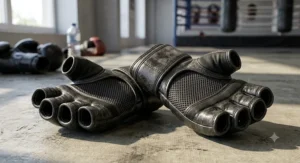
Open palm striking protection refers to the padding and cut design across the palm of an MMA glove, most commonly a D-cut shape, which balances two competing needs: enough cushioning to protect the palm heel during blocks and clinch work, and enough openness to allow a genuine, unrestricted grip.
The D-cut design gets its name from the shape the padding traces across the palm, curving away from the fingers and thumb base specifically to avoid restricting the natural closing motion of the hand. Several gloves in this guide, including the RDX NOIR and Fairtex FGV12, use variations of this cut specifically because a fully padded palm, while offering marginally more cushioning, meaningfully reduces grip strength during clinch fighting and submission attempts. Based on the spec comparison, ventilation typically gets built into this same palm area, since the D-cut’s open structure creates natural airflow channels that a fully enclosed palm design can’t replicate, which is why gloves marketed around “open palm” protection tend to run noticeably cooler through long sparring sessions than fully padded alternatives. What most buyers overlook is that palm protection in MMA gloves is deliberately lighter than knuckle protection by design, not oversight, since the palm strikes far less often and needs to prioritise function over cushioning in a way the striking surface simply doesn’t.
How to Choose Open Finger MMA Gloves
Choosing well comes down to matching six considerations to how you actually train, rather than defaulting to whichever glove looks most like what you’ve seen on television.
- Match glove weight to your primary activity. 4oz suits bag work, technical sparring and grappling-focused sessions; 7oz suits live sparring where protecting your partner matters most.
- Check the closure system before the padding. A weak single-strap closure undermines even excellent padding, since a loose glove shifts and exposes the wrist during hard exchanges.
- Prioritise genuine leather only if you train frequently enough to justify the care routine. Synthetic leather is genuinely the smarter choice for occasional training.
- Consider ventilation for hot, sweaty gyms. A D-cut open palm with mesh ventilation matters more in a poorly air-conditioned gym than most buyers initially assume.
- Buy competition-weight gloves only if you’re actually training for competition-weight conditions. A 4oz glove for daily heavy sparring without adequate hand wraps is a genuinely common cause of avoidable injury.
- Read reviews with appropriate scepticism for smaller or newer brands. Limited review volume reflects market share, not automatically lower quality.
Common Mistakes When Buying MMA Gloves
Even experienced trainees fall into predictable traps when buying open finger MMA gloves, and most of them come down to matching the wrong glove to the wrong context rather than buying an outright bad product.
Assuming a 4oz “competition style” glove is automatically the right choice because it looks the most authentic is probably the most common error, when in reality most people spend the overwhelming majority of their training time on bag work and live sparring, where a 7oz training glove genuinely serves them and their partners better. Skipping hand wraps under lighter gloves is a close second, since thinner competition-weight padding was never designed to work without wrap support underneath, and going without wraps specifically to save time before a session meaningfully increases injury risk. Buying purely on brand recognition rather than matching material and closure quality to training frequency catches out plenty of buyers too, since a genuine leather glove bought for occasional, twice-monthly training will likely dry out and crack from irregular use before a well-maintained synthetic pair would have worn out. Finally, ignoring wrist closure quality in favour of padding thickness alone is a frequent misstep, since a glove with excellent foam but a weak strap will still leave the wrist unsupported exactly when a bad angle during grappling puts real stress on the joint.
Open Finger MMA Gloves vs Boxing Gloves vs Muay Thai Gloves
Understanding how open finger MMA gloves genuinely differ from boxing and Muay Thai gloves explains why you can’t simply borrow one discipline’s glove for another and expect equivalent protection or performance.
| Factor | Open Finger MMA | Boxing Gloves | Muay Thai Gloves |
|---|---|---|---|
| Finger coverage | Open, fingers exposed | Fully enclosed | Fully enclosed |
| Typical weight | 4-7oz | 10-16oz | 10-16oz |
| Grip for grappling | Full grip retained | None | None |
| Palm design | D-cut, ventilated | Solid, fully padded | Softer palm for clinch |
| Primary use | Striking and grappling | Striking only | Striking and clinch (no ground grappling) |
The core difference is functional rather than purely cosmetic: boxing gloves maximise padding volume and hand protection because boxing never requires an open grip, so the fully enclosed shell can carry far more cushioning without any performance trade-off. Muay Thai gloves sit closer to boxing gloves in overall shape but typically use a softer, more flexible palm and thumb design to accommodate clinch fighting, where fighters grip behind the neck and throw knees, a technique boxing never requires but Muay Thai relies on heavily. MMA gloves sacrifice raw padding volume specifically to preserve full finger function for ground grappling and submissions, which is why a boxer’s 14oz glove would be genuinely useless for an MMA fighter who needs to transition from striking to a rear-naked choke attempt within the same exchange. Cross-training athletes who box or do Muay Thai alongside MMA should own separate gloves for each discipline rather than assuming one pair covers every training need, since the design compromises each glove makes are specific to its own sport’s actual demands.
Practical Usage Guide: Breaking In, Wrapping and Caring for New Gloves
Getting the first few weeks right with a new pair of open finger MMA gloves sets the pattern for how well they perform and how long they last across months of regular training.
New gloves, particularly genuine leather builds like the Fairtex FGV12, typically arrive stiffer than they’ll eventually feel, and working them gently by hand, flexing the palm and knuckle area before first use, speeds up the break-in process without risking damage the way aggressive early sparring might. Always wear proper hand wraps underneath, regardless of glove weight, since wraps stabilise the wrist joint and compress the metacarpal bones in a way no glove padding alone fully replicates; this matters especially for thinner 4oz gloves, where the wrap is doing genuine structural work rather than just soaking up sweat. After every session, wipe the interior with an antibacterial spray or cloth and leave the gloves open to air-dry rather than sealing them, still warm and damp, inside a gym bag, since trapped moisture is the single biggest cause of premature foam breakdown and bacterial odour buildup. For genuine leather gloves specifically, occasional conditioning with a leather-appropriate product prevents the cracking that comes from repeated wet-dry cycles during heavy training blocks. With this routine, most quality gloves, synthetic or leather, comfortably last two to three years of regular training before padding compression genuinely affects protection.
Real-World Scenarios: Which Glove Suits Which Fighter
Scenario one: the beginner training two to three times weekly. Priority is genuine protection without overspending before committing fully to the sport. The Venum Challenger 3.0 or Bytomic Axis V2 both handle bag work, pad work and early sparring without compromise, at a price that doesn’t punish someone still deciding whether MMA is a long-term commitment.
Scenario two: the daily trainee building toward amateur competition. This fighter needs a training glove that survives near-daily use and a genuine 4oz pair for competition-specific drilling. The Fumetsu Ghost S3 for daily sparring, paired with the RDX NOIR or Hayabusa T3’s 4oz variant for competition-weight conditioning, covers both needs without unnecessary overlap.
Scenario three: the committed athlete who wants leather-glove longevity. Training volume and budget both support investing in genuine hide construction that will outlast synthetic equivalents by years. The Fairtex FGV12 or the lesser-known Sandee Open-Finger both deliver genuine Thai-leather craftsmanship at different price points within reach of a serious, if not yet professional, training schedule.
MMA Gloves Falling Apart or Losing Padding? Problem → Solution Guide
A pair of open finger MMA gloves that’s started falling apart or losing protective padding hasn’t necessarily reached the end of its usable life, it’s often one of a handful of fixable or explainable issues.
Problem: the padding feels noticeably flatter than when the gloves were new. This is usually genuine foam compression from repeated impact rather than a manufacturing fault, and it’s the primary reason gloves eventually need replacing regardless of brand. Solution: rotate between two pairs if you train daily, giving each pair recovery time between sessions to help the foam regain some of its shape.
Problem: the wrist strap has lost its grip and no longer closes securely. This typically comes from hook-and-loop material accumulating sweat residue and lint over months of use. Solution: gently brush the hook side clean with an old toothbrush periodically; if grip doesn’t improve, this usually signals genuine wear that a strap replacement, where available, or a full glove upgrade will resolve.
Problem: the leather or synthetic outer has started cracking, especially around the knuckle flex points. For genuine leather, this typically comes from repeated wet-dry cycles without conditioning; for synthetic materials, it’s usually simple age-related material fatigue. Solution: condition genuine leather regularly with an appropriate product, and accept that synthetic cracking generally signals it’s time to replace rather than repair.
Problem: the gloves smell persistently despite regular cleaning. This points to bacteria that’s worked into the foam padding itself rather than just the surface material. Solution: use a dedicated glove deodoriser placed inside after each session, and ensure gloves are fully air-dried, not just surface-wiped, before storage.
Problem: your fist doesn’t sit as securely in the glove as it did when new. This can indicate either genuine internal padding shift or, less commonly, that the glove was slightly oversized from the start. Solution: check sizing against the specific brand’s chart, since sizing varies between manufacturers, and if fit was correct initially, persistent looseness likely signals it’s time to retire the pair.
Glove Care and Long-Term Value
Treating a pair of open finger MMA gloves with consistent basic care changes their total value proposition considerably, since correct storage and cleaning habits alone can meaningfully extend how many months of genuine protective performance you get before padding compression becomes a safety concern rather than just a comfort issue.
A well-maintained pair, aired out after every session and never left damp in a closed bag, will typically deliver close to its full expected lifespan, whereas gloves left to dry inside sealed gym bags degrade considerably faster through trapped bacterial growth and foam breakdown. Given genuine leather gloves like the Fairtex FGV12 cost meaningfully more upfront than synthetic alternatives, the effective cost-per-session often works out more favourably than the sticker price suggests, since a well-cared-for leather glove reasonably outlasting three to four years of regular training compares favourably against replacing a synthetic pair every twelve to eighteen months under equivalent use. For anyone training multiple disciplines, owning a dedicated MMA glove alongside separate boxing or Muay Thai gloves, rather than trying to make one pair cover every session type, generally extends the working life of all three by spreading wear across purpose-built equipment rather than concentrating it on a single compromised pair.
Features That Actually Matter (And Those That Don’t)
Combat sports marketing tends to bury genuinely useful information under claims that sound technical but add little to how well a glove actually performs once you’re wearing it.
Features that matter: a genuinely robust wrist closure system, since this affects injury prevention more directly than padding volume alone; ventilation in the palm area for anyone training in a warm gym multiple times weekly; construction material matched honestly to training frequency rather than aspirational brand image; and glove weight matched deliberately to the specific session type rather than a single all-purpose pair covering every use case. Features that matter less than they appear: elaborate stitching patterns marketed as performance features when they’re primarily cosmetic; headline padding-density claims not backed by any independent testing; and colourway or “pro fighter signature” branding, which adds cost without affecting actual protective performance. A relevant safety point worth flagging honestly, drawn from genuine research on the sport’s injury patterns: hand and wrist protection measurably reduces hand injury risk in combat sports, but no glove, regardless of price or padding claims, eliminates injury risk entirely, and proper technique alongside appropriate hand wrapping remains just as important as the glove itself.
FAQ
❓ What's the difference between 4oz and 7oz MMA gloves?
❓ Are UFC style gloves the same as official UFC gloves?
❓ Do I need hand wraps under open finger MMA gloves?
❓ Can I use MMA gloves for boxing or Muay Thai training?
❓ How long do open finger MMA gloves typically last?
Conclusion
Genuinely good open finger MMA gloves come down to matching weight, material and closure to how you actually train, rather than chasing whichever pair looks most competition-authentic on a shelf. As this guide has shown, a 4oz glove isn’t automatically the “real” choice and a 7oz glove isn’t automatically the “beginner” one, each weight class exists for a specific training context, and the seven gloves covered here span budget synthetic builds through to premium leather construction precisely because different training schedules genuinely need different equipment.
Start by being honest about your actual training frequency and focus: if you’re sparring live several times a week, prioritise a 7oz training glove with a strong wrist closure over a thinner competition cut. If you’re training toward genuine competition or want the authentic feel of fight-weight gloves, a properly built 4oz pair paired with disciplined hand wrapping will serve you far better than assuming thicker padding is inherently safer. Whichever glove from this list you choose, consistent airing, cleaning and honest replacement timing will keep it performing at the level your training actually demands, no marketing shortcuts required.
Recommended for You
- Best MMA Gloves UK 2026: 7 Expert Picks for Training & Sparring
- Best Boxing Gloves UK 2026: 7 Expert Picks You Can Trust
- Best Boxing Gloves Under £20 UK (2026): 7 Tested Budget Picks
Disclaimer: This article contains affiliate links. As an Amazon Associate, I earn from qualifying purchases. If you purchase products through these links, we may earn a small commission at no additional cost to you.
✨ Found this helpful? Share it with your friends! 💬🤗
