
In This Article
Your hands do more heavy lifting than any other body part in the gym, and yet they’re usually the last thing anyone thinks about buying gear for. Then the first deadlift PB happens, the bar rips a flap of skin off your palm, and suddenly weightlifting gloves for women stop being a “nice to have” and become an emergency purchase between sets.
Here’s the 40-second version: weightlifting gloves for women are hand-shaped protective accessories, cut to a narrower palm and shorter finger length than unisex gym gloves, designed to shield skin from barbell friction while some models add a wrist wrap for joint stability during heavy pulls and presses.
That narrower cut matters more than most people assume. Slip a men’s medium onto a typical woman’s hand and you get bunched fabric across the palm — exactly the kind of loose material that causes blisters rather than preventing them, since blisters develop from repeated friction damaging the skin. A properly fitted glove removes that friction point entirely.
This guide walks through seven real, currently available options spanning budget microfiber pairs to premium leather wrist-wrap gloves, breaks down exactly how leather and synthetic materials perform differently under a loaded bar, and shows you how to measure your own hand rather than guessing your way through a size chart. No fluff, no manufactured reviews — just honest analysis built from real product specs and aggregated customer feedback.
Quick Comparison Table
| Product | Material | Wrist Support | Price Range | Best For |
|---|---|---|---|---|
| Harbinger Pro Wristwrap Gloves 3.0 | Genuine leather | Integrated 1.5mm wrap | £25-£35 range | Heavy lifting & wrist stability |
| RDX Women’s Leather Gloves | Leather with gel padding | Short EZ hook-loop | Under £20 range | All-round leather value |
| Harbinger FlexFit Wash & Dry | Polyester blend | Wrap-around closure | £20-£30 range | Machine-washable convenience |
| Trideer Wrist Support Gloves | Microfiber | Extra-long adjustable | Under £15 range | Budget wrist stabilisation |
| ATERCEL Snug-Fit Gloves | Synthetic mesh | None (snug cuff) | Under £15 range | Precise hand sizing |
| RDX Long Wrist Support Grips | Ventilated synthetic | Long wraparound strap | Under £20 range | Pull-ups & CrossFit-style training |
| Bear Grip Gym Gloves | Silicone-palm synthetic | Adjustable wrap | Under £15 range | Budget silicone grip |
Looking at the spread above, the split isn’t really budget versus premium — it’s leather versus synthetic, and wrist wrap versus none. If you’re deadlifting or overhead pressing near your one-rep max, the Harbinger Pro Wristwrap Gloves 3.0 or RDX Long Wrist Support Grips earn their keep through wrist stabilisation alone. If you’re doing general strength circuits or CrossFit-style metcons, a lighter synthetic pair like the ATERCEL Snug-Fit Gloves won’t feel like you’re wearing oven mitts between burpees.
💬 Found a pair that looks right for you already? Scroll down to check current pricing before it changes!
Top 7 Weightlifting Gloves for Women: Expert Analysis
1. Harbinger Pro Wristwrap Gloves 3.0 — best overall wrist stability for heavy lifts
The standout here is the built-in 1.5mm tapered wrist wrap, which locks your wrist into a safer lifting angle rather than leaving it to flap around under load. Dig into the spec sheet and you’ll find dual-layered genuine leather palms, double-stitched seams, and 4-way stretch lycra across the back of the hand — the kind of construction that suggests this pair is built to survive years of barbell work rather than one gym membership cycle. Based on the spec comparison with the rest of this list, the tapered wrap is the differentiator: most competitors bolt on a generic strap, while Harbinger shapes theirs to actually cup the wrist joint.
Who should care? Anyone doing heavy compound lifts — deadlifts, bent-over rows, overhead press — where wrist hyperextension is a genuine injury risk rather than a marketing talking point. Reviewers consistently report that the wrap feels supportive without restricting bar-path feel, and a recurring theme in feedback is that the leather “breaks in” within the first few sessions to feel less stiff.
Pros:
- ✅ Tapered wrist wrap genuinely stabilises the joint under load
- ✅ Dual-layer leather palm resists tearing far longer than synthetic
- ✅ Breathable 4-way stretch lycra reduces sweat buildup mid-set
Cons:
- ❌ Sits at the premium end of this list price-wise
- ❌ Leather needs a short break-in period and hand-wash-only care
At around the £25-£35 range, this is a buy-it-once proposition rather than a disposable accessory — genuine leather that’s cared for properly should easily outlast two or three synthetic pairs, making the cost-per-year comparison far kinder than the upfront price suggests.
2. RDX Women’s Leather Gloves — best all-round leather pick for women
What most buyers overlook about this model is the ventilator mesh stretch-back combined with a genuinely padded leather palm — a combination that’s surprisingly rare at this price point, where brands usually pick one or the other. The abrasion-resistant leather with gel padding absorbs bar pressure on the meat of your palm, while the short-finger length keeps things low-bulk for chalk-and-barbell sessions.
Here’s what the spec sheet won’t tell you, but reviewers note: the slip-on design makes these genuinely faster to get on and off between exercises than wrap-heavy alternatives, which matters more than it sounds like during a busy superset. The EZ hook-and-loop wrist closure is shorter than a dedicated wrist wrap, so treat this as a comfort-and-grip glove rather than a joint-stabilisation tool.
Pros:
- ✅ Gel-padded leather palm cushions pressure without adding bulk
- ✅ Ventilator mesh back genuinely keeps hands cooler mid-session
- ✅ Fast slip-on, hook-and-loop closure for quick changeovers
Cons:
- ❌ Wrist closure offers comfort, not true joint stabilisation
- ❌ Leather palm needs a short break-in period like most leather gloves
Priced under the £20 mark typically, this sits as one of the better value-for-material trades on the list — genuine leather at a synthetic-adjacent price.
3. Harbinger FlexFit Wash & Dry — best machine-washable option
The standout advantage on the tin is right there in the name: this is one of the few gloves on the market actually designed to survive a washing machine cycle, thanks to a polyester-blend construction rather than leather. TechGel pockets sit in the palm and thumb specifically, targeting the two contact points that take the most repeated pressure during barbell and dumbbell work, while the open-back design trades some coverage for noticeably more airflow.
Based on the spec comparison, this is the pick for anyone who trains often enough that hygiene becomes a real factor — leather gloves generally shouldn’t go anywhere near a machine, so if you’re in the gym five or six days a week, having a wash-and-dry pair in rotation solves a problem the leather options simply can’t.
Pros:
- ✅ Machine washable — genuinely practical for frequent training
- ✅ TechGel pads target the exact palm and thumb pressure points
- ✅ Open-back design maximises breathability and flexibility
Cons:
- ❌ Less overall palm coverage than a full-leather glove
- ❌ Polyester blend wears down faster under very heavy daily use
In the £20-£30 range, this trades a little longevity for a lot of practicality — a fair swap if hygiene and convenience rank above raw durability on your priority list.
4. Trideer Wrist Support Gloves — best budget wrist wrap
The extra-long adjustable wrist strap is the headline feature, and on paper this means serious stabilisation for deadlifts, bench presses, and overhead work at a price point where most competitors skip wrist support entirely. Reviewers consistently note that the wrap genuinely locks the wrist through heavy pulling movements — a rarer find below the £15 mark than you’d expect.
What most buyers overlook about this model is the hexagonal anti-slip palm texture, which bites into a knurled bar noticeably better than the smoother synthetic patterns found on some rival budget gloves. The trade-off is breathability: microfiber doesn’t ventilate quite as well as open mesh-back designs, so expect slightly warmer hands during longer sessions.
Pros:
- ✅ Extra-long wrist strap adds real stability for heavy pulling movements
- ✅ Hexagonal grip pattern bites into knurled bars effectively
- ✅ Genuinely budget-friendly for a wrist-support glove
Cons:
- ❌ Microfiber runs warmer than mesh-heavy alternatives
- ❌ Padding is noticeably thinner than the leather options on this list
At under £15-£20, this is arguably the best-value wrist-support glove here — you’re paying budget prices for a feature that usually pushes gloves into the mid-range bracket.
5. ATERCEL Snug-Fit Gloves — best hand-sizing accuracy
The standout feature is sizing precision: five distinct options running from XSmall (6.3-6.9 inches) through to XLarge, rather than the generic S/M/L that leaves so many women’s hands swimming in excess fabric. On paper this means you can actually match the glove to your measured palm circumference instead of guessing between “women’s small” and “unisex small,” which is exactly the kind of inconsistency that causes bunching and blisters.
Aggregated review sentiment consistently flags the towelling panel and pull-loop as small but genuinely appreciated touches — quick sweat management and easy removal rather than fighting a tight glove off a sweaty hand. What most buyers overlook is that “snug fit” in the product description is not marketing language here; if you’re between sizes, sizing up is the documented recommendation from the brand itself.
Pros:
- ✅ Five precise sizes solve the “generic small” fit problem
- ✅ Towelling panel and pull-loop are small, genuinely useful touches
- ✅ Lightweight, breathable stretch fabric suits general training
Cons:
- ❌ No dedicated wrist wrap for heavy compound lifts
- ❌ Padding is modest for very heavy barbell-specific work
Sitting under the £15 mark, this is less about premium materials and more about nailing the fit — which, for many women, solves more of the “gloves feel wrong” complaint than any amount of extra padding would.
6. RDX Long Wrist Support Grips — best for pull-ups and CrossFit-style training
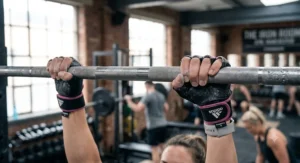
The open-back, grip-style design is the standout here rather than a conventional glove, and the long hook-and-loop wrist strap provides genuine wrist alignment through pull-ups, toes-to-bar, and other dynamic bodyweight-plus-load movements. Reviewers consistently note that the ventilated construction keeps hands notably cooler than closed-back alternatives during high-rep metcons, which matters when you’re moving between barbell work and gymnastics-style movements in the same session.
Here’s what the spec sheet won’t tell you: because this is a grips-style design rather than full palm coverage, hand protection is more targeted than total — you get support exactly where the bar contacts skin, with less bulk everywhere else. What most buyers overlook about this model is that sizing runs slightly generous, so smaller-handed women may want to size down from their usual measurement.
Pros:
- ✅ Long wrist strap gives genuine lockdown for pulling movements
- ✅ Open-back ventilation stays cooler through high-rep sessions
- ✅ Versatile across barbell, kettlebell, and pull-up training
Cons:
- ❌ Open-finger grip style offers less total hand coverage than palm gloves
- ❌ Sizing runs generous, so smaller hands may need to size down
At under £20 in most cases, this earns its spot for anyone whose training genuinely mixes barbell work with hanging and pulling movements, rather than sticking to one lifting style.
7. Bear Grip Gym Gloves — best budget silicone-grip alternative
The standout advantage is the silicone-patterned palm grip, which on paper translates to strong traction on knurled or smooth bars alike without needing chalk as a backup. The adjustable wrist wrap adds a layer of stability that’s genuinely uncommon at this price bracket, and the open workout-glove design keeps things light for general gym training rather than max-effort powerlifting.
Based on the spec comparison against the rest of this list, this sits closest to the ATERCEL pick in terms of use-case — general strength training and CrossFit-adjacent work rather than dedicated 1RM attempts — but the added wrist wrap gives it a slight edge for anyone who wants a touch more joint support without stepping up to leather pricing.
Pros:
- ✅ Silicone grip pattern provides confident traction without chalk
- ✅ Adjustable wrist wrap adds stability at a genuinely low price
- ✅ Affordable, multi-use design suits general training
Cons:
- ❌ Silicone palm patterns tend to smooth out faster than leather
- ❌ Less overall padding than the dedicated leather options on this list
Typically under £15, this is a sensible starter pair for anyone who isn’t yet sure whether gloves will become a permanent part of their kit.
Practical Usage Guide: Hand Sizing for Gloves and Getting the Perfect Fit
Getting hand sizing for gloves right is the single biggest factor in whether a pair actually works — more than material, more than brand, more than price. Here’s the method every manufacturer above actually uses: wrap a soft tape measure around your palm at its widest point, just below the knuckles and excluding the thumb, and note the circumference in inches. Most women’s gloves fall somewhere between 6 and 8.5 inches across the size range, with Small typically covering roughly 6.5-7.5 inches and Medium extending to around 7.5-8 inches, though exact ranges vary slightly by brand — always check the specific product’s chart rather than assuming sizes are universal.
A common mistake in the first 30 days of glove ownership is buying based on regular glove size (like a clothing or ski glove size) rather than this palm-circumference method — weightlifting gloves fit far more snugly than casual gloves, and a size that feels “roomy” in the shop will bunch and slip once your hands start sweating under a loaded bar. If you’re between two sizes, sizing down usually works better for leather (which stretches slightly with wear) and sizing up works better for thicker padded synthetic pairs that don’t have the same give.
Once you’ve got the right size, a short break-in period helps almost every glove on this list — leather especially. Wear them around the house for 20-30 minutes, flexing your fingers into a fist repeatedly, before your first real session; this softens the palm just enough to avoid feeling stiff mid-set. For maintenance, wipe leather palms down with a damp cloth after sweaty sessions and let them air-dry away from direct heat, which prevents the cracking that ruins leather gloves faster than actual wear does.
Real-World Scenarios: Matching Gloves to Your Training Style
If you’re a university student squeezing 45-minute strength sessions between lectures three times a week on a tight budget, the ATERCEL Snug-Fit Gloves or Bear Grip Gym Gloves make more sense than premium leather — you need reliable protection and accurate sizing, not a pair built to survive a decade of daily 1RM attempts.
If you’re training for a powerlifting meet and pulling heavy deadlifts twice weekly, wrist joint health becomes a genuine concern rather than an afterthought. The Harbinger Pro Wristwrap Gloves 3.0 or RDX Long Wrist Support Grips are worth the extra outlay here — the tapered wrap specifically reduces the hyperextension risk that comes with maximal pulls, and this is exactly the scenario where cheaper gloves without wrist support fall short.
If you’re a hybrid athlete mixing CrossFit-style metcons with Olympic lifting several times a week, hygiene and ventilation matter as much as protection. The Harbinger FlexFit Wash & Dry solves the sweat-and-bacteria problem that leather can’t, while the RDX Long Wrist Support Grips handle the pull-up and toes-to-bar elements of that training style better than a closed-palm glove ever could.
Buyer’s Decision Framework: Choosing Your Perfect Pair
If wrist pain or hyperextension worries you during heavy pulls, choose a dedicated wrist-wrap glove like the Harbinger Pro Wristwrap Gloves 3.0, because the tapered wrap is engineered specifically to hold the joint in a safer position under load — this is the single feature that most directly prevents injury rather than just protecting skin.
If you train five-plus times a week and hygiene is a real concern, choose a machine-washable synthetic pair like the Harbinger FlexFit Wash & Dry, because leather simply can’t handle repeated machine washing without degrading.
If your budget is under £15 and you just want reliable, well-fitted protection, choose the ATERCEL Snug-Fit Gloves, because the five-size range solves the fit problem that causes most glove complaints in the first place.
If your training mixes pull-ups, kettlebells, and barbell work in the same session, choose an open-back grip-style option like the RDX Long Wrist Support Grips, because targeted coverage with strong ventilation suits mixed-modal training better than a fully enclosed palm glove.
Leather vs Synthetic Material: Which Wins for Weightlifting Gloves?
The leather vs synthetic material debate isn’t really about which is “better” in the abstract — it’s about which trade-offs suit your training frequency and budget. Genuine leather, as used on the Harbinger Pro Wristwrap Gloves 3.0 and RDX Women’s Leather Gloves, offers superior long-term durability and a grip that reportedly improves with wear as the material moulds slightly to your hand shape. The trade-off is care: leather can’t be machine-washed, needs air-drying away from direct heat, and typically costs more upfront.
Synthetic materials — the microfiber on the Trideer Wrist Support Gloves, the polyester blend on the Harbinger FlexFit Wash & Dry, or the mesh on the ATERCEL Snug-Fit Gloves — trade some longevity for practicality. They’re generally cheaper, dry faster, and in the case of the FlexFit, can go straight into a washing machine. The compromise is that synthetic palm padding tends to compress and thin out faster under heavy, repeated barbell contact, meaning you’ll likely replace a synthetic pair more often than a well-maintained leather one.
| Factor | Leather | Synthetic |
|---|---|---|
| Durability under heavy barbell use | Excellent — improves with wear | Good — compresses over time |
| Washability | Hand-wash only, air-dry | Often machine washable |
| Upfront cost | Higher (£20-£35 range) | Lower (under £15-£30 range) |
| Break-in period | Short stiffness period | Minimal to none |
| Best For | Harbinger Pro Wristwrap Gloves 3.0, heavy lifters | Trideer Wrist Support Gloves, frequent trainers |
Reading across that table, the honest verdict is that leather wins on cost-per-year for anyone training three or more times a week long-term, while synthetic wins on convenience and lower barrier to entry for anyone still figuring out whether gloves suit their training at all. Neither material is objectively superior — the right call depends on how often you’re lifting and how much you value low-maintenance care over raw longevity.
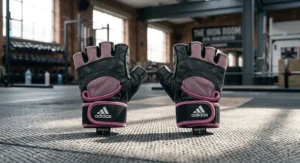
How to Choose Weightlifting Gloves for Women
Here’s a quick five-step framework for narrowing down your choice:
- Measure your palm circumference first. Skip guessing from clothing glove sizes — a tape measure around the widest part of your palm gives the only number that actually matters here.
- Decide if you need wrist support. If your lifts involve heavy deadlifts, overhead pressing, or bench work near your max, prioritise a wrap like the one on the Harbinger Pro Wristwrap Gloves 3.0.
- Weigh leather against synthetic based on training frequency. More than three sessions weekly long-term favours leather’s durability; occasional or varied training favours synthetic’s low maintenance.
- Check finger length and coverage. Half-finger designs like most on this list allow better bar feel than full-finger alternatives, which matter more for machine work than free weights.
- Confirm the closure style suits your workflow. Long wrist wraps take longer to put on between sets than slip-on hook-and-loop designs — factor in how much time you actually have during your training.
Weightlifting Gloves with Wrist Support: Do You Need Wrist Stability?
Not every lifter needs weightlifting gloves with wrist support, and it’s worth being honest about that rather than upselling every reader into the premium option. Wrist stability becomes genuinely important once you’re regularly lifting near your one-rep max on movements that load the wrist in extension — heavy overhead pressing, bench press, and pulling movements where grip fatigue causes the wrist to bend backward under load.
The HSE’s manual handling guidance emphasises keeping loads close to the body and maintaining a stable, secure hold throughout a lift — principles that translate directly to barbell training, where a wrist that collapses mid-rep is both a performance limiter and an injury risk. A wrap like the one built into the Harbinger Pro Wristwrap Gloves 3.0 or the long strap on the RDX Long Wrist Support Grips addresses exactly this failure point by locking the wrist into a neutral, supported position before fatigue sets in.
If your training is lighter, higher-rep, or machine-based, wrist stability matters far less, and a simpler glove like the ATERCEL Snug-Fit Gloves will serve you just as well without the extra strapping and its slightly longer on/off time. The honest answer to “do I need wrist support” is: only if your specific lifts are putting genuine stress on that joint — check your training log before your shopping basket.
Common Mistakes When Buying Weightlifting Gloves for Women
The most frequent mistake is buying unisex “small” sizing instead of checking a women’s-specific size chart — unisex smalls are often cut for a men’s small hand, which is proportionally different to most women’s hands even at the same circumference measurement. A second common error is prioritising padding thickness over fit; a thick, ill-fitting glove still bunches and blisters, while a thinner, correctly sized one won’t.
A third mistake worth flagging: buying leather gloves and then machine-washing them anyway, which cracks and stiffens the palm within a few wash cycles. If you know you’ll want to machine-wash, choose a synthetic pair like the Harbinger FlexFit Wash & Dry from the outset rather than fighting a leather glove’s care requirements. Finally, many buyers skip checking whether a glove has a wrist wrap at all when they actually need one for heavy lifting, discovering the gap only after a wrist niggle appears during a training block.
Leather Weightlifting Gloves: Long-Term Cost, Care & Maintenance
Leather weightlifting gloves ask for a little more care than their synthetic counterparts, but the payoff in longevity is real if you keep up with it. After sweaty sessions, wipe the palm down with a slightly damp (not soaked) cloth to lift salt and oil residue before it dries into the leather and stiffens it. Let gloves air-dry fully before storing them in your gym bag — trapping damp leather is one of the fastest ways to encourage cracking and odour.
On cost, a genuine leather pair like the Harbinger Pro Wristwrap Gloves 3.0 or RDX Women’s Leather Gloves typically outlasts two to three synthetic replacements over the same training period when properly maintained, which narrows or even reverses the apparent price gap once you calculate cost-per-year rather than cost-per-purchase. Where synthetic padding visibly compresses and thins within months of heavy use, well-cared-for leather tends to soften into a better hand-fit rather than degrading — much like how skin itself forms a callus as a protective, generally harmless response to repeated friction and pressure rather than simply wearing away.
Features That Actually Matter (And Those That Don’t)
Genuine wrist support, accurate sizing, and palm padding placement that matches your actual pressure points are the features worth paying for — everything else on a product listing is largely marketing dressing. Grip strength itself is worth protecting rather than sacrificing for comfort: research using UK Biobank data links greater grip strength to better cognitive functioning and reduced depression and anxiety symptoms, which is one more reason a glove that lets you train consistently, rather than one that compromises your grip feel entirely, is the better long-term investment.
Features that genuinely don’t matter much: elaborate colour schemes, “anti-bacterial” claims without third-party verification, and full-finger coverage for free-weight training specifically, since it reduces bar feel without adding meaningful protection for most lifters. Towelling panels and pull-loops, by contrast, seem like small gimmicks on paper but consistently show up as genuinely appreciated in real feedback — small conveniences that add up across hundreds of training sessions.
Safety, Hand Health & Grip: What the Research Says
Hand injuries from weightlifting are mostly preventable through basic protective habits, and gloves are one part of that picture alongside proper technique. The NHS explains that blisters are mostly caused by friction and usually heal on their own within about a week, though keeping the area clean and covered reduces infection risk while it heals — which is exactly the outcome a properly fitted glove is designed to prevent in the first place.
Beyond skin protection, wrist positioning during heavy lifts genuinely affects injury risk over time, which is why the HSE’s broader manual handling principles around maintaining a secure, stable hold apply just as much to a loaded barbell as to a workplace lifting task. If you’re new to heavier lifting, pairing a properly fitted glove with a gradual increase in load — rather than jumping straight to your estimated max — remains the most effective way to protect both skin and joints simultaneously.
Frequently Asked Questions
❓ Do weightlifting gloves for women weaken your grip strength over time?
❓ What size weightlifting gloves should I buy as a woman?
❓ Are leather or synthetic weightlifting gloves better for beginners?
❓ How long do weightlifting gloves with wrist support usually last?
❓ Can I wash weightlifting gloves in a washing machine?
Conclusion
Choosing the right weightlifting gloves for women really comes down to three honest questions: how often are you training, how heavy are your lifts, and how much care are you willing to put into your gear. The Harbinger Pro Wristwrap Gloves 3.0 earns its premium price through genuine wrist stabilisation for serious heavy lifters, the RDX Women’s Leather Gloves offer excellent leather value without the full wrist-wrap price tag, and budget picks like the ATERCEL Snug-Fit Gloves and Bear Grip Gym Gloves prove that accurate sizing matters more than premium materials for lighter, general training.
Whichever pair you land on, get your hand measured properly before you buy, match the wrist support level to what your actual lifts demand, and factor leather’s care requirements honestly into your decision rather than as an afterthought. Your hands will thank you somewhere around rep eight of your next heavy set.
✨ Ready to Protect Your Grip?
🔍 Take your training to the next level with a properly fitted pair of weightlifting gloves. Click through to check current pricing and availability on any of the picks above — your palms will notice the difference by your very next session!
Recommended for You
- 7 Best Weightlifting Gloves for Men in 2026 (Honest Grip Guide)
- Budget Weightlifting Gloves: 7 Best Picks Under £20 (2026)
- Twins Special Gloves 2026: 7 Best Picks Ranked (UK Guide)
Disclaimer: This article contains affiliate links. As an Amazon Associate, I earn from qualifying purchases. If you purchase products through these links, we may earn a small commission at no additional cost to you.
✨ Found this helpful? Share it with your friends! 💬🤗
