In This Article
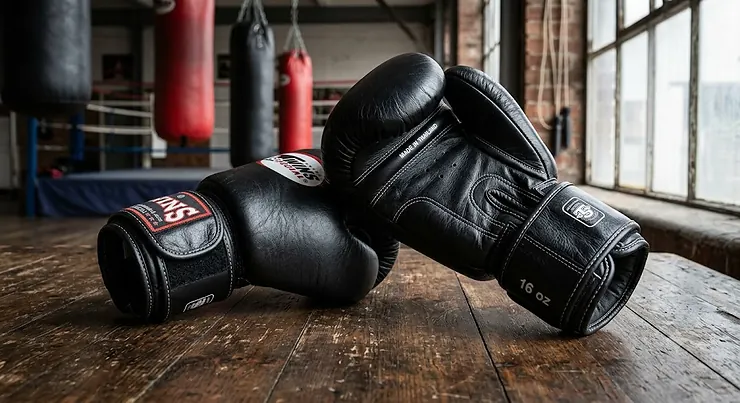
Walk into any half-decent Muay Thai gym in Britain and you’ll spot the same worn leather cuffs stacked by the ring: black, or maybe that deep maroon colourway everyone seems to gravitate towards. Twins Special gloves aren’t just another item on a kit list — they’re the closest thing this sport has to a rite of passage. Ask a coach what to buy and, nine times out of ten, the answer starts with those two words.
But “just get Twins” isn’t quite enough advice for the money involved. There are multiple models, several genuine rivals worth weighing up, and a fair bit of nonsense floating around online about what actually makes a glove last. So here’s the honest version: what Twins Special gloves are, how they stack up against Fairtex, Top King and Windy, and which pair actually suits your training life rather than someone else’s Instagram feed.
Twins Special gloves are handmade Thai leather boxing and Muay Thai gloves, built with multi-layered foam padding and a hook-and-loop wrist strap, designed for pad work, bag training and sparring at every experience level. Twins Special has been producing them since 1992, and the brand’s reputation was built the unglamorous way — in gyms, not marketing decks. For the wider context of the sport itself, including its scoring and rules, the Wikipedia entry on Muay Thai is a solid starting point. We’ll cover pricing in ranges only, since exact figures shift constantly — check the current listing before you buy.
Quick Comparison Table
| Product | Best For | Price Range | Material |
|---|---|---|---|
| Twins Special BGVL3 | All-round training & sparring | £55–£85 | Genuine Thai leather |
| Twins Special BGVL6 | Extra wrist support, orthodox boxers | £65–£90 | Genuine Thai leather |
| Twins Special FBGVS3 | Premium/limited-edition buyers | £90–£130 | Fancy Thai leather |
| Fairtex BGV1 | Beginners, tight compact fit | £70–£95 | Genuine leather |
| Top King Super Air | Breathable premium training | £70–£100 | Leather/mesh hybrid |
| Windy BGVH Classic | Larger hands, veteran-style feel | £85–£120 | Genuine cowhide leather |
| RDX Training Gloves | Budget-conscious beginners | £20–£40 | Synthetic Maya hide |
Looking at the spread above, the Twins Special BGVL3 sits in the sweet spot for most buyers — proven, all-purpose, and priced sensibly against handmade Thai leather alternatives. If your priority is wrist stability for heavier bag sessions, the Twins Special BGVL6 or the Windy BGVH Classic both edge ahead thanks to their reinforced cuffs. Budget shoppers shouldn’t feel short-changed either: the RDX Training Gloves won’t match Thai leather longevity, but they’re a sensible way to test the water before committing to a pricier pair.
💬 Found a combo that works for you already? One click below helps other readers land on the right gloves faster too!
Top 7 Twins Special & Rival Gloves: Expert Analysis
1. Twins Special BGVL3 — the classic all-rounder every gym recognises
The standout feature here isn’t flashy — it’s consistency. The Twins Special BGVL3 has barely changed its silhouette in three decades, and that’s precisely the point. Multi-layered foam padding spans the knuckle line and wraps into the palm, giving genuine shock absorption on pads without turning the glove into a boxing-glove-shaped brick. The hook-and-loop strap runs long enough to lock down properly rather than just flapping loose after round three.
Spec-wise, you’re looking at a compact hand compartment with an attached, contoured thumb — good for reducing thumb-poke injuries during clinch work, though it does mean the fit runs snugger than western brands. Based on the spec comparison against rivals in this list, the BGVL3’s foam density sits mid-pack: softer than Top King Super Air, firmer than Fairtex BGV1. That makes it genuinely versatile — pad rounds at 12oz, sparring at 14–16oz, without needing two separate pairs.
Reviewers consistently report that the leather needs a proper break-in period — expect a couple of stiff sessions before the glove starts moulding to your hand — and a handful mention the true-to-size fit running slightly generous for smaller hands. What most buyers overlook is that this “problem” self-corrects with wear; the leather softens and tightens around the knuckle in a way synthetic gloves simply can’t replicate.
Pros:
- ✅ Proven 30-year design trusted across UK gyms
- ✅ Versatile across pad work, bag work and sparring
- ✅ Genuine Thai leather ages into a superior fit
Cons:
- ❌ Needs a break-in period before it feels right
- ❌ Sizing runs generous for smaller hands
At around £55–£85, the Twins Special BGVL3 remains the benchmark entry point into genuine Thai-made gloves — good value once you factor in how long handmade leather typically outlasts synthetic alternatives.
2. Twins Special BGVL6 — built for boxers who want more wrist lock-down
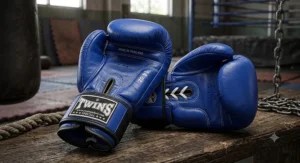
Where the BGVL3 keeps things classic, the Twins Special BGVL6 shifts the design towards orthodox boxing rather than pure Muay Thai. The standout change is a longer, more structured wrist cuff — a genuine improvement if your training involves heavier bag work where wrist torque adds up over a session.
The padding distribution is broadly similar to the BGVL3, but the extended cuff changes how the glove behaves under load: less lateral wrist movement means less strain accumulating punch after punch. On paper this means better protection for anyone who’s previously had wrist niggles; in practice, aggregated feedback across Thai equipment retailers backs this up, with several noting the BGVL6 as their pick after switching from softer-cuffed gloves.
Aggregated reviewer sentiment frames the BGVL6 as the “grown-up” Twins glove — slightly less nimble for clinch-heavy Muay Thai drilling, but noticeably more stable for anyone doing serious bag rounds. A recurring theme in feedback is that boxers moving from western brands (Everlast, Rival) find the BGVL6 an easier transition than the BGVL3, purely because of that familiar wrist structure.
Pros:
- ✅ Extended cuff adds genuine wrist stability
- ✅ Easier transition glove for western-boxing backgrounds
- ✅ Same trusted Thai leather and foam quality
Cons:
- ❌ Slightly less nimble for clinch-focused Muay Thai
- ❌ Marginally heavier than the standard BGVL3
Priced around £65–£90, the BGVL6 is the better call specifically if wrist fatigue has been a recurring issue in your training — the extra material is doing a specific job, not just padding out the price tag.
3. Twins Special FBGVS3 — the premium, limited-run leather option
This is where Twins Special leans into its “fancy” line, and the standout feature is obvious at a glance: patterned, textured leather panels instead of the plain block colours of the standard range. It’s easy to write this off as cosmetic, but the leather grade used across the FBGVS3 line tends to be a notch above the base BGVL3, with tighter stitching around the high-stress palm seam.
Functionally, the padding layout mirrors the BGVL3, so you’re not sacrificing performance for the upgrade — this is a look-and-feel premium rather than a protection premium. What most buyers overlook is that the tighter leather grain on these limited runs actually resists cracking slightly better over the long haul, since lower-grade hides are more prone to surface splitting once they’ve been through repeated sweat-and-dry cycles.
Reviewers who’ve bought into the fancy range consistently mention that the glove arrives “already looking broken in” thanks to the softer treated leather, cutting down the usual stiff-session adjustment period. The trade-off, honestly, is availability — colourways sell out and don’t always restock, so shopping around UK stockists (or Amazon UK’s rotating Twins listings) pays off before assuming a specific pattern is always in stock.
Pros:
- ✅ Softer leather needs less break-in time
- ✅ Distinctive patterned design stands out in the gym
- ✅ Tighter stitching on high-stress seams
Cons:
- ❌ Limited colourways go out of stock quickly
- ❌ Commands a premium over the standard BGVL3
At roughly £90–£130, the FBGVS3 makes sense for someone who already knows they love Twins and wants the nicer leather — it’s a harder sell as a first-ever pair.
4. Fairtex BGV1 — the beginner-friendly rival with a devoted following
Switching brands entirely, the Fairtex BGV1 earns its spot here because “Twins vs Top King” conversations online almost always drag Fairtex into the debate too — and fairly so. The standout feature is the compact, tight-fit hand compartment with elongated fingers, giving noticeably better grip than bulkier gloves when your hand is open for clinching.
Spec-wise, the BGV1 uses a three-layer foam system concentrated around the knuckles rather than spread evenly across the glove — meaning padding is thinner overall but more targeted. Based on the spec comparison, this makes the BGV1 lighter and faster on pads than the Twins Special BGVL3, but it does mean harder sparring partners will feel more through the glove than they would with Twins’ fuller foam spread.
Aggregated review sentiment is remarkably consistent here: reviewers repeatedly flag the BGV1 as excellent for technical pad work and beginner Muay Thai, while also noting that heavier sparring or anyone with pre-existing wrist issues should look elsewhere, since the wrist strap and structure are less supportive than Twins’ equivalents.
Pros:
- ✅ Superior grip for clinch and open-hand drilling
- ✅ Lighter feel, great for technical pad work
- ✅ Excellent leather quality for the price bracket
Cons:
- ❌ Thinner padding for genuinely hard sparring
- ❌ Wrist support lags behind Twins’ equivalents
Sitting around £70–£95, the BGV1 is the strongest case for “best Thai brand gloves not named Twins” — a genuinely different design philosophy rather than a clone.
5. Top King Super Air — the breathable option for hot, high-volume training
Top King built its reputation on padding density that borders on plush, and the Top King Super Air variant adds ventilated leather panelling to address the brand’s one recurring criticism: heat build-up during long sessions. The standout feature is genuinely simple — your hands stay noticeably cooler through extended pad rounds.
The padding itself remains dense and forgiving, arguably the softest strike-absorption of anything on this list, which explains why Top King gloves are popular among sparring partners who take a lot of volume. What the spec sheet won’t tell you, but reviewers note, is that this generous padding does add bulk — hand speed feels marginally slower compared with the tighter-fitting Fairtex BGV1, though most training-focused buyers won’t notice past the first session.
Common feedback across retailer reviews highlights durability as a genuine strength; the leather holds up well to repeated bag work, and the ventilation panels haven’t been reported as a weak point for tearing, which was an early concern with breathable Thai gloves generally.
Pros:
- ✅ Noticeably cooler during long, high-volume sessions
- ✅ Dense, forgiving padding ideal for sparring partners
- ✅ Strong reported durability on bag work
Cons:
- ❌ Bulkier feel reduces hand speed slightly
- ❌ Less compact than Fairtex or Twins for clinch drills
Expect a price range of roughly £70–£100 — solid mid-range value if your gym is warm, poorly ventilated, or you simply run hot when training.
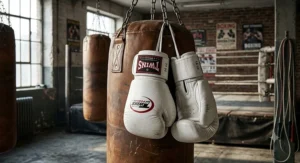
6. Windy BGVH Classic — the veteran’s choice for bigger hands
Windy has been making gloves in Bangkok since 1951, and the Windy BGVH Classic carries that heritage in its construction: a firm internal grip bar, a roomy hand compartment, and — compared with the Twins Special BGVL3 — noticeably less bulk for a similar level of cushioning. The standout feature is genuinely the interior room; if you’ve found Twins gloves snug through the fingers, this is worth trying.
The multi-layer padding follows a dense-inner, softer-outer construction, which in practice means the initial punch feels firmer than Twins but doesn’t lose that cushioning over long sessions the way cheaper foam eventually does. Reviewers consistently compare the BGVH favourably against Twins on this exact point — similar protection, less bulk, better accommodation for longer fingers or wrapped hands.
A recurring theme in aggregated feedback is that Windy gloves reward patience: the leather is genuinely stiff out of the box, stiffer than most Thai competitors, and buyers who abandon them in week one often miss out on what becomes, by month two, one of the more comfortable gloves in this list.
Pros:
- ✅ Roomier fit for larger or wrapped hands
- ✅ Less bulky than Twins for comparable protection
- ✅ Decades of proven Bangkok craftsmanship
Cons:
- ❌ Notably stiff break-in period
- ❌ Premium pricing versus Twins’ entry models
At around £85–£120, the BGVH Classic suits buyers who’ve already tried Twins and found the fit too compact — it’s a genuine alternative, not a downgrade.
7. RDX Training Gloves — the sensible budget entry point
Rounding out the list with something genuinely affordable, RDX Training Gloves use synthetic Maya hide rather than genuine leather, and the standout feature is straightforward: a low price point that removes the risk of committing £80+ before you know if Muay Thai training is actually for you. Amazon UK listings for Twins boxing gloves frequently surface RDX as a “customers also considered” alternative for exactly this reason.
Padding is layered foam rather than the denser multi-layer systems found in Thai leather gloves, which means shock absorption is adequate for pad work and light bag training but noticeably less forgiving under sustained heavy strikes. Here’s what to weigh up: synthetic material doesn’t mould to your hand the way leather does, so the fit stays broadly the same from day one to year one — a plus for consistency, a minus for that “broken-in” comfort Thai leather eventually delivers.
Reviewer sentiment aggregated from retailer listings is generally positive for the price bracket, with common praise for ventilation and grip, and common criticism centred on padding compression after several months of regular use — a limitation genuine leather gloves in this list tend to handle better over the long run.
Pros:
- ✅ Genuinely low-risk entry price for beginners
- ✅ Consistent fit without a break-in period
- ✅ Decent ventilation for warm-weather training
Cons:
- ❌ Padding compresses faster than leather alternatives
- ❌ Doesn’t match Thai leather’s long-term durability
Typically priced under £40, RDX gloves are the honest “try before you commit” option — not a long-term replacement for the Thai leather gloves above, but a sensible first step.
Practical Usage Guide: Breaking In and Maintaining Your Gloves
Getting the most from any of the gloves above starts before your first session. Loosen the wrist strap fully before your first wear, and flex your fingers into a fist repeatedly for a few minutes — this begins softening the leather along the natural crease lines rather than forcing a crease where the glove doesn’t want one. Many first-time buyers make the mistake of going straight into hard pad rounds on day one; a gentler shadow-boxing session first lets the foam and leather settle together.
After training, never leave gloves balled up inside a gym bag — this is the single biggest cause of premature odour and leather cracking. Turn them inside out if the liner allows, or at minimum leave the wrist straps fully open so air can circulate through the hand compartment. A dedicated glove deodoriser or simply a few teaspoons of bicarbonate of soda tucked into a sock and left inside overnight works far better than spraying fragrance over the problem.
Long-term maintenance is where genuine Thai leather earns its price tag. Every few months, a small amount of leather conditioner (a proper leather-specific product, not household polish) worked gently into the outer surface prevents the drying-out that eventually causes surface cracking — the most common failure point reported across every Thai-leather glove in this list. Common first-30-days mistakes include over-tightening the wrist strap out of habit (it should be snug, not restrictive) and skipping hand wraps entirely, which accelerates interior lining wear far faster than the exterior leather ever shows.
Real-World Scenarios: Which Glove Fits Your Training Life
Picture three fairly typical buyers. First, the complete beginner — say, someone who’s just signed up for a twice-weekly Muay Thai class after years of half-hearted gym memberships. Budget matters, and commitment is still unproven. The RDX Training Gloves make sense here: low financial risk, decent enough performance for pad work, and a natural upgrade path once training actually sticks.
Second, the regular clubber — three or four sessions a week, mixing pads, bag work and light sparring, on a budget that stretches to genuine leather but not the premium end. This is squarely Twins Special BGVL3 territory. It handles the variety of training styles without needing a second pair, and the leather rewards the mileage this kind of schedule puts in.
Third, the competitive or semi-competitive fighter doing serious bag conditioning alongside technical work, possibly carrying a minor wrist niggle from previous training. Here, the Twins Special BGVL6 or Windy BGVH Classic earns its higher price — the extra wrist structure genuinely matters once volume gets serious, and the durability difference over a Twins BGVL3 becomes noticeable within a year of heavy use rather than a marketing claim.
How to Choose Twins Special Gloves
Picking the right pair comes down to five practical checks, in this order:
- Match glove weight to your training type. 10–12oz suits pad and bag work; 14–16oz is standard for sparring, giving your partner more protection than you’d get from lighter gloves.
- Check the wrist closure style. Hook-and-loop (Velcro) suits solo training since you can fasten it yourself; lace-up offers a marginally more locked-in fit but needs someone else’s help.
- Prioritise hand compartment shape over branding. Twins’ compact fit suits smaller or narrower hands; if yours are broader, try the roomier Windy or Top King shape first.
- Factor in break-in time realistically. If you need gloves ready for a session next week, budget for a stiffer first fortnight rather than expecting instant comfort.
- Buy leather if you train more than twice weekly. The cost-per-use maths favours genuine Thai leather once you’re past roughly 100 sessions — synthetic gloves compress faster under that frequency.
Twins Special Gloves vs Top King Gloves
This is probably the most common genuine dilemma among UK buyers, and the honest answer is that neither brand “wins” outright — they solve different problems. Twins Special gloves, and specifically the BGVL3, favour a compact, snug hand compartment that suits Muay Thai’s clinch-heavy technical work; you can open your palm quickly and get a firm grip on a partner without excess material bunching up. Top King gloves, by contrast, lean into dense, generous padding that prioritises shock absorption over hand agility — better suited to holders taking repeated hard shots on pads, or sparring partners who want maximum cushioning.
Durability-wise, both brands use genuine leather and hold up comparably well when properly maintained, though aggregated reviewer sentiment slightly favours Twins for long-term shape retention, while Top King edges ahead on heat management thanks to the Super Air ventilation. If your training is Muay Thai-specific with plenty of clinch work, Twins tends to fit the movement pattern better. If you’re doing more conventional pad holding or higher-volume sparring where cushioning matters more than compactness, Top King’s extra padding earns its keep.
Price-wise, the two brands sit in broadly similar UK ranges — typically £55–£100 depending on model — so the decision genuinely comes down to hand shape and training style rather than value for money.
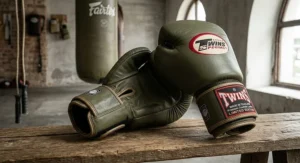
What Makes a Handmade Thai Boxing Glove Different
There’s a reason “handmade in Thailand” appears on nearly every listing in this article, and it isn’t just marketing flourish. Handmade Thai boxing gloves are typically stitched and assembled by workers with years of specific glove-construction experience, in factories that have been refining the same patterns for decades — Twins since 1992, Windy since 1951. That continuity matters because glove construction isn’t purely about materials; it’s about consistent, tight stitching at stress points (the palm seam, the thumb junction) that machine-only mass production tends to handle less precisely.
The leather itself also differs. Genuine Thai leather gloves use full-grain or top-grain hides that are treated to soften with wear rather than degrade, whereas budget synthetic alternatives — like the RDX gloves in this list — use PU or Maya hide materials that stay structurally static but don’t develop that “broken-in” comfort long-term users describe. The trade-off is honest: handmade leather costs more upfront and needs a break-in period; synthetic costs less and performs consistently from day one, just with a shorter genuine lifespan under heavy use.
Is Twins the Best Thai Brand for Gloves?
“Best” depends heavily on what you’re optimising for, and the honest answer is that Twins earns its reputation through consistency rather than being objectively superior on every metric. Against Fairtex, Twins offers fuller padding and better sparring protection, while Fairtex counters with superior grip for clinch work. Against Top King, Twins is more compact and marginally better for shape retention, while Top King’s cushioning and ventilation are genuinely superior for hot, high-volume sessions. Against Windy, Twins is snugger and slightly cheaper at entry level, while Windy offers more room for larger hands and arguably even longer brand heritage.
What tips Twins ahead for most UK buyers isn’t a single spec — it’s availability and consistency. Twins Special gloves appear across more UK retailers and Amazon UK listings than any rival on this list, sizing is well-documented across forums and review sites, and the BGVL3 specifically has such a long track record that buying blind carries less risk than with less-established alternatives. If you want the single safest first purchase, Twins remains the sensible default; if you already know your hand shape and training style favour a rival’s construction, that’s a legitimate reason to look elsewhere.
Twins BGVL3 Review: What Buyers Actually Report
Since the BGVL3 anchors this entire list, it’s worth digging into what real buyers consistently report rather than just repeating the marketing copy. The recurring positive theme across UK retailer reviews is longevity — multiple sources describe gloves still performing well after years of regular gym use, with the leather softening rather than degrading. Reviewers also consistently praise the balance between protection and mobility; unlike some pillowy Muay Thai gloves, the BGVL3 doesn’t feel like you’re punching through a mattress.
On the critical side, sizing comes up repeatedly. Several buyers note that Twins gloves run generously compared with western sizing charts, meaning a “medium” hand might want to size down from what feels intuitive, especially for 10–12oz training weights where a snugger fit matters more for control. A smaller but recurring complaint concerns colour consistency between the product photos and the delivered item — a minor issue, but one worth flagging honestly rather than pretending every unit is identical.
Taken together, the aggregated sentiment paints the BGVL3 as a genuinely reliable, long-lasting glove that rewards patience during the break-in period — not a glove that wows in the first session, but one that earns its reputation over months of use.
Common Mistakes When Buying Muay Thai Gloves
The single biggest mistake is buying by price alone, then being disappointed when a £25 pair doesn’t perform like a £75 pair — the difference in padding density and leather quality is real and directly affects both comfort and injury risk. A close second is ignoring glove weight entirely; turning up to sparring in 10oz bag gloves because “that’s what I had” puts your partner at unnecessary risk and will get you turned away at most decent UK gyms.
Another recurring error is judging fit from photos alone rather than checking a sizing guide against your actual hand measurement — Twins, Fairtex, Top King and Windy all size slightly differently, and what fits well in one brand won’t necessarily translate. Buyers also frequently skip hand wraps to “save time,” which accelerates interior lining wear and increases genuine injury risk regardless of how good the glove itself is. Finally, plenty of first-time buyers expect immediate comfort from genuine leather gloves and give up during the stiff break-in period — precisely the phase that, with a little patience, leads to the best-fitting glove in your kit bag.
Long-Term Cost & Maintenance: Getting Long-Lasting Muay Thai Gloves
Cost-per-use is the honest way to compare a £30 synthetic pair against an £80 leather pair. If synthetic foam compresses and the glove needs replacing within a year of regular training (roughly 100–150 sessions), that works out more expensive over three years than a well-maintained leather pair that’s still performing at year three. Genuine Thai leather, properly conditioned every few months and stored correctly between sessions, routinely outlasts synthetic alternatives by two to three times the usable lifespan — which is precisely why “long-lasting Muay Thai gloves” so often means “genuine leather Thai gloves” in practice.
That said, longevity isn’t automatic — it depends on maintenance discipline, not just material. Leaving any glove damp and balled up after sweaty sessions will shorten its life regardless of price point. If a purchase does go wrong — genuinely faulty stitching, padding that fails within weeks rather than months — it’s worth knowing your statutory position as a UK buyer. Whether you bought from Amazon or a specialist retailer, UK consumer law gives you clear rights around faulty goods, separate from any individual seller’s returns policy — worth checking before assuming you’re stuck with a bad pair.
Features That Actually Matter (And Those That Don’t)
Genuine leather versus synthetic matters enormously for long-term durability and comfort — this is a real differentiator, not marketing fluff. Multi-layer foam padding distribution matters too, since where the padding sits (knuckle-focused versus full-hand) genuinely changes how a glove performs for different training types. Wrist strap length and structure matters for anyone doing serious bag work, since it directly affects injury prevention over repeated sessions.
What matters considerably less: colour and pattern options, despite how much shelf space they take up in marketing photos — a fancy leather pattern doesn’t protect your hands any better than a plain black pair from the same padding tier. “Pro-endorsed” branding is similarly overstated for a home or club trainee; the gloves a professional fighter wears in a televised bout are often a completely different model from what’s sold retail, tailored to competition rules rather than everyday training. Grip bars (the internal plastic or foam bar some gloves include) are a genuine preference issue rather than a universal upgrade — useful for pad holders wanting a firm fist shape, less relevant for bag work where an open, flexible hand sometimes helps with combination speed.
Safety, Regulations & UK Compliance Guide
Training gloves for club and gym use aren’t subject to the same strict approval lists as competition gloves. If you’re moving towards amateur competition in England, be aware that governing bodies maintain specific approved brand lists for actual bouts. England Boxing’s 2026 rule book update confirms glove weight requirements have shifted, with boxers at 65kg and under now required to use 10oz gloves in competition rather than the previous 67kg threshold — a reminder that competition specifications change and are worth checking directly through England Boxing’s official rule book updates rather than assuming last year’s rules still apply.
For general gym and Muay Thai club training, most UK venues simply require appropriately weighted gloves (typically 12–16oz depending on the activity) alongside hand wraps and, for sparring, a mouthguard. None of the gloves reviewed in this article are marketed as competition-sanctioned equipment — they’re training and sparring gloves, and if you’re progressing towards licensed amateur bouts, confirm with your club exactly which brand and model your specific competition body currently approves before purchasing gloves for that purpose.
Frequently Asked Questions
❓ Are Twins Special gloves good for beginners?
❓ How do I know what size Twins Special gloves to buy?
❓ Are Twins Special gloves better than Fairtex?
❓ How long do handmade Thai boxing gloves usually last?
❓ Do Twins Special gloves need breaking in?
Conclusion
There’s no single “best” pair among the seven gloves covered here — only the pair that matches your hand shape, training frequency and budget honestly. For most UK buyers starting out or training a few times a week, the Twins Special BGVL3 remains the sensible default: proven, versatile, and priced fairly against genuine Thai leather alternatives. If wrist support matters more, the Twins Special BGVL6 or Windy BGVH Classic step up appropriately. Beginners unsure about commitment can start with RDX Training Gloves without much financial risk, while anyone chasing the tightest technical grip for clinch work should give Fairtex BGV1 a proper look before assuming Twins is automatically the answer.
Whichever pair you land on, the maintenance habits matter as much as the purchase decision — a cheaper glove looked after properly will often outlast an expensive one left damp in a gym bag. Take the time to break gloves in gradually, condition the leather periodically, and size correctly rather than guessing from a product photo, and any of the gloves above should serve you well for genuine years of training.
✨ Ready to Find Your Perfect Pair?
🔍 Compare current listings and check today’s availability before you commit. A properly fitted, well-maintained pair of gloves is one of the few pieces of kit that genuinely pays for itself in comfort and confidence, session after session!
Recommended for You
- Muay Thai Gloves for Beginners: 7 Best Picks for 2026
- Muay Thai Gloves vs Boxing Gloves: 7 Top Picks for 2026
- Muay Thai Gloves: 7 Best Picks & Costly Mistakes to Avoid (2026)
Disclaimer: This article contains affiliate links. As an Amazon Associate, I earn from qualifying purchases. If you purchase products through these links, we may earn a small commission at no additional cost to you.
✨ Found this helpful? Share it with your training partners! 💬🥊
