
In This Article
There’s a particular kind of betrayal that happens on a British autumn morning: you set off in glorious low sunshine, hands perfectly comfortable, and twenty minutes later your fingers have turned into ten useless little sausages that can’t operate a brake lever. Long finger road cycling gloves exist precisely to stop that from happening. They’re full-fingered cycling gloves built with thinner, more dexterous materials than a winter glove but with enough wind and weather protection to see you through the shoulder seasons, when the mercury swings ten degrees between breakfast and lunch and refuses to commit to a season.

This guide takes a proper, spec-driven look at seven real gloves you can buy on Amazon UK right now, spanning budget windproof options through to premium GORE-TEX-lined performers, so you can pick the pair that actually matches your riding rather than whatever happened to be on the shelf. We’ll cover lightweight long finger road cycling gloves for milder shoulder-season riding, dig into wind resistance and layering, and work through the genuine trade-offs — because the “best” glove for a club run in October is rarely the same one you’d want for a wet commute in November.
Before you scroll to the products, it’s worth knowing what actually separates a good pair from a mediocre one: seam placement, the type of windproof membrane used, palm padding density, and cuff design. We’ll unpack all of it below.
Quick Comparison Table
| Glove | Best For | Price Range | Weight |
|---|---|---|---|
| dhb Windproof Long Finger Gloves | Tightest budget | £15–£20 | ~50g |
| GripGrab Ride Windproof Midseason Gloves | Everyday shoulder-season riding | £20–£28 | ~94g |
| Sportful Fiandre Light Gloves | Lightest packable windproof | £35–£45 | ~50g |
| Altura Nightvision Waterproof Insulated Gloves | Wet-weather value | £45–£55 | ~90g |
| Sealskinz Waterproof All Weather Cycle Gloves | Driving rain protection | £45–£55 | 103g |
| Rapha Brevet Reflective Gloves | Long-distance touchscreen use | £60–£70 | ~60g |
| Castelli Perfetto RoS Long Finger Gloves | Premium windproof all-rounder | £70–£85 | 55g |
At a glance, the spread here tells its own story: price climbs roughly in line with membrane quality and seam engineering, not just branding. The dhb Windproof Long Finger Gloves and GripGrab Ride Windproof Midseason Gloves cover the vast majority of UK autumn rides for under £30, while the Castelli Perfetto RoS Long Finger Gloves and Rapha Brevet Reflective Gloves earn their higher price tags through genuine membrane technology (GORE-TEX INFINIUM in Castelli’s case) and conductive touchscreen panels rather than marketing gloss. If you ride mostly in dry, breezy conditions, weight and breathability should outrank waterproofing on your priority list — and that’s where the Sportful Fiandre Light Gloves earn their keep.
💬 Just one click — help others make better buying decisions too!😊
Top 7 Long Finger Road Cycling Gloves: Expert Analysis
Each of these gloves was selected because it’s a genuine, currently available product with verifiable specifications — not a filler entry. We’ve grouped them roughly budget to premium, but read the “who it’s for” line in each section carefully, because price doesn’t map neatly onto suitability for your specific rides.
1. dhb Windproof Long Finger Gloves — best budget windproof pick for autumn
The standout here is the price-to-performance ratio: at around £15–£20, this is Wiggle’s in-house brand doing what budget kit rarely manages, which is actually working as advertised. The softshell back panel blocks wind effectively, while a synthetic suede palm and light DWR coating shrug off drizzle without claiming to be waterproof.
Underneath sits a fleece liner anchored mainly at the fingertips, so it stays put when you pull the gloves on and off rather than bunching up inside. Palm padding sits across the main pressure points with an extra gel pad at the heel of the hand, and perforations through the centre of the palm help vent heat on the climbs — a detail that matters more than it sounds on a glove meant to bridge two seasons.
Based on the spec sheet, this is squarely a beginner-to-intermediate commuter and club-rider glove: the fit runs snug across the knuckles, so this is one to size up if you’re between sizes, and reviewers consistently note the cuff is on the short side, meaning a generous jacket sleeve helps seal out draughts. Reviewers consistently report that these gloves keep hands warm in mild-to-moderate autumn temperatures without overheating on effort, though a handful mention the touchscreen compatibility is fiddly in practice.
Pros:
- ✅ Genuinely windproof softshell for the price point
- ✅ Fleece lining stays anchored, doesn’t bunch
- ✅ Perforated palm keeps hands from overheating
Cons:
- ❌ Cuff is short, lets in draughts without a jacket sleeve
- ❌ Fit is tight across the knuckles for some hand shapes
At around £15–£20, the dhb Windproof Long Finger Gloves represent about as much genuine cold-weather protection as UK cycling retail currently offers per pound spent — an easy first pair if you’re not yet sure how much you’ll ride through fewer daylight hours.
2. GripGrab Ride Windproof Midseason Gloves — best all-rounder for shoulder-season riding
What most buyers overlook about this model is right there in its name: GripGrab specifically markets this as a “midseason” glove, and the manufacturer’s own recommended temperature band of 5–15°C maps almost exactly onto a typical British October or April morning. That’s a level of honesty about intended use that’s rarer than it should be in cycling kit.
Construction is 95% polyester and 5% polyamide, water-repellent and breathable rather than fully waterproof, with a knitted cuff instead of Velcro — a detail that speeds up getting your hands in and out at café stops but offers slightly less of a hard seal than a wrist strap. The palm uses GripGrab’s DoctorGel padding at roughly 4mm thickness alongside silicone printing for grip, and the thumb carries a terry cloth panel for the inevitable nose-wipe on a cold descent.
On paper this means a genuinely versatile middle-ground glove: warm enough for a brisk shoulder-season ride, thin enough that you’re not fighting bulk at the brake levers. Aggregated review sentiment from retailer review sections is strongly positive, with buyers repeatedly praising the warmth-to-price ratio and comfortable fit, while the most common criticism — consistent with the manufacturer’s own claims — is that they’re not suited to sustained heavy rain.
Pros:
- ✅ Temperature range matches UK shoulder-season conditions precisely
- ✅ DoctorGel padding reduces pressure without adding bulk
- ✅ Knitted cuff is quick on and off at stops
Cons:
- ❌ Not rainproof in sustained downpours
- ❌ Knitted cuff seals less tightly than Velcro in strong wind
For a rider who wants one glove to cover most of September through November, the GripGrab Ride Windproof Midseason Gloves are hard to beat in the £20–£28 range, and they’re arguably the single best-value entry on this list for exactly the audience searching for shoulder-season riding kit.
3. Sportful Fiandre Light Gloves — lightest windproof glove in the lineup
The standout feature is right there in the name: this is a deliberately pared-back version of Sportful’s heavier Fiandre winter glove, built from a water-repellent, windproof softshell fabric that Sportful specifically markets for moderate temperatures and as a packable “emergency glove” thanks to how small it compresses.
Taped seams reduce water ingress at the stitch lines, a neoprene cuff seals tight against the skin, and the synthetic palm carries injected silicone grip zones rather than a printed pattern, which tends to hold up better over repeated washes. The shape is pre-curved to match a bent-wrist riding position on drop bars, a small but genuinely useful detail for road-specific fit.
What the spec sheet won’t tell you, but user reports suggest, is that the “Light” branding is accurate in both senses: it’s genuinely low-weight at around 50g, and it’s genuinely better suited to cooler-but-not-cold conditions than deep winter. Riders who’ve compared it against Sportful’s full-weight Fiandre glove note the Light version trades some insulation for a noticeably slimmer, more dexterous fit — ideal if you dislike the clumsy-fingers feeling that thicker winter gloves cause on shifters.
Pros:
- ✅ Genuinely packable — useful as a just-in-case glove
- ✅ Pre-curved shape suits drop-bar hand position
- ✅ Taped seams add real water resistance at stitching
Cons:
- ❌ Less warmth than Sportful’s full Fiandre winter glove
- ❌ Palm eventually takes on moisture on longer wet rides
Priced around £35–£45, the Sportful Fiandre Light Gloves suit riders who want lightweight long finger road cycling gloves for those in-between days when a full winter glove would be overkill but bare fingers still aren’t an option.
4. Altura Nightvision Waterproof Insulated Gloves — best value UK-brand waterproofing
Altura is a British-founded cycling brand, and the standout here is a waterproof rating that’s unusually specific for this price bracket: the softshell outer is rated to an 8,000mm water column with breathability quoted at 8,000g/m²/24h. Neither figure is class-leading against premium three-layer fabrics, but it’s a meaningfully transparent spec that budget competitors rarely publish.
Inside sits a fleecy thermal lining with a layer of insulation between it and the outer shell, and Altura uses a double-cuff design — an inner cuff that seals against the wrist, designed to sit underneath a jacket sleeve for a genuine weatherproof overlap. Reflective finger graphics run across the backs of the fingers for low-light visibility, and the palm uses a durable printed grip pattern rather than raised silicone dots.
Based on the spec comparison, this is a glove aimed squarely at riders who get caught out by British drizzle more often than they’d like. Reviewers consistently note the fit runs slim through the fingers, which suits narrower hands well but may feel tight for wider ones, and the standout positive across review sources is the combination of genuine dexterity with real winter warmth — a pairing that’s harder to achieve than it sounds.
Pros:
- ✅ Published waterproof rating rare at this price
- ✅ Double-cuff design pairs well with a jacket sleeve
- ✅ Strong dexterity despite genuine winter insulation
Cons:
- ❌ Palm and cuff eventually absorb water in prolonged rain
- ❌ Slim fit won’t suit wider hands without sizing up
At roughly £45–£55, the Altura Nightvision Waterproof Insulated Gloves are the pick for anyone who wants a British-brand glove with genuinely disclosed technical specs rather than vague marketing claims.
5. Sealskinz Waterproof All Weather Cycle Gloves — most waterproof for driving rain
Sealskinz, a British outdoor-gear brand built its reputation on waterproof socks before expanding into gloves, and the standout feature here is a genuine three-layer construction: an outer shell, a waterproof-breathable membrane, and an inner lining, bonded so the liner doesn’t twist or bunch inside the glove — something the brand calls “zero liner movement.”
The material mix runs 55% polyester, 24% polyurethane, 16% nylon and 5% elastane for the shell, with a separate polyester/polyurethane insulation layer, and the finished glove weighs a relatively substantial 103g — noticeably heavier than the windproof-only options on this list, which is the direct trade-off for full waterproofing rather than mere water resistance. Foam padding sits at the main pressure points, and a PU suede wiper on the thumb handles the inevitable weather-related nose issue.
Here’s what to weigh: three-layer waterproof construction genuinely keeps rain out in a way that DWR-coated softshell fabric can’t match over a long, wet ride, but that membrane costs you dexterity and breathability compared with the lighter gloves further up this list. This is a glove for the commuter who refuses to let a forecast dictate whether they ride, not for the fair-weather club cyclist chasing a personal best on a dry Sunday.
Pros:
- ✅ Genuine three-layer waterproof-breathable construction
- ✅ Liner is bonded to prevent twisting inside the glove
- ✅ British brand with a long history in waterproof kit
Cons:
- ❌ Heavier and less dexterous than windproof-only alternatives
- ❌ Overkill warmth-to-weight ratio for mild, dry shoulder-season days
Around £45–£55, the Sealskinz Waterproof All Weather Cycle Gloves earn their place as the glove you reach for specifically when the forecast turns hostile, rather than an everyday shoulder-season pick.
6. Rapha Brevet Reflective Gloves — best for long-distance touchscreen use
Rapha built its Brevet range specifically for long-distance endurance riding, and the standout feature is genuinely useful rather than gimmicky: conductive fingertip panels on both the thumb and index finger, letting you operate a phone or GPS head unit without exposing bare skin to autumn air — a detail that matters more than it sounds when you’re navigating an unfamiliar sportive route in fading light.
Padding leans towards substantial gel inserts positioned to dampen vibration and reduce pressure on the ulnar nerve, the specific nerve responsible for that pins-and-needles sensation long-distance riders get in their little and ring fingers after hours gripping a handlebar. Reflective detailing runs across the design for low-light visibility, which pairs sensibly with Rapha’s endurance-riding positioning — these are gloves designed to still be on your hands after dark.
What most buyers overlook about this model is that it’s engineered around a specific use case — six-hour-plus rides — rather than general-purpose cycling. Reviewers consistently note the touchscreen function is more consistently responsive than cheaper conductive-thread alternatives, and the fit is true to size with a snug, low-bulk feel that suits riders who dislike loose material bunching at the palm.
Pros:
- ✅ Reliable conductive touchscreen panels on thumb and index
- ✅ Gel padding specifically targets ulnar nerve pressure points
- ✅ Reflective detailing suits rides that run into dusk
Cons:
- ❌ Premium pricing for what remains a mid-warmth glove
- ❌ Less insulation than dedicated deep-winter gloves in this price bracket
At around £60–£70, the Rapha Brevet Reflective Gloves are the pick for anyone whose autumn riding regularly means long distances, low light, and a genuine need to check a route on a phone without stopping to strip a glove off.
7. Castelli Perfetto RoS Long Finger Gloves — best premium windproof glove overall
The standout feature is GORE-TEX INFINIUM WINDSTOPPER Stretch Warm fabric — a genuinely different tier of windproof membrane compared with the softshell fabrics used further up this list — combined with Castelli’s reduced-seam, single-seam thermoformed construction that removes several stitch lines entirely from the high-friction areas of the palm and fingers.
Castelli’s own recommended temperature window is a tight 6–10°C, which tells you precisely how this glove is meant to be used: not deep winter, but the cold, still mornings either side of it. A fleece lining adds warmth without bulk, the Castelli Damping System sits across the palm specifically to protect the median nerve from handlebar vibration, and a neoprene stretch wrist insert makes for quick on-off without sacrificing seal quality. At 55g, it’s remarkably light for the level of wind protection on offer.
Based on the spec comparison, this is the glove for riders who’ve already worked out that cheaper windproof fabrics let wind through at the seams long before the fabric itself gives up — reduced seaming is a genuine, measurable difference, not a marketing phrase. One verified owner review on a major US retailer’s site specifically praised the build quality of the long-finger version, calling it excellent for winter riding, which is consistent with Castelli’s broader reputation for glove construction. The trade-off is dexterity: the GORE-TEX INFINIUM membrane, while thin, doesn’t quite match the razor-thin feel of the uninsulated summer gloves you’d wear in July.
Pros:
- ✅ GORE-TEX INFINIUM WINDSTOPPER blocks wind at a different level
- ✅ Reduced-seam construction removes friction and cold-entry points
- ✅ CDS palm technology specifically targets median nerve comfort
Cons:
- ❌ Highest price point on this list
- ❌ Touchscreen compatibility is limited compared with Rapha’s Brevet
At around £70–£85, the Castelli Perfetto RoS Long Finger Gloves are the glove to buy once, rather than the glove to buy first — a genuine step up in wind-blocking technology for riders who’ve already tried cheaper softshell options and found the wind still gets through.
Long Finger Road Gloves for Autumn: What Changes When Summer Ends
Long finger road gloves for autumn need to solve a specific, narrow problem: temperatures that swing from a chilly 4°C start to a mild 14°C midday, often within a single ride. A true winter glove overheats your hands by 11am; bare fingers or a summer mitt leave you numb by 8am. The sweet spot is a windproof, water-resistant (not necessarily waterproof) glove in the 40–100g range, which is exactly the category most of the gloves above occupy.
What actually changes physiologically is worth understanding briefly. Blood flow to the extremities is one of the first things your body restricts as core temperature drops, precisely because keeping your torso and organs warm takes priority over your fingertips — a mechanism the NHS describes in detail in relation to conditions like Raynaud’s phenomenon, where this normal cold response becomes exaggerated. Even riders without any diagnosed circulation condition experience a milder version of the same effect on a cold morning, which is precisely why a glove that blocks wind at the fingertips first — as the Castelli Perfetto RoS Long Finger Gloves and Sportful Fiandre Light Gloves are specifically engineered to do — makes a disproportionate difference to comfort compared with adding bulk elsewhere.
Autumn also means variable light, so several gloves on this list — notably the Rapha Brevet Reflective Gloves and Altura Nightvision Waterproof Insulated Gloves — build in reflective detailing as standard rather than an afterthought.
Wind Resistance Explained: What Actually Blocks the Gusts
“Windproof” gets printed on a lot of glove packaging, but the term covers a genuinely wide range of real-world performance, and it’s worth understanding the mechanism rather than taking the label on trust.
- Membrane type matters more than thickness. A GORE-TEX INFINIUM membrane, as used in the Castelli Perfetto RoS Long Finger Gloves, works by blocking air molecules while still allowing water vapour to escape — genuine wind resistance without trapping sweat. A basic DWR-coated softshell, as used in the dhb Windproof Long Finger Gloves, blocks wind mechanically through tight fabric weave rather than a dedicated membrane, which works well but degrades faster with washing.
- Seams are the weak point, not the fabric. Wind rarely pushes straight through a windproof fabric panel; it finds its way in through stitch holes at the seams. This is exactly why Castelli’s reduced-seam construction and Sportful’s taped seams on the Fiandre Light matter more than the headline fabric spec.
- Cuff design determines real-world sealing. A glove can have excellent fabric and still let wind straight up the sleeve if the cuff is short or loose. Reviewers consistently flag the dhb’s short cuff as its main weakness for exactly this reason, while Altura’s double-cuff design specifically targets this failure point.
- Wind chill compounds faster than most riders expect. The Met Office’s own explainer on wind chill notes that the “feels like” temperature accounts for wind speed at roughly walking pace — and a bike moving at 15mph generates considerably more effective wind speed across exposed skin than that baseline, which is a large part of why hands get cold on a bike faster than they would standing still in the same air temperature.
Understanding this hierarchy — membrane, then seams, then cuff — is genuinely more useful when shopping than comparing headline “windproof” claims, because two gloves can both legitimately claim windproof performance while differing enormously in how that holds up on an actual ride.
Layering Your Hands: Liners, Base Layers and When to Double Up
Layering isn’t just a torso strategy. On genuinely cold shoulder-season mornings, a thin liner glove underneath one of the long finger gloves above can extend its usable temperature range by several degrees without needing to buy a separate, heavier winter glove.
Choosing a liner. A thin merino or synthetic liner glove, similar in concept to a base-layer top, adds warmth through trapped air rather than bulk. This works best under gloves with some room in the fit — the GripGrab Ride Windproof Midseason Gloves and dhb Windproof Long Finger Gloves both have enough volume to accommodate a thin liner without the seams pulling tight across the knuckles.
When layering backfires. A liner under a genuinely tight-fitting glove, such as the slim-cut Altura Nightvision Waterproof Insulated Gloves, can actually reduce circulation by compressing the hand — counterproductively making fingers colder rather than warmer. If your usual glove already fits snugly, sizing up for winter rather than layering underneath is the better fix.
The jacket-cuff overlap. Layering also applies to how your glove cuff interacts with your jacket sleeve. A neoprene or double-cuff design, like Sportful’s Fiandre Light or Altura’s Nightvision, is built specifically to sit under a jacket cuff rather than over it, creating a genuine overlap that stops wind funnelling up the arm — a small detail that makes a measurably bigger difference to hand warmth than most riders assume.
Removing a layer mid-ride. On a genuine shoulder-season day where morning and midday temperatures differ by 8–10°C, the practical answer often isn’t more layers but a glove light enough to tolerate slightly cool hands for the first twenty minutes rather than overheating for the remaining two hours — which is the entire rationale behind lightweight long finger road cycling gloves as a category, rather than simply reaching for a winter glove year-round.
Shoulder-Season Riding: Three Rider Profiles Matched to Gloves
Shoulder-season riding covers a wider range of conditions and riders than the phrase suggests, so rather than a single recommendation, here’s how three different real-world profiles map onto the gloves above.
The early-morning commuter. Riding at 7am in October, often in the dark, on wet-ish roads with genuine standing water some mornings. Priority: reliable waterproofing and visibility over ultimate dexterity, since commuting rarely demands split-second shifting precision. The Sealskinz Waterproof All Weather Cycle Gloves or Altura Nightvision Waterproof Insulated Gloves suit this rider well, both offering genuine water resistance and reflective detailing for low-light visibility.
The weekend club rider. Out for two to four hours on a Saturday club run, starting cold and warming up as the group works harder. Priority: a glove that won’t overheat once the pace lifts, with enough dexterity for group-riding hand signals and quick gear changes. The GripGrab Ride Windproof Midseason Gloves or Sportful Fiandre Light Gloves fit this profile, since both are specifically engineered around the moderate temperature band a club run typically occupies.
The long-distance sportive rider. Six-plus hours in the saddle, often navigating via a phone or head unit, riding into genuinely cold late-autumn conditions with limited opportunity to stop and warm up. Priority: sustained comfort, touchscreen access, and vibration damping over a long ride. The Rapha Brevet Reflective Gloves or Castelli Perfetto RoS Long Finger Gloves are built specifically around this use case, with the Castelli’s tighter 6–10°C window suiting the colder end of the sportive calendar particularly well.
How to Choose Long Finger Road Cycling Gloves
- Start with your typical temperature range, not the coldest day of the year. A glove rated for 5–15°C, like the GripGrab Ride Windproof Midseason, will suit the vast majority of autumn rides better than a deep-winter glove you’ll only wear a handful of times.
- Check the cuff style against how you dress. A short cuff works fine under a long jacket sleeve; a loose or short cuff with no jacket overlap invites draughts, as several reviewers note with the dhb Windproof.
- Weigh padding against bar feel. More gel or foam padding reduces vibration on long rides but can dull your feel for the brake levers — a genuine trade-off, not a simple “more is better” spec.
- Decide how much you actually need waterproofing versus water resistance. True three-layer waterproofing, as in the Sealskinz, adds weight and reduces breathability; for most dry-but-windy autumn rides, water resistance alone is sufficient.
- Touchscreen compatibility varies wildly in real-world use. Conductive thread works better on some fabrics than others — Rapha’s Brevet is specifically praised for consistency here, while cheaper implementations can be frustratingly unresponsive.
- Size against your hand shape, not just your usual glove size. Several gloves on this list, including the Altura and dhb, run notably slim through the fingers; if you have wider hands, sizing up is often the better call than persisting with a tight fit.
- Consider whether you need one glove or two. A single mid-weight windproof glove plus an optional thin liner (see our layering section above) often serves better across a full autumn-to-spring season than one very warm glove that overheats on milder days.
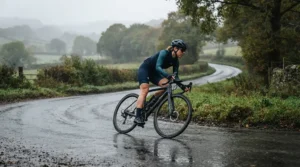
Lightweight Long Finger Road Cycling Gloves vs Winter-Weight Gloves
| Factor | Lightweight Long Finger Gloves | Winter-Weight Gloves |
|---|---|---|
| Typical weight | 40g–55g | 90g–150g+ |
| Best temperature | 8°C–16°C | Below 5°C |
| Dexterity | High — close to bare-hand feel | Reduced, bulkier at levers |
| Example on this list | Sportful Fiandre Light Gloves, Castelli Perfetto RoS | Sealskinz Waterproof All Weather Cycle Gloves |
| Best For | Club runs, commuting in mild spells | Deep cold, prolonged wet rides |
The clearest takeaway from this comparison is that lightweight long finger road cycling gloves aren’t simply a “lesser” version of a winter glove — they’re a different tool built around a different problem. A winter-weight glove solves for sustained cold and wet at the expense of dexterity and heat regulation, while a lightweight option like the Sportful Fiandre Light Gloves solves for variable, moderate conditions where overheating is the more likely failure mode than freezing. Riders who own only one heavy winter glove often find themselves peeling it off mid-ride once effort lifts their body temperature — a sign the lighter category would have served them better for the majority of autumn miles.
Common Mistakes When Buying Long Finger Cycling Gloves
Even experienced riders trip up on a handful of recurring errors when choosing gloves for the shoulder seasons.
- Buying for the coldest possible day rather than the average ride. Most riders massively overestimate how often they’ll actually face genuinely freezing conditions, ending up with a bulky glove that’s uncomfortable ninety percent of the time it’s worn.
- Ignoring cuff length in favour of headline fabric specs. As covered above, a short cuff undermines even the best windproof fabric by letting draughts in at the wrist.
- Assuming “water-resistant” means “waterproof.” These are genuinely different specifications, and several gloves on this list — the dhb Windproof and GripGrab Ride Windproof among them — are explicitly water-resistant rather than waterproof, which is fine for drizzle but not for sustained heavy rain.
- Sizing based on a summer mitt rather than measuring the hand. Full-finger gloves fit differently to fingerless mitts, and sizing charts vary meaningfully between brands — a mid-range hand can be a Medium in one brand and a Large in another.
- Overlooking palm padding thickness relative to grip preference. Riders with smaller hands in particular can find thick gel padding interferes with a secure grip on the bar, a detail worth checking against your own hand size rather than assuming maximum padding equals maximum comfort.
Safety and Visibility: What UK Regulations Actually Say
Long finger road cycling gloves aren’t classed as mandatory safety equipment under UK law, but visibility is directly addressed in official cycling guidance, and several gloves on this list build it in for good reason. The Highway Code’s rules for cyclists specifically recommend light-coloured or fluorescent clothing in daylight and poor light, alongside reflective clothing and accessories after dark — guidance that applies just as much to hand position, which is often the most visible and most animated part of a cyclist’s silhouette when signalling a turn.
This is precisely why the reflective detailing on the Rapha Brevet Reflective Gloves and Altura Nightvision Waterproof Insulated Gloves is a genuinely functional feature rather than a cosmetic one, particularly for autumn and winter riding where a significant share of commuting hours happen in low light or full darkness. Beyond visibility, dexterity itself is a safety factor worth weighing: a glove too bulky to comfortably reach the brake lever’s full travel is a genuine hazard, which is one more reason the lighter, close-fitting options on this list deserve serious consideration even in cooler conditions.
Long-Term Cost and Maintenance
A £17 pair of dhb Windproof gloves replaced every season works out cheaper over three years than a single £85 Castelli pair — on paper. In practice, the calculation is less straightforward, because seam integrity and fabric performance tend to degrade with wash cycles, and premium gloves generally hold their windproofing longer before that degradation becomes noticeable.
As a rough total-cost-of-ownership guide: budget windproof gloves in the dhb and GripGrab bracket typically show reduced wind resistance after roughly 20–30 wash cycles, while GORE-TEX INFINIUM membranes, as used in the Castelli Perfetto RoS, tend to retain performance considerably longer — often multiple seasons of regular use — provided they’re washed according to the manufacturer’s care instructions rather than tumble-dried, which can damage membrane fabrics. Hand-washing or a gentle machine cycle, followed by air drying away from direct heat, is the single most effective maintenance step for extending any windproof or waterproof glove’s working life, regardless of price point.

Frequently Asked Questions
❓ What temperature are long finger cycling gloves good for?
❓ Are long finger gloves better than mitts for autumn riding?
❓ Can I wear a liner glove under long finger cycling gloves?
❓ Do windproof cycling gloves work in the rain?
❓ How should long finger road cycling gloves fit?
Conclusion
There’s no single best long finger road cycling glove — only the best one for the riding you’re actually doing. If you’re commuting through standing water most mornings, the waterproof construction of the Sealskinz Waterproof All Weather Cycle Gloves or Altura Nightvision Waterproof Insulated Gloves earns its weight. If you’re chasing a club run where the pace — and your body temperature — will climb fast, the lighter, more dexterous GripGrab Ride Windproof Midseason Gloves or Sportful Fiandre Light Gloves will keep you comfortable without overheating. And if you’ve already been through a cheaper windproof glove and found the wind still gets through at the seams, the reduced-seam GORE-TEX INFINIUM construction of the Castelli Perfetto RoS Long Finger Gloves is a genuine, measurable step up.
What matters most is matching the glove’s engineered temperature window and cuff design to your actual riding pattern rather than buying for the single coldest ride of the year. Get that right, and the specific brand matters far less than the fit.
Recommended for You
- Padded Gloves for Wrist Pain Cycling: 7 Picks That Work (2026)
- Padded Road Cycling Gloves: 7 Best Picks to Stop Numb Hands (2026)
- Breathable Road Cycling Gloves: 7 Best Picks for UK Summer 2026
Disclaimer: This article contains affiliate links. As an Amazon Associate, I earn from qualifying purchases. If you purchase products through these links, we may earn a small commission at no additional cost to you.
✨ Found this helpful? Share it with your friends! 💬🤗
