
In This Article
Somewhere around mile thirty, your hands start sending you a message you’d rather not receive. First it’s a dull ache across the base of the palm. Then the ring and little fingers go strangely quiet, like they’ve wandered off to sulk. If that sounds familiar, you’re not imagining it, and you’re certainly not alone — road buzz, an aggressive riding position, and a death-grip on the bars are a genuinely rough combination for the nerves running through your wrist. The good news is that padded gloves for wrist pain cycling are one of the cheapest, fastest fixes available, and they don’t require a trip to the physio (though sometimes that helps too).
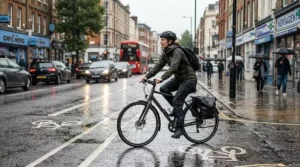
This guide is built around real products with real specifications and real, verifiable review sentiment — not marketing copy lifted from a listing page. We’ve dug into gel-pad placement, palm construction, and the aggregated experiences of riders who’ve actually put these gloves through hundreds of kilometres, because a glove that merely looks padded in a product photo isn’t the same as one engineered around where nerve compression actually happens. Whether you’re chasing relief from carpal tunnel-style numbness, ulnar nerve tingling in your outer fingers, or general end-of-ride hand fatigue, there’s a meaningful difference between the seven gloves below — and knowing that difference before you buy will save you both money and pins-and-needles.
We’ll cover budget options under £25, mid-range all-rounders, and premium gloves purpose-built around nerve protection, plus the bike-fit context that no glove can fully substitute for. Let’s get into it.
Quick Comparison Table
| Product | Padding Type | Best For | Price Range |
|---|---|---|---|
| dhb Aeron Short Finger Gel Gloves 2.0 | 4mm gel/foam | Budget all-rounders | Under £25 |
| Giro Bravo Gel | Optimised gel, 3-panel palm | Narrow hands, hot weather | Around £20 |
| GripGrab Ride ProGel | DoctorGel® shock-absorbing | Numbness-prone commuters | £20-£30 range |
| Endura Hummvee Plus Mitt II | Palmistry™ contoured gel | Mixed-terrain, gravel | Around £25 |
| Lizard Skins Aramus GC | 2-3mm low-profile gel | Riders who want bar feel | £25-£30 range |
| Pearl iZUMi Elite Gel | 3D gel, ulnar/median zones | Diagnosed nerve compression | £30-£40 range |
| Specialized Body Geometry Dual-Gel | Dual-layer Equalizer™ gel | Long-distance, chronic numbness | £30-£40 range |
Looking at the spread here, there’s a clear pattern: the gloves that name-check the ulnar or median nerve directly in their design — the Pearl iZUMi Elite Gel and the Specialized Body Geometry Dual-Gel — sit at the top of the price range, and that’s not a coincidence. Engineering gel pads around specific anatomical pressure points costs more to develop than dropping a generic foam pad into a palm. That said, the budget options aren’t just filler; the dhb Aeron and Giro Bravo Gel punch well above their price tag for riders whose pain is more “general road buzz” than “diagnosed nerve issue.” We’ll unpack exactly which situation calls for which glove as we go.
A quick heads-up before we dive in: gloves help enormously, but they’re one part of a bigger picture that includes your bike fit and your grip. Keep that in mind as you read on.
Top 7 Padded Gloves for Wrist Pain Cycling: Expert Analysis
1. dhb Aeron Short Finger Gel Gloves 2.0 — best budget pick under £25
The dhb Aeron Short Finger Gel Gloves 2.0 are dhb’s entry-level offering, and they’re the anchor of this whole “under £25” conversation — because unlike a lot of budget gear, they don’t feel like a compromise. The gloves use a hybrid gel and foam pad roughly 4mm thick, positioned across three zones of the palm: the heel, the centre, and the base of the fingers.
That heel-of-palm placement matters more than it sounds. It’s precisely where riders resting on the hoods or drops transfer the most weight through the wrist, and a thicker pad there does real, measurable work in cutting vibration transfer from rough tarmac. On paper, this means fewer of those “why do my hands feel like they’ve been asleep” moments on longer rides, especially on British B-roads that haven’t seen a resurfacing crew since the last coalition government.
The dhb Aeron is best suited to newer cyclists or anyone doing regular sub-40-mile rides who wants meaningful cushioning without premium pricing — it’s less convincing for riders with a confirmed nerve compression diagnosis, where more targeted padding earns its keep. Reviewers at Cyclist described this exact model as outperforming gloves costing twice as much, while a separate road.cc review of the pricier Aeron long-finger sibling noted the gel padding can feel a touch bulky and reduce bar feel for riders who prefer a minimalist connection to the bars.
Pros:
- ✅ Genuinely padded for under £25 — rare at this price point
- ✅ Silicone palm detailing adds grip when hands get sweaty
- ✅ Breathable mesh back keeps summer rides comfortable
Cons:
- ❌ Gel padding can compress and flatten with heavy use
- ❌ Thicker pad slightly reduces direct bar feel
Expect to pay in the £20-£25 range, and treat that as excellent value if you’re commuting or doing weekend club runs — for the money, there’s very little on amazon.co.uk that matches this level of targeted cushioning.
2. Giro Bravo Gel — best for narrow hands and hot-weather riding
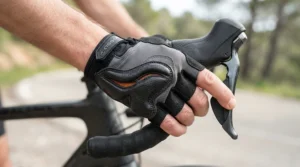
Giro built the Giro Bravo Gel around what it calls Super Fit Engineering: a three-piece palm construction designed to reduce bunching by tailoring the panel shapes to the natural contours of the hand rather than using one flat piece of material. Optimised gel padding sits within that three-panel palm, and a moisture-wicking mesh back keeps things ventilated.
What this means in practice is a glove that moves with your hand instead of fighting it — bunched fabric under the palm is a surprisingly common, under-discussed cause of localised pressure points that can aggravate wrist discomfort, so a well-tailored panel layout genuinely earns its place here, not just as a comfort nicety. The trade-off, based on aggregated customer feedback on Amazon, is sizing: multiple reviewers note the gloves run noticeably small, with one describing the padding as “less than expected” at a size that should otherwise fit.
This one’s best for riders with smaller-to-average hand widths who ride mostly in warm conditions and want a snug, no-bunch fit rather than maximum cushioning volume — if you’ve got wider hands, size up a full size from your usual measurement, since Giro’s own charts appear to run tight compared with competitors.
Pros:
- ✅ Three-panel palm reduces bunching under pressure points
- ✅ Highly breathable for hot-weather and summer commuting
- ✅ Durable construction reported across multiple owner reviews
Cons:
- ❌ Sizing runs small — up to a full size in some reports
- ❌ Padding volume is lighter than dedicated nerve-relief gloves
Price sits around £18-£24 depending on colourway, making it a solid budget alternative to the dhb Aeron if fit and breathability matter more to you than maximum gel depth.
3. GripGrab Ride ProGel — best for commuters worried about numbness
GripGrab is a Danish brand that’s built a loyal UK following through Wiggle and its own storefront, and the GripGrab Ride ProGel padded gloves centre on the brand’s proprietary DoctorGel®, a shock-absorbing compound placed across the full palm rather than in isolated pads. The palm itself uses a durable synthetic leather (in newer Ride-series updates, a recycled microsuede), paired with a lightweight, breathable stretch back panel.
The full-palm approach to padding, rather than the more common “islands of gel at pressure points” method, spreads load more evenly across the hand — which on paper should reduce the concentrated pressure spikes that trigger nerve tingling in the first place, since the force isn’t funnelling into a handful of contact zones. One verified customer review specifically noted their hand numbness “seemed to be slightly reduced” wearing this model, which lines up with what you’d expect from broader load distribution, though it’s worth being honest that this is a single aggregated data point rather than a clinical claim.
This is the pick for daily commuters and anyone doing repetitive, similar-position riding (a fixed commute route, turbo trainer sessions) where the same nerve gets loaded the same way, day after day.
Pros:
- ✅ Full-palm DoctorGel® spreads pressure rather than isolating it
- ✅ Strong aggregated customer ratings (4.4-4.5 out of 5 across retailers)
- ✅ Touchscreen-compatible thumb for city riding
Cons:
- ❌ Velcro wrist strap is minimal and can feel loose for some hand shapes
- ❌ Not fully waterproof in wetter iterations of the range
Typically priced in the £20-£30 range depending on the specific Ride variant, this sits comfortably in “affordable but purpose-built” territory.
4. Endura Hummvee Plus Mitt II — best for mixed-terrain and gravel riders
The Endura Hummvee Plus Mitt II takes a different approach to gel placement, using what Endura brands as its Palmistry™ design — gel padding shaped to follow the natural lifelines of the hand rather than sitting in generic rectangular blocks. It’s paired with a silicone-printed grip palm, a durable microfibre construction, and a Velcro-adjustable cuff.
Following the hand’s natural creases rather than an arbitrary grid means the pad flexes with you as you change grip position, rather than creating a hard edge that digs in when your hand moves — something that matters a great deal on gravel or broken tarmac where you’re constantly repositioning to absorb impacts. Owner reviews on Endura’s own UK site are largely enthusiastic, with one describing the gel inserts as making “longer rides much more comfortable,” while a small number flag the wrist Velcro as prone to loosening on long days, and at least one report of a seam failing after intensive multi-day use.
This is the glove for riders who split their time between road and gravel, or anyone doing bikepacking-style multi-day trips where hand position varies constantly and a rigid pad pattern would become uncomfortable fast.
Pros:
- ✅ Contoured gel padding follows natural hand lines
- ✅ Silicone grip palm performs well in wet or sweaty conditions
- ✅ Knuckle protection on the full-finger version adds versatility
Cons:
- ❌ Wrist Velcro can loosen during long, sweaty rides
- ❌ Occasional reports of seam wear under heavy multi-day use
Expect to pay around £22-£28, which is competitive for a glove offering this level of terrain versatility.
5. Lizard Skins Aramus GC — best for riders who don’t want to lose bar feel
Lizard Skins, better known in the UK for handlebar tape, brings that same philosophy to gloves with the Lizard Skins Aramus GC: gel inserts kept deliberately thin — around 2-3mm — and placed only at the base of the fingers, the thumb, and the outer edge of the hand, rather than as one thick uniform slab.
The logic here is sound and worth explaining, because it directly addresses a genuine trade-off in glove design: thicker padding damps more vibration, but it also numbs your sense of exactly how hard you’re gripping the bar, which paradoxically can make some riders grip tighter out of uncertainty — worsening the very nerve compression they’re trying to avoid. A thinner, precisely placed pad aims to solve pressure points without sacrificing that tactile feedback loop. road.cc’s review of this exact model backs this up, describing it as “comfortable and well made” with “well-positioned padding” that doesn’t feel like a specialist-only product, and separate testing at FeedTheHabit similarly rated the gel thickness as “just right” for maintaining bar feel.
This is the glove for confident, experienced riders whose wrist discomfort stems more from prolonged grip tension than from a diagnosed nerve compression issue, and who’d rather solve the problem with technique and light padding than maximum cushioning.
Pros:
- ✅ Thin gel inserts preserve bar feel and control
- ✅ AX suede palm offers grip in both dry and sweaty conditions
- ✅ Generous finger pulls make removal easy, even one-handed
Cons:
- ❌ Padding volume is too light for severe nerve compression cases
- ❌ Sits at the upper end of the budget bracket for what it offers
Priced around £25-£30, this is a considered mid-range choice rather than an impulse buy, and it rewards riders who already have a reasonably good bike fit.

6. Pearl iZUMi Elite Gel Full Finger Gloves — best for diagnosed nerve compression
The Pearl iZUMi Elite Gel Full Finger Gloves are where this list starts getting genuinely clinical in its approach. Pearl iZUMi’s Elite Gel system uses 3D-shaped gel pads specifically engineered, in the brand’s own technical language, to protect both the ulnar and median nerves — the two nerve pathways responsible for, respectively, ulnar neuropathy (handlebar palsy) and carpal tunnel-style symptoms.
What separates this from a generic gel pad is the shaping: rather than a flat block, the gel is moulded into a 3D profile designed to sit around the nerve pathways instead of directly on top of them, redistributing pressure to the surrounding tissue and bone structures that can actually bear load safely. This is precisely the kind of targeted engineering that matters if you already know, rather than suspect, which nerve is causing your symptoms. road.cc’s review of the closely related women’s Elite Gel Vent model specifically praised the “complex gel pads to protect the ulnar and median nerves” as a standout feature relative to competitors at a similar price.
This is the pick for riders who’ve had numbness or tingling confirmed as nerve-related — whether informally through pattern-spotting on rides, or formally through a GP or physio consultation — and want a glove engineered around that specific mechanism rather than general comfort.
Pros:
- ✅ 3D gel pads specifically target ulnar and median nerve zones
- ✅ Ax Suede Uno palm combines durability with genuine four-way stretch
- ✅ Touchscreen-compatible index finger and thumb
Cons:
- ❌ Sits above the £25-£30 budget bracket
- ❌ Full-finger design runs warmer, less ideal for peak summer heat
Typical UK pricing lands in the £30-£40 range, positioning it as a considered investment for riders whose symptoms are established rather than occasional.
7. Specialized Body Geometry Dual-Gel Long Finger Gloves — best for chronic long-distance numbness
At the top of this list sits the Specialized Body Geometry Dual-Gel Long Finger Gloves, built around Specialized’s Body Geometry research programme — a long-running effort by the brand’s in-house ergonomics team to map pressure points across the hand, foot, and saddle contact areas. The Dual-Gel system uses two distinct gel layers rather than one, aiming to combine impact absorption with sustained comfort over very long durations, and the palm padding is explicitly positioned to relieve pressure on the ulnar nerve.
The two-layer approach is the standout technical detail here: a firmer base layer manages larger vibration impacts (potholes, cattle grids, that one savage stretch of unmaintained cycle path everyone avoids), while a softer top layer conforms to the hand’s shape for sustained, lower-level comfort across hours in the saddle. Independent testing from Active-Traveller specifically called out how the “thick layer of gel padding is well placed and supremely comfortable, especially if you tend to suffer from pain and numbness on longer rides,” while also confirming the padding doesn’t feel so bulky that bar control suffers. Aggregated owner reviews do flag one consistent long-term issue worth knowing about upfront: the gel padding can flatten out after roughly 1,000km or 30 washes, and sizing tends to run slightly small, particularly for riders with smaller hands.
This is the glove for committed long-distance riders — sportive regulars, audax participants, multi-hour weekend loop enthusiasts — whose numbness specifically shows up in the later stages of a ride rather than early on.
Pros:
- ✅ Dual-layer gel targets both impact absorption and sustained comfort
- ✅ Ulnar nerve-specific pad placement backed by in-house ergonomics research
- ✅ Touchscreen compatibility and a genuinely absorbent Microwipe™ thumb
Cons:
- ❌ Gel padding flattens noticeably after roughly 1,000km of use
- ❌ Sizing runs small — consider ordering a size up
Expect to pay in the £30-£40 range, which reflects the added engineering, though budget-conscious riders should weigh that against the roughly 1,000km padding lifespan when calculating cost-per-use.
Setting Up Your New Gloves (and Cockpit) for Real Wrist Pain Relief
Buying the right glove is only half the job — how you set it up, and what you pair it with, determines whether you actually feel the benefit. Start by sizing correctly: measure your hand circumference at the widest point, excluding the thumb, and cross-reference it against the specific brand’s chart rather than assuming your usual size, since — as you’ll have noticed above — sizing varies wildly between Giro, Specialized, and dhb. A glove that’s even slightly too small compresses the very tissue you’re trying to protect, which can make symptoms worse, not better.
Once fitted, don’t fasten the Velcro cuff as tight as it’ll go out of habit; snug enough to stay put without sliding is the goal, since an overly tight wrist closure can itself create a new pressure point right where the median nerve passes through. In the first thirty days, pay attention to any hot spots that develop after an hour or more of riding — that’s useful diagnostic information about whether the gel is actually aligned with your specific pressure points, and it’s worth adjusting your hand position on the bars if a spot keeps recurring in the same place.
Wash gloves by hand or on a gentle cycle, and always air-dry rather than using a radiator or tumble dryer — direct heat degrades gel padding and synthetic leather far faster than the mileage itself does, effectively shortening the glove’s useful life before it’s even worn out. Finally, treat your cockpit setup as part of the same system: even the best-padded glove is fighting a losing battle against handlebars that are positioned too low or too far forward, a point we’ll return to shortly.

Real Rider Scenarios: Matching the Glove to Your Wrist Pain
Picture three different riders, each dealing with a version of the same underlying problem. The first is a weekday commuter doing eight flat miles each way on a hybrid bike, whose hands go slightly numb by the final mile home — for them, the GripGrab Ride ProGel or dhb Aeron Short Finger Gel Gloves 2.0 make the most sense, since the discomfort is mild, repetitive, and budget matters more than clinical-grade engineering.
The second is a weekend sportive rider tackling 60-80 miles at a time on drop bars, who notices genuine tingling in the ring and little fingers by hour three — classic ulnar nerve territory. This rider is better served by the Pearl iZUMi Elite Gel or Specialized Body Geometry Dual-Gel, where the padding is specifically shaped around that nerve pathway rather than just generically cushioned.
The third is a gravel and bikepacking rider covering variable terrain across multi-day trips, whose hand position shifts constantly to absorb impacts — here, the Endura Hummvee Plus Mitt II earns its keep through the Palmistry™ contouring that flexes with changing grip angles rather than creating one fixed pressure profile. None of these riders are wrong to want relief; the point is that “padded gloves” isn’t one solution but a spectrum, and matching your specific riding pattern to the right padding geometry gets you there faster than guessing.
Problem → Solution: Fixing Common Wrist Pain Complaints
“My hands go numb after about an hour.” This pattern, worse on longer rides but absent on short ones, typically points to sustained pressure rather than acute impact — try the dual-layer or full-palm gel gloves (GripGrab Ride ProGel, Specialized Body Geometry Dual-Gel) and, critically, get in the habit of shifting hand position on the bars every ten to fifteen minutes.
“I feel tingling specifically in my ring and little finger.” That’s a textbook ulnar nerve signature, often called handlebar palsy. The Pearl iZUMi Elite Gel and Specialized Body Geometry Dual-Gel both explicitly engineer around this nerve pathway, but pairing either with a slight increase in handlebar height will compound the benefit.
“My gloves feel padded but I still get pain at the base of my palm.” This usually means the pad is in the wrong place for your specific hand shape rather than too thin — the Endura Hummvee Plus Mitt II‘s contoured Palmistry™ design, which follows natural hand lines rather than a fixed grid, is worth trying here.
“The padding felt great for the first few months, then stopped helping.” Gel compresses with use — most gloves in this guide show measurable flattening somewhere between 500km and 1,000km. Rotating two pairs, rather than wearing one pair exclusively, roughly doubles the useful lifespan of the padding before either needs replacing.
“I get discomfort only when I’m in the drops, not on the hoods.” That’s a bar-feel and pressure-distribution issue rather than a padding-volume issue — thinner, precisely placed gel like the Lizard Skins Aramus GC often solves this better than a thicker pad, because it avoids forcing your hand into an unnatural grip angle to compensate for bulk.
What Is Wrist Pain from Cycling, and Why Do Padded Gloves Help?
Wrist pain from cycling is discomfort, tingling, or numbness in the hand and wrist caused by sustained pressure and vibration on the nerves and soft tissue where the hand grips the handlebars. It’s most commonly linked to compression of the ulnar nerve (handlebar palsy) or, less often on a bike, symptoms resembling carpal tunnel syndrome. Padded gloves help by absorbing vibration and redistributing pressure away from these nerve pathways, though they work best alongside a properly fitted bike.
According to NHS guidance on carpal tunnel syndrome, the condition itself is caused by pressure on the median nerve as it passes through the wrist, and while repetitive gripping activity is listed among contributing factors, the NHS is clear that CTS has multiple possible causes beyond any single activity. That distinction matters for cyclists: much of what riders describe as “carpal tunnel” from cycling is more accurately ulnar nerve compression, since the classic cycling hand position loads the outer edge of the palm — where the ulnar nerve runs through Guyon’s canal — more heavily than the median nerve pathway associated with true carpal tunnel syndrome. Both benefit from padded gloves, but understanding which one you’re dealing with helps you choose gel placement more precisely, which is exactly why several gloves on this list (the Pearl iZUMi Elite Gel and Specialized Body Geometry Dual-Gel in particular) explicitly engineer for both pathways rather than just one.
How to Choose Padded Gloves for Wrist Pain Cycling
- Identify where your symptoms occur. Numbness in the ring and little finger points to the ulnar nerve; numbness across the thumb, index, and middle finger points more towards median nerve involvement. This determines which gel placement you actually need.
- Match padding thickness to your riding style. Long, steady endurance rides benefit from thicker dual-layer gel; twitchy, technical riding benefits from thinner padding that preserves bar feel.
- Check the brand’s specific size chart, not your usual size. As shown across this guide, sizing varies significantly between brands, and an ill-fitting glove can create new pressure points rather than solving old ones.
- Prioritise palm construction over glove aesthetics. A three-panel or contoured palm reduces bunching, which is a genuinely underrated cause of localised discomfort.
- Decide between half-finger and full-finger based on season and terrain. Half-finger mitts offer better dexterity and cooling for road use; full-finger gloves add knuckle protection useful for gravel or off-road riding.
- Factor in your budget realistically against expected padding lifespan. Most gel pads compress meaningfully between 500km and 1,000km, so a £20 glove replaced twice a year can be comparable value to a £40 glove replaced once.
- Treat gloves as one part of a wider fix, not a standalone cure. Persistent or worsening numbness that gloves alone don’t resolve is worth raising with a GP or a professional bike fitter rather than solving purely through kit changes.
Best Padded Gloves for Carpal Tunnel Cycling: What Actually Matters
If your GP or physio has specifically mentioned carpal tunnel syndrome, or your symptoms match the median nerve pattern — numbness concentrated in the thumb, index, and middle finger rather than the outer two fingers — then glove selection deserves a slightly different lens than general wrist discomfort. The priority becomes gel placement across the centre and heel of the palm, precisely where the median nerve passes closest to the surface as it runs through the carpal tunnel itself, rather than padding concentrated toward the outer edge of the hand.
Among the gloves covered here, the Pearl iZUMi Elite Gel stands out specifically because Pearl iZUMi’s own technical documentation describes the 3D gel shaping as targeting both the median and ulnar pathways, rather than just one. The Specialized Body Geometry Dual-Gel, while marketed primarily around ulnar nerve relief, uses a dual-layer structure broad enough to offer meaningful coverage across the central palm too. Riders with confirmed carpal tunnel symptoms should also pay close attention to wrist extension angle on the bars — a wrist bent backward while gripping the hoods increases carpal tunnel pressure regardless of how good the glove is — which is where a slightly higher handlebar position, or shallower-drop bars, tends to help more than any single piece of kit.
It’s worth being straightforward here: gloves manage symptoms and reduce contributing pressure, but they are not a medical treatment for diagnosed carpal tunnel syndrome, and the NHS’s own guidance around wrist splints and activity modification remains the primary route for anyone experiencing worsening or persistent symptoms.

Padded Road Gloves Under £25: Are They Worth It?
There’s a persistent assumption in cycling kit generally that spending more automatically buys more protection, and gloves are one of the few categories where that assumption doesn’t hold up particularly well. Both the dhb Aeron Short Finger Gel Gloves 2.0 and the Giro Bravo Gel deliver genuine, measurable gel cushioning for under £25, and independent reviewers have specifically noted the dhb model performing on par with, or better than, gloves priced significantly higher.
| Feature | Under £25 Gloves | £30-£40 Gloves |
|---|---|---|
| Gel placement | Palm heel and centre | Nerve-specific 3D zones |
| Typical lifespan of padding | ~500-700km | ~800-1,000km+ |
| Best suited to | General road buzz, commuting | Diagnosed nerve compression |
| Example | dhb Aeron, Giro Bravo Gel | Pearl iZUMi Elite Gel |
What this comparison really shows is that the extra spend on premium gloves buys precision, not just more material — the padding is shaped around specific nerve pathways rather than simply spread more generously across the palm. For riders whose wrist discomfort is mild, occasional, or clearly linked to general road vibration rather than a specific nerve, an under-£25 glove is genuinely sufficient, and upgrading further mostly buys peace of mind rather than measurably better outcomes. Where the calculation shifts is for anyone with a confirmed nerve compression pattern, where the targeted engineering in pricier gloves is solving a more specific problem that generic gel padding simply isn’t designed for.
Ulnar Nerve Compression vs Carpal Tunnel Syndrome: Know the Difference
These two conditions get conflated constantly in cycling forums, and the confusion is understandable, since both produce numbness and tingling in the hand — but they involve different nerves, different mechanisms, and, to some extent, different glove solutions. Ulnar nerve compression, sometimes called handlebar palsy or cyclist’s palsy, affects the ulnar nerve as it passes through Guyon’s canal at the outer edge of the wrist, and it’s specifically linked to sustained pressure on that area from gripping handlebars — making it, unlike general carpal tunnel syndrome, a condition genuinely characteristic of cycling itself.
Carpal tunnel syndrome, by contrast, involves compression of the median nerve as it passes through the carpal tunnel on the palm side of the wrist, and per NHS information on the condition, it’s linked to a broader range of causes including repetitive wrist movement, pregnancy, and underlying conditions like diabetes — cycling can be a contributing factor, but it’s rarely the sole cause. Symptom location is the clearest way to tell them apart at home: ulnar involvement shows up in the ring and little finger, while median nerve involvement (carpal tunnel) affects the thumb, index, and middle finger. Since several premium gloves in this guide, notably the Pearl iZUMi Elite Gel, explicitly engineer padding around both pathways, riders unsure which one applies to them aren’t necessarily choosing wrong by picking a dual-nerve glove — but persistent symptoms of either type are worth discussing with a GP rather than diagnosing purely through glove marketing copy.
Ergonomic Grip and Bike Fit: The Half of the Equation Gloves Can’t Fix
Here’s an uncomfortable truth this whole guide has been building towards: even the most expertly engineered gel padding is fighting an uphill battle against a poor bike fit. According to British Cycling’s guidance on hand and wrist pain, handlebar palsy is caused by direct compression of the ulnar nerve, and the practical fixes British Cycling points to sit largely outside the glove itself — handlebar height, reach, and how much of your body weight is actually resting through your hands versus your saddle.
Ergonomic grip covers, wider handlebar tape, or an actual bar-end extension can all reduce the pressure funnelling into any single point of contact, working alongside your gloves rather than instead of them. If your handlebars sit lower than your saddle by a significant margin, you’re mechanically forcing more weight through your wrists regardless of how good your gloves are — raising bar height even 10-15mm, or shortening stem reach slightly, often produces a more noticeable improvement than switching glove models entirely. It’s also worth genuinely checking your grip: many riders unconsciously white-knuckle the bars far harder than necessary, particularly on descents, and consciously relaxing your grip (loose enough that you could wiggle your fingers) reduces sustained nerve pressure more than any amount of padding can compensate for.
Getting an actual bike fit — even an informal one from a knowledgeable shop rather than a full biomechanical assessment — remains one of the most underrated fixes for chronic hand numbness, and it’s worth doing before assuming you simply need better gloves.
Common Mistakes When Buying Padded Cycling Gloves
The single most common mistake is buying based on padding thickness alone, assuming “thicker is always better” — as covered above with the Lizard Skins Aramus GC, excessive bulk can actually worsen grip tension by reducing bar feel, which paradoxically increases the tight-gripping behaviour that causes nerve compression in the first place. A close second is ignoring brand-specific sizing and defaulting to a “usual size,” which the Giro Bravo Gel and Specialized Body Geometry Dual-Gel reviews above both flag as a genuine, recurring issue rather than an isolated complaint.
Riders also frequently overlook wash care, treating gel-padded gloves like any other kit and tumble-drying or radiator-drying them, which meaningfully shortens padding lifespan regardless of how good the glove was on day one. Another overlooked error is buying a single pair and expecting it to perform identically at month one and month six — gel compression is a known, expected part of the product lifecycle across every brand covered here, not a manufacturing fault, and budgeting for replacement (or rotating two pairs) is part of realistic ownership. Finally, treating gloves as a total fix rather than one component of a wider solution — alongside bike fit and grip habits — is probably the costliest mistake of all, since it can lead to persistent frustration with gloves that were never going to solve a fit-related problem on their own.
Long-Term Cost & Maintenance
Thinking in cost-per-use rather than upfront price changes the maths on several of these gloves. A £22 pair of dhb Aeron Short Finger Gel Gloves 2.0, replaced roughly every six to eight months of regular riding as the gel compresses, works out to a modest ongoing cost that’s easy to budget for. A £35 pair of Pearl iZUMi Elite Gel, if it lasts genuinely longer thanks to more robust construction and gel that’s engineered to resist flattening, can work out similarly or even cheaper per month of use — but only if you’re riding frequently enough to justify the investment.
Maintenance genuinely extends this lifespan more than most riders realise: hand-washing or a gentle machine cycle, always air-drying flat rather than using direct heat, and rotating between two pairs rather than wearing one exclusively can meaningfully slow the compression process across any of the gloves in this guide, including the Endura Hummvee Plus Mitt II and GripGrab Ride ProGel. For riders logging serious annual mileage — sportive season regulars, daily commuters — buying two mid-range pairs and rotating them, rather than one premium pair worn constantly, often delivers better sustained padding performance for a comparable total spend across a full season.

Frequently Asked Questions
❓ Do padded gloves actually help with wrist pain from cycling?
❓ What's the difference between carpal tunnel and cyclist's palsy?
❓ How long does gel padding in cycling gloves actually last?
❓ Should I choose full-finger or half-finger gloves for wrist pain?
❓ Can padded gloves under £25 really compete with premium options?
Conclusion
If there’s one thing worth taking away from this whole comparison, it’s that “padded gloves for wrist pain cycling” isn’t a single product category with one right answer — it’s a spectrum running from budget-friendly general cushioning right through to nerve-specific engineering, and the right choice depends entirely on where your discomfort actually shows up and how far into a ride it appears. Riders with occasional, mild road-buzz discomfort will likely find everything they need in the dhb Aeron Short Finger Gel Gloves 2.0 or Giro Bravo Gel, both genuinely capable performers for under £25. Those with more specific, nerve-pattern symptoms — tingling concentrated in particular fingers, numbness that shows up reliably at the same point in every ride — are better served by the targeted pad geometry in the Pearl iZUMi Elite Gel or Specialized Body Geometry Dual-Gel.
Whichever you choose, remember that gloves are genuinely effective but not a total substitute for addressing bike fit, grip tension, and hand position — and if numbness or pain persists despite trying both, that’s a solid signal to talk to a GP or a physio, per NHS and British Cycling guidance covered above, rather than continuing to cycle through glove after glove hoping one will finally fix it. Your hands do a lot of quiet, thankless work on every ride; giving them the right support, in the right place, is one of the most cost-effective upgrades available to any cyclist.
🔍 Take your hand comfort on the bike to the next level with one of the seven gel-padded options above. Click through to check current pricing and availability, and give your wrists the relief a genuinely well-placed gel pad can offer!
Recommended for You
- Padded Road Cycling Gloves: 7 Best Picks to Stop Numb Hands (2026)
- Breathable Road Cycling Gloves: 7 Best Picks for UK Summer 2026
- Road Cycling Gloves for Beginners: 7 Best Picks (2026)
Disclaimer: This article contains affiliate links. As an Amazon Associate, I earn from qualifying purchases. If you purchase products through these links, we may earn a small commission at no additional cost to you.
✨ Found this helpful? Share it with your friends! 💬🤗
