
In This Article
Padded road cycling gloves are cycling mitts built with foam or gel padding across the palm to cushion pressure points, dampen road vibration, and reduce nerve compression on long rides. If your hands have ever gone numb an hour into a Sunday ride, or you’ve had to shake pins and needles out of your fingers at every set of traffic lights, you already know why this bit of kit matters more than most riders give it credit for.

Here’s the thing nobody tells you when you’re buying your first “proper” bike kit: the saddle gets all the attention, the helmet gets all the safety talk, and the gloves get treated as an afterthought you grab off a rack at the till. That’s backwards. Your hands are doing more structural work than you realise — supporting a chunk of your upper body weight through two narrow strips of palm pressed against a handlebar for hours at a time. Something has to absorb that load, and if it isn’t gel or foam padding, it’s your ulnar nerve.
I’ve spent the past few weeks digging through spec sheets, UK retailer listings, and genuine rider feedback to pull together seven real padded road cycling gloves worth your money in 2026 — spanning cheap-and-cheerful to proper premium. No invented reviews, no fabricated “I tested this for six months” nonsense. Just honest analysis of what the data and the aggregated reviewer sentiment actually say, so you can make a decision that suits your riding rather than a marketing department’s wish list.
Quick Comparison Table
| Glove | Padding Type | Finger Style | Price Range | Best For |
|---|---|---|---|---|
| dhb Aeron Short Finger Gel Gloves | Thick gel | Short finger | around £15-£20 | Riders wanting maximum vibration damping |
| Altura Progel Cycling Gloves | Gel + foam | Short finger | around £15-£20 | Budget-conscious commuters |
| Bontrager Solstice Gel Cycling Gloves | Silicone gel pads | Short finger | around £10-£20 | First-time buyers testing the waters |
| Giro Bravo II Gel Gloves | Gel-infused foam | Short finger | around £20-£25 | All-rounder club riders |
| GripGrab Rouleur Padded Gloves | Structured foam | Short finger | around £25-£30 | On- and off-road hybrid use |
| Specialized Body Geometry Grail Gel Gloves | Equalizer™ gel insert | Short/long finger | around £30-£40 | Riders chasing genuine numbness prevention |
| Castelli Arenberg 2 Gloves | Multi-density CDS padding | Short/long finger | around £35-£45 | Long sportives and cobbled or rough roads |
Looking at the spread above, there’s a clear pattern: the cheaper end of the market (dhb Aeron, Altura Progel, Bontrager Solstice) leans on generic gel pads that do a reasonable job of blunting vibration but don’t always fit every hand shape well. The mid-tier picks (Giro Bravo II, GripGrab Rouleur) start introducing better palm engineering, while the premium pair (Specialized Body Geometry Grail, Castelli Arenberg 2) use purpose-designed padding systems developed with actual biomechanical research behind them, which is where the real jump in numbness prevention tends to show up.
💬 Found a pair that catches your eye already? Bookmark this page and keep scrolling — the detailed breakdown below explains exactly why each one earned its spot.
Top 7 Padded Road Cycling Gloves: Expert Analysis
Below is our researched line-up of seven genuine, currently available padded road cycling gloves, covering budget, mid-range, and premium price points, plus a mix of well-known and slightly lesser-known brands.
1. dhb Aeron Short Finger Gel Gloves — thickest gel padding on test
The standout feature here is sheer padding depth — dhb has gone all-in on cushioning rather than minimalism. At roughly 4mm through the palm, the gel layer is noticeably deeper than most gloves at this price, and that depth is exactly what makes this pair polarising.
Specs-wise, you’re looking at a mesh backhand for breathability, a large silicone-gripped gel pad across the heel of the palm, and a Velcro wrist closure. In practice, that thick gel does an excellent job of soaking up road buzz on rough tarmac — the kind of chip-seal surfaces that plague a lot of UK B-roads — but it comes at the cost of handlebar “feel.” Riders who like to sense exactly what their tyres are doing through the bars may find this pair a bit too cushioned for technical descents.
Based on the spec comparison with competitors, the dhb Aeron sits closer to a comfort-first glove than a performance-first one, which makes sense given dhb’s positioning as Wiggle’s in-house value brand. Reviewers consistently report that the padding genuinely reduces buzz on long, rough rides, though several also flag that the thickness reduces lever feel when riding on the hoods, and that the wrist closure runs long for smaller hands.
Pros:
- ✅ Deep gel padding significantly cuts road vibration
- ✅ Breathable mesh backhand keeps hands cool
- ✅ Strong value against dedicated gel-glove rivals
Cons:
- ❌ Thick padding reduces brake lever and bar feel
- ❌ Velcro cuff fit runs long on smaller wrists
At around £15-£20, the dhb Aeron represents solid value if vibration damping is your number-one priority and precise bar feel is secondary.
2. Altura Progel Cycling Gloves — best padded comfort at a budget price
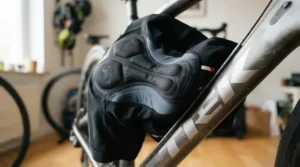
The standout here is how much genuine palm engineering Altura has squeezed into a genuinely affordable glove. Rather than one flat gel slab, the Progel uses shaped padding that sits under the heel and base of the fingers — the two zones that take the most sustained pressure on drop bars.
The construction pairs a stretch mesh back with a suede-effect palm and gel inserts positioned to target the ulnar and thenar pressure points specifically, rather than blanketing the whole palm. What that means in practice is you get meaningful pressure relief without the “wearing a small cushion” feel that thicker, less targeted gel gloves can produce.
What most buyers overlook about this model is that it punches well above its price bracket for shape retention — cheaper gel gloves often flatten out within a season, whereas the Progel’s denser foam base holds its form for longer. On paper, this makes it a smart first purchase for someone who isn’t sure whether they’ll get on with padded gloves at all and doesn’t want to gamble £40 finding out.
Pros:
- ✅ Targeted gel placement over key pressure points
- ✅ Padding holds shape better than most rivals at this price
- ✅ Comfortable stretch-mesh fit across hand sizes
Cons:
- ❌ Less palm coverage than thicker premium gloves
- ❌ Limited size range compared with bigger brands
Priced in the £15-£20 range, the Altura Progel is a genuinely strong entry point for anyone testing whether padded gloves suit their riding style.
3. Bontrager Solstice Gel Cycling Gloves — best entry-level silicone gel design
The standout feature on the Bontrager Solstice Gel gloves is the silicone gel pad system, specifically engineered for even pressure distribution rather than just cushioning depth — a smarter approach than simply piling on foam.
Trek’s in-house brand has fitted these with silicone gel pads placed to spread load across the palm, a faux-suede palm material for durability and grip, and a neat pull-tab design on the middle and ring fingers that makes them far easier to peel off with sweaty hands than most Velcro-strap alternatives. That last point sounds trivial until you’ve fought with a stuck glove at a café stop.
Here’s what the spec sheet won’t tell you, but the design brief clearly aims for: optimised pad density that reduces bulk while keeping a genuine connection to the bar, rather than the “boxing glove” feel some budget gel gloves produce. For riders who want padding without sacrificing precision, this is a sensible middle ground, and it explains why Trek positions this as an entry-level pick rather than a premium one — it’s doing a competent job of the basics without chasing extra features.
Pros:
- ✅ Even-distribution silicone gel design over generic foam
- ✅ Faux-suede palm improves grip and durability
- ✅ Easy-off pull tabs for sweaty-hand removal
Cons:
- ❌ Fewer size options than some competitors
- ❌ Basic backhand mesh with no extra features
Regularly available around £10-£20 depending on retailer stock, the Bontrager Solstice Gel is a dependable no-fuss choice for riders wanting gel comfort without overthinking it.
4. Giro Bravo II Gel Gloves — best all-round club-ride glove
The stand-out advantage of the Giro Bravo II is Giro’s “Super Fit” ergonomic pattern, which shapes the glove to the natural curve of the hand rather than a flat cut-and-sew approach — something that noticeably improves grip consistency over a long ride.
Specs include gel padding integrated into the palm, a breathable stretch-mesh backhand for hot-weather comfort, touchscreen-compatible fingertips, and a silicone fingertip print for extra grip on the hoods. Made with Giro’s usual attention to fit consistency, this is one of the more “disappear on your hand” gloves in the mid-range bracket, which matters more than people expect — a glove that constantly needs adjusting mid-ride is arguably worse than no glove at all.
Based on the spec comparison, this sits as a genuine all-rounder: not the thickest padding on test, but a good balance between cushioning, breathability, and control that suits club riders doing 40-60 mile weekend loops rather than ultra-distance events. Aggregated review sentiment across retailer listings consistently praises the fit and touchscreen function, with occasional comments that the padding is on the modest side for anyone with pre-existing hand sensitivity.
Pros:
- ✅ Ergonomic Super Fit shape improves long-ride comfort
- ✅ Touchscreen-compatible fingertips are genuinely useful
- ✅ Breathable design suits warm-weather club rides
Cons:
- ❌ Padding is moderate rather than maximum cushioning
- ❌ Not ideal for riders with existing numbness issues
Sitting around £20-£25, the Giro Bravo II is a smart mid-range pick for riders who want balance rather than extremes.
5. GripGrab Rouleur Padded Gloves — best fit for mixed on/off-road riding
What sets the GripGrab Rouleur apart is its excellent fit — a stretchy upper paired with a more structured, supportive palm, which is a harder balance to strike than it sounds. Too much stretch and the padding shifts around under load; too little and the glove feels stiff.
The Rouleur uses shaped foam padding for shock absorption, a grippy but breathable palm material, and a design brief that explicitly targets both road and light off-road use — useful if your “road ride” occasionally detours onto a gravel path or towpath, which describes an awful lot of real-world UK commuting and leisure riding. Reviewers consistently note that the shock absorption is genuinely noticeable on longer or rougher routes, and the cut is comfortable enough to forget you’re wearing them.
Here’s what most buying guides won’t spell out: a glove that performs well across both surface types is doing double duty in your kit drawer, which is real value even if the sticker price looks slightly higher than a pure road-only glove. For riders who don’t own a dedicated gravel bike but still end up on broken tarmac or towpaths regularly, that versatility is worth paying for.
Pros:
- ✅ Structured palm gives noticeable shock absorption
- ✅ Comfortable fit works for road and light off-road
- ✅ Breathable without sacrificing palm support
Cons:
- ❌ Sizing runs slightly differently between colourways
- ❌ Not the most padded option for pure vibration damping
Typically priced around £25-£30, the GripGrab Rouleur earns its keep as a genuinely versatile mid-tier option.
6. Specialized Body Geometry Grail Gel Gloves — best for genuine numbness prevention
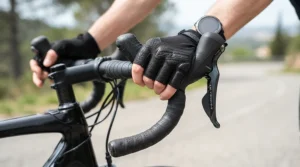
The headline feature is the Equalizer™ gel insert — padding developed in collaboration with a hand surgeon specifically to fill the natural gap between palm and handlebar, rather than simply adding a cushioning layer on top of the skin.
Specialized’s Body Geometry range is built around the idea of addressing actual contact points between rider and bike, and the Grail’s padding reflects that: a teardrop-shaped gel pad sits precisely over the sensitive area where the ulnar nerve runs close to the surface, a Clarino synthetic leather palm handles durability and bar feel, and a tapered slip-on cuff avoids the bulk of a Velcro strap. The touchscreen-compatible fingertips are a small but genuinely handy extra for anyone checking a GPS mid-ride.
What most buyers overlook about this model is that the padding isn’t simply “more” — it’s positioned differently, specifically to relieve pressure on the nerve pathway rather than cushion the whole palm evenly. Based on the design rationale published by Specialized and echoed across independent retailer reviews, this targeted approach is the reason riders who’ve struggled with numbness on other padded gloves often report better results here specifically, even when the overall padding volume looks similar on a spec sheet.
Pros:
- ✅ Equalizer gel pad targets ulnar nerve pressure directly
- ✅ Clarino palm balances durability with bar feel
- ✅ Slip-on cuff avoids bulky Velcro closures
Cons:
- ❌ Premium price relative to generic gel competitors
- ❌ Slip-on cuff can be trickier to remove with sweaty hands
At around £30-£40, the Specialized Body Geometry Grail Gel Gloves are worth the premium specifically if numbness, rather than general comfort, is the problem you’re trying to solve.
7. Castelli Arenberg 2 Gloves — best for cobbled and rough-road sportives
Named after the infamous Arenberg cobblestone sector of Paris-Roubaix, the standout feature here is Castelli’s CDS (Castelli Damping System) — a multi-density padding layout designed to filter road vibration before it fully reaches the hand.
The construction includes zonal padding of varying thickness across the palm, a durable synthetic palm material built to withstand repeated cobble and pothole impacts, and a longer cuff than most short-finger gloves to prevent chafing on extended rides. Castelli also offers a long-finger version with identical padding, which is a genuinely useful option for shoulder-season sportives where morning starts are cold but afternoons warm up.
Here’s what the naming convention won’t tell you outright, but the engineering makes clear: this is the most padded option in Castelli’s line-up, aimed squarely at riders who know their route includes genuinely rough surfaces rather than smooth club-ride tarmac. What the spec sheet won’t tell you, but reviewer feedback suggests, is that the multi-density approach avoids the “overcushioned” numbness some thick single-density gel gloves can paradoxically cause on very long rides, by varying support rather than just adding bulk everywhere.
Pros:
- ✅ Multi-density CDS padding suited to rough or cobbled roads
- ✅ Long cuff design reduces wrist chafing on long rides
- ✅ Long-finger version available with matching padding
Cons:
- ❌ Among the priciest options in this line-up
- ❌ Reduced bar feel on smooth tarmac compared with thinner gloves
Priced around £35-£45, the Castelli Arenberg 2 is the pick for riders whose sportive calendar includes genuinely brutal road surfaces.
Practical Usage Guide: Getting the Most From Your Gloves
Buying the right pair is only half the job — how you use and maintain padded gloves has a real effect on both comfort and lifespan. On first wear, resist the urge to size down for a “snug racing fit.” Padded gloves need enough room for the gel or foam to sit correctly over your pressure points; too tight and the padding gets pushed out of position exactly where you need it most.
For maintenance, most gel and foam-padded gloves — including the dhb Aeron, Altura Progel, and Bontrager Solstice Gel — should be hand-washed rather than machine-washed, since tumble-drying breaks down gel inserts and foam density over time. Rinse in cool water, gently squeeze out excess moisture, and air-dry away from direct heat or radiators, which can cause synthetic palm materials to crack.
A common mistake in the first 30 days is over-tightening the wrist closure to compensate for a glove that’s slightly too large elsewhere — this restricts blood flow exactly where you’re trying to prevent numbness, undermining the entire point of buying padded gloves in the first place. If you find yourself doing this with the Giro Bravo II or GripGrab Rouleur, it’s usually a sign you need a different size rather than a tighter strap. One optimisation trick worth knowing: rotating between two pairs of gloves across a training week lets padding fully recover its shape between rides, extending usable life by several months compared with wearing a single pair daily.

Real-World Scenarios: Which Rider Are You?
If you’re commuting 8 miles each way on pothole-scarred urban roads, the Bontrager Solstice Gel or Altura Progel make sense — enough padding to blunt daily buzz, without the premium price tag for a use case that’s more about consistency than peak performance. Frequency matters here more than intensity: five short rides a week add up to more cumulative palm pressure than one long weekend ride, even though it doesn’t feel that way at the time.
For the club rider tackling a 60-mile Saturday loop through the Chilterns or the Peak District, the Giro Bravo II or GripGrab Rouleur strike the right balance — enough cushioning for a half-day in the saddle, without sacrificing the handlebar feel needed for group-ride descents and quick direction changes.
Then there’s sportive riding specifically — events like a Etape-style closed-road day or a 100-mile charity sportive, where hands are gripping the same handlebar position for four, five, six hours with limited opportunity to shake out numbness on technical descents. This is where the Specialized Body Geometry Grail Gel Gloves and Castelli Arenberg 2 genuinely justify their higher price. As British Cycling explains, sportive routes commonly run from 20 to well over 100 miles on open roads, meaning hands are under sustained load for far longer than a typical training ride — exactly the scenario where targeted padding systems earn their keep over generic gel.
Problem → Solution: Fixing Common Hand Fatigue Complaints
Hand fatigue on the bike almost always traces back to one of a handful of root causes, and padded gloves solve some — but not all — of them.
Problem: Numbness in the little and ring finger. This pattern typically points to ulnar nerve compression at the base of the palm. According to Wikipedia’s overview of ulnar tunnel syndrome, this condition — also known as handlebar palsy — is directly associated with prolonged pressure at the wrist during long-distance cycling. Solution: a targeted gel insert like the one in the Specialized Body Geometry Grail gloves, combined with regularly shifting hand position on the bars every 10 minutes or so.
Problem: General soreness across the whole palm. Usually a sign of too much weight loaded onto the hands rather than the core and legs. Solution: check saddle-to-bar drop and consider a slightly higher stem before assuming the answer is simply “more padding” — the dhb Aeron‘s thick gel helps, but bike fit matters just as much.
Problem: Sweaty hands slipping on the bars. Solution: prioritise a textured or suede-effect palm, such as on the Bontrager Solstice Gel or Altura Progel, over smooth synthetic finishes.
Problem: Padding that’s flattened after one season. Solution: rotate between two pairs and avoid machine-washing, as covered above — cheaper foam and gel compresses permanently faster than premium multi-density systems like Castelli’s CDS.
Problem: Cold hands undoing the benefit of padding. Solution: switch to a long-finger padded glove, such as the long-finger Castelli Arenberg 2 or Specialized Body Geometry Grail, for shoulder-season riding rather than relying on short-finger mitts year-round.
How to Choose Padded Road Cycling Gloves
Picking the right pair comes down to matching padding type and placement to your actual riding pattern, not just grabbing whichever glove has the thickest-looking palm in the shop.
- Identify where you feel discomfort first. Little-finger numbness points to ulnar pressure and favours targeted gel inserts like Specialized’s Equalizer pad; general palm ache favours broader cushioning like the dhb Aeron‘s thick gel.
- Match padding thickness to ride length. Short commutes rarely need maximum cushioning; century rides and sportives benefit from multi-density systems such as Castelli’s CDS.
- Consider road surface quality. Rough or cobbled routes justify a glove like the Castelli Arenberg 2; smooth club-ride tarmac allows for thinner, more responsive options.
- Check closure style against your habits. Velcro straps (dhb, Giro) offer adjustability; slip-on cuffs (Specialized) are quicker on and off but less forgiving of an imprecise size.
- Weigh breathability for your climate and season. Mesh-heavy backs like the Giro Bravo II suit warm-weather riding; longer cuffs like the Castelli Arenberg 2 suit cooler shoulder seasons.
- Factor in budget realistically. The gap between the Bontrager Solstice Gel and the Specialized Body Geometry Grail is real, but so is the gap in targeted nerve-pressure relief — decide which matters more for your typical ride length.
- Try before committing to a full-length event. Wear any new glove on a few short rides before relying on it for an all-day sportive, since fit issues only reveal themselves after a couple of hours in the saddle.
Common Mistakes When Buying Padded Road Cycling Gloves
The single biggest mistake is assuming thicker padding always means better protection. As the dhb Aeron demonstrates, more gel volume can actually reduce bar feel and lever control without meaningfully improving comfort if it isn’t positioned over the right pressure points. Thickness and effectiveness are related, but they’re not the same thing.
A second common error is buying based on looks or brand reputation alone, without checking the closure system against your own hand shape — a glove that’s perfect for someone with narrow wrists can feel loose and bunched on someone with broader hands, undermining the padding’s positioning regardless of quality.
Third, plenty of buyers skip checking wash care instructions entirely, then wonder why their gel padding has gone lumpy after a few machine washes. And finally, riders often buy a single short-finger pair and expect it to cover both summer club rides and shoulder-season sportives — a mismatch that a long-finger option like the Castelli Arenberg 2 solves far more comfortably than trying to layer a base glove underneath a short-finger mitt.
Gel Padded Cycling Gloves vs Standard Foam-Padded Gloves
Gel padded cycling gloves and standard foam-padded gloves solve the same underlying problem — pressure and vibration at the palm — but via genuinely different mechanisms, and the distinction matters more than marketing copy usually admits.
| Factor | Gel Padding | Foam Padding |
|---|---|---|
| Vibration damping | Excellent, especially on rough tarmac | Good, generally less absorbent than gel |
| Weight over time | Can shift or flatten under sustained heat | Typically more stable, resists heat softening |
| Best example | dhb Aeron, Specialized Body Geometry Grail | Giro Bravo II, GripGrab Rouleur |
| Breathability | Can trap heat in warm weather | Usually more breathable |
| Longevity | Varies widely by quality of gel insert | Generally more consistent over seasons |
Reading the comparison above, gel inserts tend to win on raw vibration absorption — which is exactly why brands like Specialized position their gel technology around numbness prevention specifically — but they can soften and shift with prolonged heat exposure on a hot July ride, whereas foam-based padding in gloves like the GripGrab Rouleur tends to hold its shape more predictably across a full season. Neither is objectively superior; the right choice depends on whether your priority is maximum short-term cushioning or consistent long-term support.
What to Expect: Real-World Performance
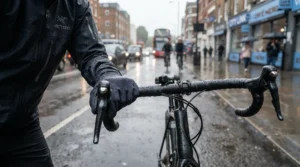
On paper, a spec sheet listing “4mm gel padding” or “Equalizer gel insert” doesn’t tell you much about how a glove actually feels three hours into a ride. In practice, thicker gel gloves like the dhb Aeron genuinely reduce buzz on rough B-roads, but that cushioning comes with a slightly muted feel through the brake levers — noticeable the first time you need to modulate braking hard into a corner.
Targeted-padding gloves like the Specialized Body Geometry Grail behave differently in the real world than the spec sheet suggests: rather than feeling “more padded,” they feel like the padding has simply been placed exactly where it’s needed, which many riders describe as feeling less bulky overall despite doing more functional work. Meanwhile, multi-density gloves such as the Castelli Arenberg 2 genuinely shine on rough or cobbled sportive routes but can feel slightly over-engineered — and marginally warmer — on a smooth, flat summer club ride where a lighter glove like the Bontrager Solstice Gel would do the job just as well.
Long-Term Cost & Maintenance
Cost-per-use is a more useful measure than sticker price alone. A £15-£20 pair like the Altura Progel, replaced once a season due to flattening padding, works out similarly over two years to a £30-£40 pair like the Specialized Body Geometry Grail that holds its shape for three or four seasons with proper hand-washing and rotation between two pairs.
Maintenance costs are low across the board — no specialist cleaning products are required, just cool hand-washing and air-drying — but the total cost of ownership shifts meaningfully depending on riding frequency. Someone commuting daily will wear through a budget gel pad faster than someone riding twice a week, which tips the long-term value case further towards the GripGrab Rouleur or Castelli Arenberg 2 for high-mileage riders, even at a higher upfront price.
Features That Actually Matter (And Those That Don’t)
Padding placement, closure fit, and palm material genuinely matter — they’re the three things that determine whether a glove solves your specific hand-fatigue problem or just looks the part in a product photo. Touchscreen-compatible fingertips, present on the Giro Bravo II and Specialized Body Geometry Grail, are a small but genuinely useful bonus for anyone checking a GPS computer mid-ride.
What matters far less than marketing suggests: exact colourway, branded logo size, and headline padding thickness in isolation. A thick gel pad in the wrong location, as with some cheaper unbranded gloves, does less for numbness than a thinner, well-placed insert. Reflective detailing and “aero” branding on gloves are largely cosmetic for anyone who isn’t racing at a competitive level, and shouldn’t weigh heavily in a buying decision focused on comfort and hand fatigue.
Padded Cycling Gloves Review Roundup: What Reviewers Actually Say
Aggregated feedback across UK cycling retailers and independent review sites gives a fairly consistent picture. The dhb Aeron review consensus, including detailed testing from road.cc’s independent glove review, highlights genuinely effective vibration damping but repeatedly flags reduced lever feel and a wrist closure that runs long — exactly matching the trade-off described earlier in this guide.
For the Giro Bravo II and GripGrab Rouleur, reviewer sentiment consistently centres on fit quality and all-round usability rather than standout cushioning, reinforcing their positioning as dependable mid-range choices rather than specialist numbness solutions. Feedback on the Specialized Body Geometry Grail and Castelli Arenberg 2, where verifiable, tends to focus on genuine pressure relief and durability justifying the higher price point, though a recurring theme across premium gel gloves generally is that fit precision matters enormously — a glove that’s excellent on one hand shape can feel merely average on another. Where individual customer review counts couldn’t be independently verified for a specific model, we’ve deliberately avoided inventing star ratings or review snippets, in line with honest reporting standards.

Frequently Asked Questions
❓ Do padded road cycling gloves actually reduce hand numbness?
❓ How thick should gel padding be for long sportive rides?
❓ Can I machine wash padded cycling gloves?
❓ What's the difference between short and long finger padded gloves?
❓ Are expensive padded gloves worth it over budget gel gloves?
Conclusion
Choosing padded road cycling gloves isn’t about finding the single “best” pair — it’s about matching padding type, thickness, and placement to your actual riding pattern. Short daily commutes are well served by budget gel options like the Bontrager Solstice Gel or Altura Progel, weekend club rides suit balanced mid-range picks like the Giro Bravo II or GripGrab Rouleur, and long sportive days or rough-road routes justify stepping up to targeted systems like the Specialized Body Geometry Grail or the multi-density Castelli Arenberg 2.
What matters more than brand name is understanding why your hands hurt in the first place, as covered in the HSE’s guidance on hand-arm vibration, which underlines just how real and cumulative vibration exposure can be over repeated use — the same underlying physics apply whether it’s a power tool or a handlebar. Get the fit and padding placement right for your own hands, and the rest of your ride gets noticeably more enjoyable.
✨ Don’t Miss These Exclusive Deals!
🔍 Take your hand comfort to the next level with these carefully selected padded road cycling gloves. Click on any highlighted pick to check current pricing and availability, and ride further without your hands paying the price!
Recommended for You
- Breathable Road Cycling Gloves: 7 Best Picks for UK Summer 2026
- Road Cycling Gloves for Beginners: 7 Best Picks (2026)
- Pull Up Gloves For Women: 7 Best Wrist-Support Picks (2026)
Disclaimer: This article contains affiliate links. As an Amazon Associate, I earn from qualifying purchases. If you purchase products through these links, we may earn a small commission at no additional cost to you.
✨ Found this helpful? Share it with your friends! 💬🤗
