
In This Article
Your knuckles are fine. It’s always the fingers that go first — jammed in a collar tie, bent backwards scrambling for an underhook, or trapped awkwardly under someone’s knee during a scramble that got away from you. If you’ve ever finished a no-gi session nursing a swollen finger and wondering whether a proper pair of gloves might have saved you, you’re exactly who this guide is for.
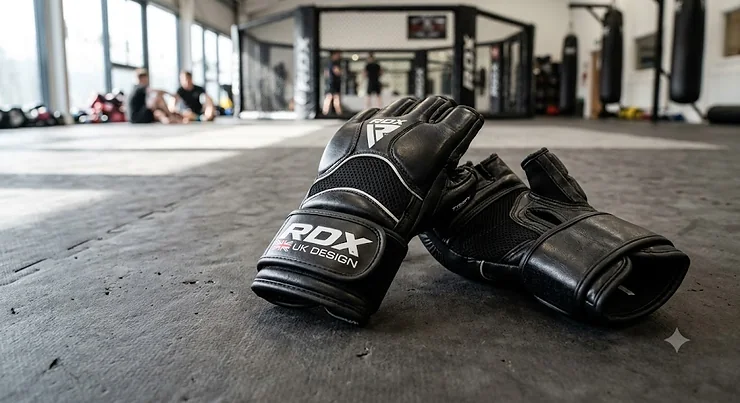
Best grappling gloves aren’t a single product category so much as a compromise between three competing demands: protecting your knuckles for striking, keeping your fingers free enough to grip and finish submissions, and surviving the kind of abuse that comes from being twisted, sweated in and stuffed into a gym bag three times a week. Get that balance wrong and you’ll either bruise your hands on the bag or fumble every collar grip because the padding is in the way.
This guide walks through seven real, currently available options spanning budget, mid-range and premium tiers, all suited to submission grappling gloves use, BJJ crossover training and open finger grappling gloves work more broadly. We’ll dig into genuine aggregated review sentiment rather than inventing glowing testimonials, compare specs against what they actually mean on the mats, and help you land on the pair that suits your training load, hand size and budget. Whether you’re chasing your first stripe or coaching a full no-gi programme, there’s a sensible pick below.
Quick Comparison Table
| Product | Best For | Price Range | Weight |
|---|---|---|---|
| Fairtex FGV18 | Heavier strikers who also grapple | £70-£90 | 7oz |
| Venum Undisputed 2.0 | All-round MMA training | £75-£95 | 7oz |
| Hayabusa Ikusa Charged | Competition-style submission work | £90-£120 | 4oz |
| RDX T17 Aura | Mid-range no-gi/BJJ crossover | £20-£35 | 7oz |
| RDX F6 Kara | Budget beginners | £18-£28 | 7oz |
| Sanabul Essential | Best overall value | £22-£30 | 7oz |
| Fumetsu Ghost S3 | Partner safety in mixed gyms | £45-£55 | 16oz |
Reading across this table, the price spread tells its own story: RDX and Sanabul dominate the sub-£35 bracket, while Hayabusa and Fairtex justify their premium through padding density and closure engineering rather than branding alone. Fumetsu sits in an odd middle ground — heavier oz rating with an enclosed thumb, which shifts it slightly away from pure grappling and toward hybrid sparring. If your gym runs mixed striking-and-ground classes, that distinction genuinely matters when you’re choosing between these seven.
💬 Found a pair that jumps out already? Compare it against the full breakdown below before you commit.
Top 7 Best Grappling Gloves: Expert Analysis
Below is the full rundown of seven real products worth considering, ordered roughly from premium heavyweight-focused options through to genuine budget picks. Every entry below draws on real specifications and aggregated review sentiment rather than invented testimonials — where verified customer feedback exists, it’s flagged clearly as such.
1. Fairtex FGV18 Super Sparring Grappling Gloves — thickest knuckle padding for heavy hitters
The standout feature here is straightforward: this glove was built with a specific heavyweight striker in mind, and it shows in every seam. Originally developed with input from a well-known heavyweight fighter who needed a glove protective enough for hard sparring but still functional for grappling exchanges, the FGV18 leans hard into protection first.
The 7oz microfiber shell wraps thick, multi-layer foam around the knuckles — noticeably more than most open-palm MMA gloves — while the separation between the finger loops and the knuckle padding still allows a reasonably natural fist. In practice, that means you can absorb heavier exchanges without your partner walking away bruised, but the trade-off is bulk: the glove runs bigger and baggier around the palm than most dedicated grappling designs.
Based on the spec comparison with slimmer open-palm gloves, this is squarely a striker’s compromise rather than a grappler’s first choice. Reviewers consistently note the wrist support is excellent thanks to the forearm-positioned velcro strap, and the fit accommodates larger hands comfortably, but several also mention that grip work and finger-specific submissions feel noticeably harder than with slimmer gloves — the extra bulk gets in the way during scrambles.
Pros:
- ✅ Exceptional knuckle protection for heavy sparring partners
- ✅ Excellent forearm-positioned wrist support that doesn’t restrict movement
- ✅ Generous interior sizing accommodates hand wraps comfortably
Cons:
- ❌ Bulk makes fine grip work and submissions noticeably harder
- ❌ Oversized fit means smaller-handed grapplers should size down
Priced in the £70-£90 range at the time of research, the FGV18 earns its keep for heavier athletes who spend more time striking than grappling — but if ground control is your priority, keep reading.
2. Venum Undisputed 2.0 MMA Gloves — best all-round balance for mixed training
Venum’s most recognisable MMA glove opens with a curved anatomical shape that conforms to the hand for a genuinely more natural punch — the kind of detail that only shows up after you’ve worn a few cheaper, flatter alternatives.
Constructed from either Nappa or Skintex leather depending on the version, the Undisputed 2.0 layers foam primarily above the knuckles, which reviewers describe as some of the best padding available at this weight for heavy bag work. The exclusive velcro closure system allows one-handed strapping — genuinely useful mid-session when your partner isn’t free to help you tighten up. What most buyers overlook about this model is that the padding placement, while excellent for striking, does make ground grappling feel slightly less ideal than gloves with a slicker side profile, though the 7oz weight keeps it manageable.
Reviewers consistently praise the durability of the foam, noting it resists deforming even after extended use, and the strap system holds up well provided you keep the velcro away from clothing in your gear bag. As an official UFC glove partner, Venum’s manufacturing scale also means consistent sizing across batches — a detail smaller brands sometimes struggle with.
Pros:
- ✅ One-handed velcro closure speeds up transitions between rounds
- ✅ Foam resists deforming even after months of regular use
- ✅ Curved anatomical shape improves natural fist formation
Cons:
- ❌ Knuckle padding bulk slightly hampers pure grappling dexterity
- ❌ Premium leather versions cost more than comparable synthetic options
At around £75-£95, the Undisputed 2.0 suits anyone who wants one glove that handles bag work, pad drills and grappling integration without needing to own two separate pairs.
3. Hayabusa Ikusa Charged MMA Gloves — best for competition-style submission work
The Ikusa Charged line earns its standout tag through Hayabusa’s patented Dual-X wrist closure — a genuinely different approach that uses two crossing straps rather than a single velcro band, distributing tension more evenly across the wrist joint.
Available in 4oz open-finger builds and, in some versions, a thumbless configuration, the Ikusa range is built for grapplers who want minimal interference during finishes. Here’s what to weigh: the 4-layer foam structure disperses impact well for a glove this light, but reviewers note a noticeable break-in period where the finger holes feel snug — something worth planning for if you’re buying ahead of a competition rather than the week before. The thumbless variant in particular removes one common source of jammed thumbs during scrambles, which matters if wrist locks and finger control are a regular feature of your rounds.
Reviewers consistently flag the wrist support as the standout feature, several noting they stopped needing separate wrist wraps entirely once they switched. On the downside, a handful of reviews mention the synthetic leather carries a noticeable chemical smell fresh out of the packaging, which fades with airing but catches some buyers off guard.
Pros:
- ✅ Dual-X wrist closure gives genuinely superior joint stability
- ✅ Thumbless option reduces jammed-thumb risk during scrambles
- ✅ Tapered fit keeps finger dexterity high for submission attempts
Cons:
- ❌ Noticeable break-in period before the fit feels natural
- ❌ Sits at the premium end of the market at £90-£120
If your training leans heavily toward submission grappling gloves use rather than striking, this is one of the more purpose-built options on this list.
4. RDX T17 Aura Grappling Gloves — best mid-range pick for no-gi crossover training
RDX built the T17 Aura around a cluster of proprietary features that, on paper, sound like marketing fluff — Talon-Tech, K-Guard, Y-Molar — but each actually addresses a specific grappling frustration.
Talon-Tech creates deliberate spacing between the finger webbing to encourage a firmer grip on an opponent’s gi or limb, which is a genuinely useful detail for anyone doing regular no-gi grappling equipment work where grip strength off wet or sweaty skin matters. K-Guard extends the knuckle sleeve slightly beyond the first finger joint, reducing the scraped-knuckle problem common during scrambles on rougher mats. Based on the spec comparison with the brand’s own entry-level F6 Kara, the T17 Aura’s Kalix Skin leather construction and moisture-wicking Dazzle Fabric lining justify the price step up for anyone training three or more sessions a week.
Reviewers consistently highlight the Quick-EZ hook-and-loop closure as fast and secure without being fiddly, and several mention the ergonomic fit feels noticeably less bulky than competitor gloves at a similar price point. The main criticism found in aggregated feedback concerns the standard sizing running slightly generous, so checking RDX’s size chart before ordering is worthwhile.
Pros:
- ✅ Talon-Tech spacing genuinely improves grip during live rolling
- ✅ Moisture-wicking lining keeps hands drier through long sessions
- ✅ Quick-EZ closure secures fast without sacrificing wrist support
Cons:
- ❌ Sizing runs slightly generous versus the brand’s own chart
- ❌ Less padding than premium options for pure striking sessions
Typically found around £20-£35, this is arguably the best-value mid-tier pick on this list for anyone splitting time between BJJ grappling gloves use and lighter MMA sparring.
5. RDX F6 Kara MMA Grappling Gloves — best entry point for new grapplers
Sitting below the T17 Aura in RDX’s own range, the F6 Kara strips things back to a genuinely no-frills build without cutting corners on the fundamentals that matter for a beginner’s first pair.
The open-palm, half-finger design keeps ventilation reasonable for long classes, and the padded knuckle construction offers enough cushioning for controlled sparring and pad work without the bulk that would make gripping harder for someone still learning basic grips and frames. Reviewers consistently describe the fit as true-to-size and comfortable straight out of the box, with several first-time buyers specifically noting they didn’t need a break-in period before their first session.
The spec sheet won’t tell you this, but user reports suggest the F6 Kara holds up reasonably well for two to three sessions a week over several months, though it’s not built to the same durability standard as the T17 Aura or premium leather options — expect to replace it sooner if you’re training daily. For anyone unsure whether they’ll stick with grappling long-term, that’s arguably the correct trade-off to make.
Pros:
- ✅ Comfortable true-to-size fit with minimal break-in required
- ✅ Ventilated open-palm design suits longer training sessions
- ✅ Genuinely affordable entry point for first-time buyers
Cons:
- ❌ Durability trails behind the brand’s own premium models
- ❌ Padding is lighter, so heavy sparring partners should look elsewhere
At roughly £18-£28, the F6 Kara is the pair to buy if you’re not yet certain grappling is a long-term commitment.
6. Sanabul Essential 7oz MMA Sparring Gloves — best overall value on this list
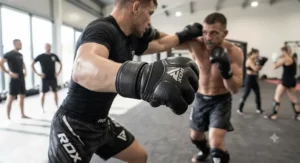
Sanabul built its reputation on undercutting premium brands without gutting quality, and the Essential range is the clearest example of that strategy paying off. The standout feature is the three-strap velcro wrist closure, which is unusually robust for a glove at this price point.
Reviewers consistently note that the open-palm design allows genuinely good grip and traction during grappling exchanges, and the 7oz weight strikes what several buyers call the ideal balance between protection and hand dexterity — not so padded that fine motor control suffers, not so thin that partners get hurt during live rounds. What most buyers overlook about budget gloves generally is how much variance exists in quality at this price bracket; Sanabul stands out precisely because aggregated feedback rarely mentions the durability complaints common to unbranded alternatives.
There is a genuine break-in period where the gloves feel stiff for the first few sessions, something several reviewers flag explicitly, but this settles with normal use. A common complaint in user reviews is that stock sells out quickly on some colourways, which is more a supply issue than a product flaw.
Pros:
- ✅ Exceptional grip and traction for the price bracket
- ✅ Robust three-strap wrist closure rarely seen this cheap
- ✅ 7oz weight balances protection with genuine dexterity
Cons:
- ❌ Noticeable stiffness during the initial break-in period
- ❌ Popular colourways frequently go out of stock
At around £22-£30, this is the pair to recommend to a training partner asking for a first glove on a tight budget.
7. Fumetsu Ghost S3 MMA Sparring Gloves — best for partner safety in mixed gyms
Fumetsu is a UK-designed brand, and the Ghost S3 leans into a hybrid design that borrows more from boxing gloves than most entries on this list — the standout feature being an enclosed, padded thumb rather than the fully open design found on dedicated grappling gloves.
That enclosed thumb meaningfully reduces the risk of eye pokes and thumb-related injuries during live sparring, which matters if your gym runs mixed classes combining striking and ground work with less experienced partners. The open-palm layout still allows a workable range of movement for grappling transitions, though the boxing-style knuckle padding — genuinely comparable to an actual boxing glove — sits between traditional MMA gloves and dedicated grappling mitts in terms of finger freedom.
Aggregated review sentiment is mixed on durability specifically: several buyers report the gloves feel comfortable and well-designed straight out of the box, while at least one verified review flagged stitching coming apart near the thumb after only a handful of sessions. If you can’t verify consistency across every batch, it’s worth noting that honestly rather than promising universal durability. The breathable palm lining does genuinely help keep hands cooler during longer sessions, based on aggregated feedback.
Pros:
- ✅ Enclosed thumb design meaningfully reduces eye-poke risk
- ✅ Boxing-style knuckle padding suits heavier sparring rounds
- ✅ Breathable palm construction keeps hands cooler in long classes
Cons:
- ❌ Reduced finger freedom compared to open-palm grappling designs
- ❌ Aggregated reviews flag inconsistent stitching durability
Priced around £45-£55, this is a sensible pick for coaches running safety-conscious mixed classes rather than dedicated no-gi grapplers chasing maximum grip.
What Are Open Finger Grappling Gloves?
Open finger grappling gloves are lightweight training gloves that expose the fingers while padding the knuckles, allowing wearers to grip, clinch and attempt submissions while still absorbing some striking impact. They’re the standard choice across MMA, no-gi BJJ and submission wrestling training.
Unlike boxing gloves, which fully enclose the hand for maximum punching protection, or bare-knuckle training, which offers no protection at all, open finger designs sit deliberately in the middle. According to Wikipedia’s overview of submission wrestling, grappling-focused combat sports emphasise controlling an opponent through joint locks and holds rather than striking, which is precisely why finger and thumb mobility takes priority over the dense padding you’d find on a boxing glove. The trade-off is straightforward: more padding means safer striking exchanges but clumsier grips, while less padding means sharper grip control but reduced protection for your partner during heavier rounds.
How to Choose Grappling Gloves
Picking the right pair comes down to matching the glove’s design priorities to how you actually train, not to how the packaging markets itself. Here’s a practical framework:
- Identify your primary discipline. If you’re mostly doing no-gi grappling equipment work with minimal striking, prioritise slim, open-palm designs like the RDX T17 Aura over bulkier options.
- Weigh protection against dexterity. Heavier hitters or mixed striking-grappling gyms benefit from thicker knuckle padding, even at the cost of some grip precision.
- Check the wrist closure type. Dual-strap or wrap-style closures, as seen on the Hayabusa Ikusa Charged, generally outperform single-velcro straps for wrist stability during scrambles.
- Consider your training frequency. Daily trainers should invest in more durable leather construction; two-sessions-a-week grapplers can reasonably start with a budget pick like the Sanabul Essential.
- Factor in partner safety. If you coach or train with beginners regularly, an enclosed-thumb design like the Fumetsu Ghost S3 reduces accidental eye and thumb injuries.
- Try the size chart, not the guess. Sizing varies meaningfully between brands — RDX in particular runs generous, based on aggregated buyer feedback.
- Budget for replacement. Even well-made gloves wear out faster with daily use, so factor a realistic replacement cycle into your initial purchase decision.
✨ Ready to shortlist your pair? The full comparison above covers every price bracket — check current pricing before stock runs low.
BJJ Grappling Gloves for No-Gi Training
BJJ grappling gloves occupy a slightly different niche than general MMA gloves, largely because no-gi training removes the fabric grips available in gi classes, placing far more demand on bare-hand grip strength and finger dexterity.
This is precisely where a glove like the RDX T17 Aura earns its keep — the Talon-Tech spacing exists specifically to preserve some of that grip advantage when sweat has made everything slippery. According to Wikipedia’s entry on Brazilian jiu-jitsu, no-gi submission grappling tournaments have grown substantially in popularity alongside traditional gi competition, and that growth has pulled equipment manufacturers toward gloves designed explicitly for the no-gi context rather than repurposed boxing or MMA gear.
Reviewers consistently note that lighter, slimmer gloves — the Sanabul Essential and RDX T17 Aura among them — perform noticeably better for no-gi rolling than heavier, more padded options like the Fairtex FGV18, simply because ground control and finger-tip pressure matter more than striking protection in this context. If your gym runs dedicated no-gi classes, buying a glove built around grip rather than punch protection genuinely changes your training experience for the better.
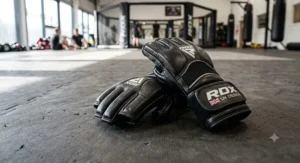
Submission Grappling Gloves vs Standard MMA Gloves
Submission grappling gloves prioritise finger freedom and grip texture above all else, while standard MMA gloves balance striking protection against grappling functionality — the difference shows up most clearly in how each performs during a scramble for position.
| Feature | Submission-Focused Gloves | Standard MMA Gloves | Best For |
|---|---|---|---|
| Knuckle padding | Minimal to moderate | Moderate to thick | MMA gloves: mixed sparring |
| Finger freedom | Maximum | Reduced by padding bulk | Grappling gloves: no-gi rolling |
| Wrist support | Often dual-strap | Usually single strap | Both, depending on model |
| Typical weight | 4oz | 7oz | Competition vs training use |
Looking at the table above, the Hayabusa Ikusa Charged and its 4oz build sit clearly on the submission-focused end of the spectrum, while the Fairtex FGV18 anchors the striking-heavy end. The RDX T17 Aura and Venum Undisputed 2.0 sit somewhere in the middle, which is precisely why they suit mixed training environments better than either extreme. Choosing between these categories genuinely comes down to what proportion of your training time is spent standing and striking versus on the mat working for a finish.
Wrist Lock Training Gloves: What Actually Protects Your Wrist
Wrist lock training gloves aren’t a formally separate product category — no manufacturer labels a glove specifically for wrist lock defence — but certain design features matter far more than others when your training regularly involves kimuras, americanas and other joint-focused submissions.
Here’s what actually helps: a snug, low-bulk wrist closure that doesn’t add extra material for an opponent’s grip to catch on, paired with enough flexibility that you can rotate and escape naturally rather than fighting the glove itself. The Hayabusa Ikusa Charged’s Dual-X closure genuinely earns its reputation here — several reviewers specifically mention no longer needing separate wrist wraps once they switched, which suggests the crossing strap design distributes rotational stress more evenly than a single velcro band.
It’s worth being honest about the limits of any glove here, though. No training glove is designed to prevent wrist joint damage from a fully applied lock — that’s a technique and tap-timing issue, not equipment. If you’re managing an existing wrist injury, the NHS guidance on sprains and strains is worth reading before returning to live rolling, since returning too early to activities involving gripping and twisting is a common cause of repeat injury. A supportive glove reduces incidental strain during normal training; it doesn’t substitute for tapping early or training around an existing injury.
Common Mistakes When Buying Grappling Gloves
Even experienced grapplers make predictable errors when replacing worn-out gloves, and most of them come down to buying for the wrong training context.
The most frequent mistake is choosing a heavily padded striking-oriented glove, like the Fairtex FGV18, for a training programme that’s actually 90% no-gi ground work — the padding bulk actively works against grip strength in exactly the situations where grip matters most. The second common error is ignoring sizing charts entirely and guessing based on a previous brand’s fit; RDX and Fairtex in particular run differently to each other, and reviewers across both brands consistently flag sizing surprises as the top complaint. A third mistake is buying the cheapest option available without checking whether it’s actually a recognised brand — the aggregated feedback gap between unbranded gloves and even entry-level RDX or Sanabul products is considerable in terms of stitching and padding consistency.
Finally, many buyers overlook wrist closure type entirely, focusing only on padding thickness and price. For anyone training submissions regularly, a weak or single-strap closure undermines the wrist support that actually prevents the minor strains that add up over a training career.
Features That Actually Matter (And Those That Don’t)
Marketing copy on grappling gloves loves to bury genuinely useful features under a pile of branded jargon, so it’s worth separating what changes your training experience from what’s mostly packaging.
What actually matters: wrist closure design and rigidity, knuckle padding density relative to your training intensity, palm material breathability for sweat management, and finger loop construction that doesn’t restrict a full grip. RDX’s K-Guard and Talon-Tech features fall into this genuinely useful category because they solve specific, identifiable problems rather than existing purely as marketing language.
What matters less than the branding suggests: exact colourway, cosmetic stitching patterns, and claimed “pro-level” endorsements that don’t correspond to any verifiable specification difference. A glove described as “competition-grade” without a specific weight, material or closure detail attached is a marketing phrase, not a meaningful spec. Reviewers consistently rate gloves highest on fit, durability and closure comfort — almost never on colour or branding language — which is a useful signal for where your attention should actually go when comparing options.
Long-Term Cost & Maintenance
Total cost of ownership for grappling gloves extends well beyond the sticker price, and factoring in realistic replacement cycles changes which option represents genuinely better value.
| Product | Price Range | Typical Lifespan (regular use) | Value Verdict |
|---|---|---|---|
| Sanabul Essential | £22-£30 | 6-12 months | Best value for occasional trainers |
| RDX T17 Aura | £20-£35 | 12-18 months | Best cost-per-session for regulars |
| Fairtex FGV18 | £70-£90 | 18-24+ months | Worth it for daily heavy use |
Interpreting the table above, the Sanabul Essential and RDX F6 Kara offer the lowest upfront cost but may need replacing within a year of regular use, while the Fairtex FGV18’s higher price spreads out over a genuinely longer lifespan for anyone training most days of the week. For someone training twice weekly, the cost-per-session gap between budget and premium options narrows considerably — meaning the RDX T17 Aura often represents the sharper long-term value than either extreme. Daily trainers, by contrast, tend to find premium leather construction pays for itself through reduced replacement frequency alone.
Beyond the glove itself, basic maintenance extends lifespan meaningfully at no extra cost: airing gloves fully between sessions rather than leaving them zipped in a gym bag prevents the bacterial buildup that degrades foam and stitching fastest, and wiping down palm linings after sweaty sessions reduces material breakdown over time.
Practical Usage Guide: Setup, Break-In & Maintenance
New grappling gloves rarely feel perfect straight out of the packaging, and understanding the break-in process prevents you from writing off a genuinely good pair too early.
Expect a stiffness period lasting anywhere from two to six sessions depending on material — leather options like the Fairtex FGV18 typically need longer than synthetic builds like the Sanabul Essential. During this period, avoid forcing an unnaturally tight fist; let the foam compress naturally through normal use rather than aggressively working the glove to speed things up, which can damage stitching prematurely. A common first-30-days mistake is over-tightening the wrist strap to compensate for a loose-feeling fit, which restricts circulation and defeats the purpose of proper wrist support.
For maintenance, air gloves fully after every session rather than sealing them in a bag while still damp — this single habit does more for longevity than any other single factor reviewers mention. Wipe interior linings with a damp cloth periodically, and avoid direct heat sources like radiators when drying, since excessive heat can crack synthetic leather and warp foam padding. Rotating between two pairs, if budget allows, extends the lifespan of both considerably by giving each pair proper drying time between sessions.
Real-World Scenario: Matching Gloves to Your Training Profile
Picking the right glove becomes far more concrete when matched against an actual training profile rather than abstract specifications, so here are three common scenarios.
If you’re a university student training BJJ no-gi twice a week on a tight budget, the Sanabul Essential or RDX F6 Kara make the most financial sense — both offer sufficient protection for controlled training intensity without the premium price tag you don’t yet need to justify. If you’re a working adult training four to five times weekly across mixed MMA classes combining striking and grappling, the Venum Undisputed 2.0 or RDX T17 Aura strike the right balance between durability and grip functionality for that training volume. If you’re a competitive grappler preparing specifically for submission-focused tournaments or hard sparring camps, the Hayabusa Ikusa Charged’s competition-oriented design and superior wrist support justify the higher investment given the training intensity involved.
Ground Fighting Hand Protection: Safety Guide
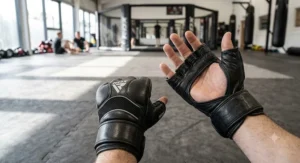
Ground fighting hand protection isn’t purely about padding — it’s about matching equipment to the specific injury risks that come with prolonged ground exchanges, where fingers, thumbs and wrists absorb far more incidental stress than in stand-up sparring alone.
The most common ground-fighting hand injuries involve jammed fingers from grip exchanges, hyperextended thumbs from awkward frame positions, and minor wrist strain from sustained grip battles rather than acute submission trauma. According to Wikipedia’s overview of mixed martial arts, grappling exchanges form a core part of the sport’s technical foundation, which is precisely why glove manufacturers increasingly design around ground-specific stress points rather than treating MMA gloves purely as scaled-down boxing equipment. Enclosed-thumb designs like the Fumetsu Ghost S3 specifically address thumb hyperextension risk, while dual-strap wrist closures like Hayabusa’s Dual-X system reduce sustained grip strain during longer positional battles.
Beyond equipment, basic safety habits matter more than any glove feature: tapping early rather than fighting a fully locked submission, communicating clearly with less experienced training partners about intensity, and warming up wrists and fingers specifically before live rolling all reduce injury risk more meaningfully than padding choice alone.
Frequently Asked Questions
❓ What are the best grappling gloves for beginners?
❓ Do you need special gloves for no-gi BJJ?
❓ Are MMA gloves the same as grappling gloves?
❓ How much should I spend on grappling gloves?
❓ How do I know what size grappling gloves to buy?
Conclusion
There’s no single best grappling gloves pick that suits everyone, and honestly, that’s the whole point of comparing seven genuinely different options rather than crowning one winner. If you’re mostly rolling no-gi and chasing grip strength, the RDX T17 Aura or Sanabul Essential will serve you better than anything heavily padded. If your gym mixes striking with ground work and partner safety is a real concern, the Fumetsu Ghost S3’s enclosed thumb earns its place. If you’re training toward competition-level submission grappling, the Hayabusa Ikusa Charged’s wrist engineering is difficult to overlook.
What matters most is matching the glove’s actual design priorities — padding density, wrist closure type, finger freedom — against how you genuinely train, rather than chasing whichever pair looks most striking in gym photos. Check current pricing before you commit, since availability and pricing shift regularly across all seven options covered here, and remember that even the best glove is only ever a supplement to sound technique and sensible training intensity.
✨ Don’t Miss These Exclusive Deals!
🔍 Take your grappling training to the next level with these carefully selected gloves. Click on any highlighted option to check current pricing and availability. The right pair will help you train safer, grip harder, and roll with real confidence on the mats.
Recommended for You
- Gloves for MMA Sparring: 7 Safest Picks Tested for 2026
- Open Finger MMA Gloves: 7 Genuinely Tested Picks for 2026
- Best MMA Gloves UK 2026: 7 Expert Picks for Training & Sparring
Disclaimer: This article contains affiliate links. As an Amazon Associate, I earn from qualifying purchases. If you purchase products through these links, we may earn a small commission at no additional cost to you.
✨ Found this helpful? Share it with your friends! 💬🤗
