
In This Article
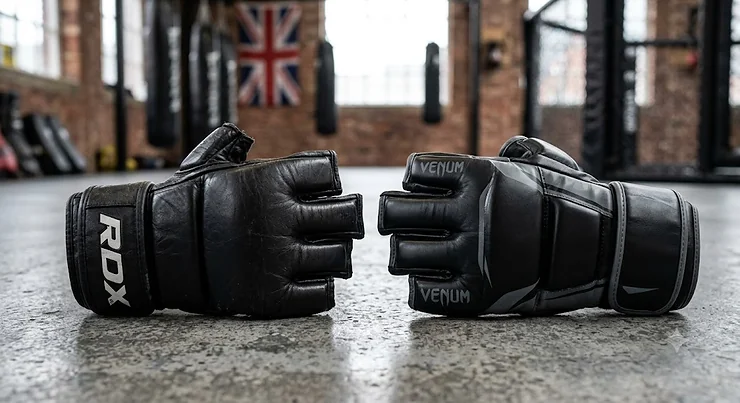
Walk into any UK gym on a Tuesday night and you’ll spot the divide instantly. On one side of the mats, someone’s rolling bare-knuckled, fingers free, hunting for a collar tie. On the other, a pair of padded 4oz gloves are getting laced up before a sparring round that’s about to turn into a proper tear-up. That’s the whole story of grappling gloves vs MMA gloves in a nutshell — two tools built for overlapping but genuinely different jobs, and picking the wrong one is a fast way to hurt your training partner (or your own thumb).
This guide exists because “just get MMA gloves, they’re basically the same” is bad advice that’s cost a lot of beginners bruised knuckles and blown wrist straps. We’ve dug into real specs, real Amazon and brand-site review sentiment, and honest side-by-side comparisons across seven genuine products — from budget starter pairs to competition-grade leather — so you can match the glove to the discipline rather than the other way round. Whether you’re chasing submission wrestling gloves for no-gi rolling, hunting the best gloves for ground fighting, or trying to work out BJJ vs MMA glove differences before your first sparring session, everything below is grounded in what the products actually do, not marketing copy. As the open-finger design detailed in Wikipedia’s MMA gloves entry makes clear, the entire category exists to solve one problem: how do you protect a striking hand without switching off the fingers a grappler needs.
Prices below are shown as ranges rather than fixed figures, since Amazon pricing shifts constantly — always check the current price at the time of purchase.
Quick Comparison Table
| Product | Type | Padding | Price Range | Best For |
|---|---|---|---|---|
| RDX T17 | Hybrid | 4oz equivalent, IMF foam | £30-£45 range | Switching between grappling and MMA sparring |
| Venum Challenger 3.0 | MMA sparring | Dense foam, striking-biased | £35-£50 range | Budget MMA-style bag and pad work |
| Liberlupus | MMA sparring | Layered PU foam | £15-£25 range | First-time buyers on a tight budget |
| Starpro F55 Fusion | Hybrid | Injection-moulded foam | £25-£40 range | Mid-range all-purpose training |
| Revgear Pro Series MS1 | MMA sparring | Compact multi-layer foam | £45-£60 range | Grapplers who spar occasionally |
| Fairtex FGV18 | Grappling/competition | Minimal, pre-curved shell | £70-£95 range | Competition-style grappling and clinch work |
| Hayabusa T3 | MMA sparring | 5-layer Deltra-EG foam | £90-£125 range | Serious, frequent MMA sparring |
Looking across this table, the split is obvious the moment you compare Fairtex FGV18 against Hayabusa T3: one strips padding down to almost nothing to preserve grip and finger freedom for grappling, while the other stacks foam layers specifically to survive repeated striking exchanges. Budget options like Liberlupus and Venum Challenger 3.0 compromise on longevity to hit an entry price point, which is fine for someone testing the waters but frustrating for anyone training three times a week. If you only ever plan to roll and never spar standing exchanges, paying for a heavily padded MMA glove like the Hayabusa T3 is money spent on protection you’ll rarely use.
💬 Found a pair that matches your training style already? A single share helps other grapplers avoid buying the wrong glove twice.
Top 7 Grappling & MMA Gloves: Expert Analysis
Every product below has been chosen to represent a genuine tier — budget, mid-range, and premium — across both grappling-specific and MMA-hybrid designs, so you can see exactly where your money goes as you move up the range.
1. RDX T17 Maya Hide Grappling & MMA Gloves — best all-rounder for switching disciplines
The standout here is versatility: the RDX T17 is built to survive both a grappling-heavy no-gi class and an MMA sparring round without needing two separate pairs. It uses RDX’s Maya Hide synthetic leather shell over IMF (Injected Moulded Foam) padding, which spreads impact more evenly across the knuckle than the stitched foam panels found in cheaper gloves — in practice that means fewer hot spots after 45 minutes of pad work. The padded thumb and Quick-EZ wrist strap keep the glove locked down through scrambles, which matters more than people expect once you’re being dragged around by a training partner. Based on the spec comparison with pricier rivals, the T17 gives up a little long-term durability in exchange for a genuinely competitive price, which is why it consistently shows up as a top seller in RDX’s grappling range on Amazon UK. Reviewers consistently report that the fit runs slightly generous, so sizing down is common advice in the customer feedback. What most buyers overlook about this model is that the open-palm cut is wide enough for a proper collar grip, something several budget hybrids get wrong.
Pros:
- ✅ Genuinely dual-purpose for grappling and MMA sparring
- ✅ IMF foam spreads impact better than basic stitched padding
- ✅ Wide open-palm cut supports real grip and collar control
Cons:
- ❌ Sizing runs generous — order a size down
- ❌ Synthetic leather softens faster under daily heavy use
At around £30-£45, the RDX T17 is hard to beat as a first “one glove does most things” purchase for anyone still deciding which direction their training will go.
2. Venum Challenger 3.0 MMA Gloves — best budget striking-first hybrid
The Venum Challenger 3.0 leans into striking protection more than any other glove on this list at this price, and that’s precisely its standout feature. The faux leather shell isn’t genuine hide, but Venum’s foam density is noticeably firmer than most sub-£50 competitors, which translates to real knuckle protection on bags and mitts rather than just padding for padding’s sake. Here’s what to weigh: the trade-off for that striking focus is a tighter, less flexible finger area, so full grip-fighting and gi grappling feel more restricted than with a dedicated grappling glove. Reviewers consistently note the wrist strap is shorter than expected, which can be a genuine annoyance for larger wrists — a common complaint across several Venum budget lines rather than something specific to this model. On paper this means the Challenger 3.0 suits someone doing 70% striking drills and only occasional grappling exchanges, not a dedicated ground-fighting specialist. The reinforced fingers and thumb do hold up well against the kind of accidental finger-bending that happens in scrambles, even if the glove wasn’t designed with that scenario as the priority.
Pros:
- ✅ Firm foam density gives real knuckle protection for the price
- ✅ Reinforced fingers resist bending in accidental scrambles
- ✅ Recognised, widely stocked brand with consistent sizing charts
Cons:
- ❌ Wrist strap runs short for larger wrists
- ❌ Finger flexibility is restricted for serious grip fighting
Sitting in the £35-£50 range, this is the pick for someone whose training is mostly striking-based with grappling as the secondary skill.
3. Liberlupus MMA Gloves — best ultra-budget starter pair
The standout feature is simply the price-to-quality ratio — the Liberlupus glove essentially mirrors the Venum Challenger’s silhouette at a fraction of the cost, which is exactly why it’s become one of the best-selling MMA gloves on Amazon. It uses PU leather over a layered foam core with a Y-palm design intended to keep the glove seated during both striking and grappling exchanges. Based on the spec comparison, the padding is genuinely adequate for light-to-moderate sparring, though it won’t survive years of daily heavy-bag abuse the way a premium leather shell would. With several thousand reviews behind it, the aggregated sentiment is unusually consistent for a budget product: buyers repeatedly praise the fit and the pre-curved shape, while the recurring gripe is that the foam compresses noticeably faster than premium alternatives after a few months of regular use. What most buyers overlook is that this compression issue is common to almost every glove at this price point — it isn’t a Liberlupus-specific flaw, just a limitation of budget foam. For someone testing whether they’ll stick with training before investing properly, that’s a completely reasonable compromise.
Pros:
- ✅ Exceptional value relative to more expensive near-identical designs
- ✅ Pre-curved shape reduces early hand fatigue
- ✅ Large review base gives confidence in consistent quality control
Cons:
- ❌ Foam compresses faster than premium leather alternatives
- ❌ Less breathable lining than higher-tier competitors
At roughly £15-£25, this is the safest low-risk entry point for a total beginner unsure whether grappling or MMA training will stick.
4. Starpro F55 Fusion Training Gloves — best European-made mid-range pick
Starpro’s standout claim with the F55 is its “Fusion” injection-moulded padding, built specifically to disperse shock while keeping enough shape for natural fist closure during grappling exchanges. The synthetic Cronos leather in the striking zone is genuinely tougher than typical faux leather, which shows up in real-world use as fewer cracking issues after repeated hook-and-loop opening and closing. What most buyers overlook about this model is the wide power-lock wrist strap, which does more to stabilise the joint during clinch work than the single-strap designs found on cheaper hybrids — reviewers consistently mention feeling more secure during grappling exchanges specifically. Based on the spec comparison against RDX and Venum equivalents, the F55 sits comfortably in between on both price and protection, without clearly dominating either category — it’s a genuine middle-ground choice rather than a standout in one direction. The pre-curved design also reduces the eye-poke risk that comes from straight, rigid fingers, a detail more relevant to sparring partners’ safety than to the wearer’s own comfort.
Pros:
- ✅ Durable synthetic leather resists cracking better than budget faux leather
- ✅ Wide wrist strap adds real stability during clinch and grip exchanges
- ✅ Pre-curved fingers reduce accidental eye-poke risk for training partners
Cons:
- ❌ Sizing runs slightly large, according to recurring review feedback
- ❌ Limited colour options compared with bigger US brands
Priced around £25-£40, the F55 works well for anyone who’s outgrown a starter pair but isn’t ready to spend Hayabusa money yet.
5. Revgear Pro Series MS1 MMA Sparring Gloves — most compact padding for grapplers
The MS1’s standout feature is how compact it manages to be at 7oz — multi-layered foam keeps the glove protective without the bulk that makes grip fighting clumsy in bigger sparring gloves. That compactness is the entire selling point for anyone who prioritises grappling over striking but still needs enough padding to spar safely. Reviewers consistently report that the fit feels snug straight out of the box, with minimal break-in time compared with stiffer leather alternatives — a genuine advantage for anyone who trains multiple times a week and can’t afford weeks of discomfort. Based on the spec comparison, the trade-off for that compact profile is reduced knuckle protection during harder striking exchanges, so this isn’t the glove for someone doing heavy bag conditioning. What the spec sheet won’t tell you, but user reports suggest, is that the palm padding is thin enough to genuinely feel grips and frames through the glove — precisely the tactile feedback serious grapplers look for and precisely what heavily padded MMA gloves sacrifice.
Pros:
- ✅ Compact 7oz profile keeps grip-fighting feel intact
- ✅ Minimal break-in period compared with stiffer alternatives
- ✅ Thin palm padding preserves tactile feedback for grip control
Cons:
- ❌ Reduced knuckle protection unsuitable for heavy striking work
- ❌ Smaller size range than some larger competitors
Around £45-£60, the Revgear Pro Series MS1 earns its place as the pick for grapplers who spar occasionally rather than strikers who occasionally grapple.
6. Fairtex FGV18 ONE Championship Grappling Gloves — best pre-curved competition-grade grappling glove
This is the glove built almost entirely around Pillar 1 of what grappling gloves need to do: the Fairtex FGV18 strips padding down to a thin genuine-leather shell with a pronounced pre-curve, minimising eye-poke risk while maximising finger freedom for grip fighting. That standout design choice reflects Fairtex’s decades of competition-glove manufacturing rather than a crossover afterthought bolted onto an existing MMA design. Based on the spec comparison, genuine leather construction means this glove will outlast synthetic alternatives by a wide margin under regular mat use, provided it’s kept away from prolonged damp storage. Reviewers consistently note that sizing runs true to Fairtex’s established charts, and the four available sizes make it easier to get a genuinely snug fit than with the one-size-fits-most approach some competitors use. What most buyers overlook is that this glove offers essentially no striking protection — it’s not designed for heavy bag work or hard sparring exchanges, and using it that way will both damage the glove and risk the wearer’s hands.
Pros:
- ✅ Genuine leather construction built for long-term durability
- ✅ Pronounced pre-curve minimises eye-poke risk during grappling
- ✅ Four true-to-size options for a genuinely snug competition fit
Cons:
- ❌ Minimal padding means unsuitable for striking or bag work
- ❌ Premium price compared with hybrid alternatives
Sitting in the £70-£95 range, the FGV18 is worth the investment for anyone competing in grappling-specific formats where a dedicated design outperforms a compromise glove.
7. Hayabusa T3 MMA Gloves — best premium wrist support and durability
The Hayabusa T3‘s standout feature is its Dual-X closure system paired with the Y-Volar palm design, which together deliver noticeably more wrist stabilisation than any single-strap glove on this list. The five-layer Deltra-EG foam is engineered specifically to absorb and disperse striking impact, meaning this is the glove built for someone sparring hard and often rather than occasionally. Based on the spec comparison, the vegan microfibre leather shell has been independently reported to outperform genuine leather in tear and abrasion resistance in Hayabusa’s own testing claims, and real-world reviews back up the durability angle even if they flag a noticeable break-in period. Reviewers consistently report that the glove feels rigid for the first few sessions before softening into a genuinely comfortable, snug fit — patience during that break-in period is a recurring theme across independent reviews. What most buyers overlook about the T3 is that, despite marketing suggesting it covers everything, several experienced reviewers specifically recommend against using 4oz competition-style versions for full-contact sparring, reserving heavier sparring gloves for that role instead.
Pros:
- ✅ Dual-X closure delivers the best wrist stabilisation on this list
- ✅ Five-layer foam built for frequent, hard sparring sessions
- ✅ Durable microfibre shell backed by consistent long-term reviews
Cons:
- ❌ Noticeable break-in period before the fit feels natural
- ❌ Highest price point among all seven gloves featured here
At around £90-£125, the Hayabusa T3 is the premium choice for a dedicated MMA athlete who sparring multiple times a week and wants gear that will genuinely last the distance.
What Is the Difference Between Grappling Gloves and MMA Gloves?
Grappling gloves are minimally padded, pre-curved gloves designed to maximise finger freedom and grip for ground fighting, clinch work, and submissions, while MMA gloves add layered foam padding across the knuckles specifically to protect the hand during striking exchanges — the trade-off between the two is padding versus dexterity, and picking the wrong one for your training style is the single most common mistake beginners make.
That distinction matters more in practice than it sounds on paper. A dedicated grappling glove like the Fairtex FGV18 lets you feel exactly where a grip is slipping mid-scramble — information that’s genuinely lost the moment you add several layers of striking foam. Conversely, trying to spar hard striking rounds in a thin grappling glove like the FGV18 is how knuckles get hurt, since there’s simply nothing there to absorb repeated impact. Hybrid gloves such as the RDX T17 or Starpro F55 exist precisely to bridge that gap, accepting a compromise on both ends in exchange for not needing two separate pairs of gloves in your kit bag.
Grappling Gloves vs MMA Gloves: Full Feature Comparison
| Feature | Grappling Gloves | MMA Gloves |
|---|---|---|
| Padding level | Minimal, shell-only | 4-7oz layered foam |
| Best For | Fairtex FGV18, ground fighting, gi and no-gi rolling | Hayabusa T3, sparring, bag work, striking |
| Finger freedom | Maximum | Reduced by padding |
| Durability under grappling | Excellent (genuine leather options) | Moderate (padding compresses) |
| Suitability for striking | Poor — inadequate protection | Strong — designed purpose |
The table above makes the buying decision fairly clear-cut: if your sessions are 90% ground work with the occasional light hand-fighting, a purpose-built grappling glove such as the Fairtex FGV18 will always feel more natural than a padded hybrid. If striking exchanges are a regular part of your training — even light sparring — something with real foam like the Hayabusa T3 or Venum Challenger 3.0 isn’t optional, it’s a genuine safety requirement. The middle ground, where hybrids like the RDX T17 live, only really makes sense for people whose training genuinely splits evenly between both disciplines.
✨ Ready to gear up properly for your next session? Compare current pricing on any glove above before your next class.
BJJ vs MMA Glove Differences
Brazilian Jiu-Jitsu, in its purest gi and no-gi form, typically involves no gloves at all — grips on fabric and skin are part of the technique itself, which is why BJJ vs MMA glove differences start from a fundamentally different premise than most buyers expect. Where gloves do appear in a BJJ-adjacent context, it’s almost always in a submission-grappling or MMA-crossover class, and the gloves used there are thin, pre-curved designs like the Fairtex FGV18 rather than anything resembling an MMA sparring glove. According to the United Kingdom’s national governing body for the sport, UKBJJA, BJJ’s explosive UK growth over the past decade has been driven partly by crossover interest from MMA fans wanting to build a genuine ground game — and that crossover is exactly where confusion about gloves tends to start.
MMA gloves, by contrast, are built around a completely different constraint: they must protect the hand through repeated striking while still permitting enough dexterity for clinch entries and submissions during a fight. That’s why the padding profile, the closure system, and even the finger-loop shape diverge so sharply once you compare a BJJ-style thin grappling glove against something like the Hayabusa T3. What most buyers overlook is that a genuine MMA competition glove is actually a legal requirement in regulated cage fighting, whereas grappling gloves are almost never mandatory in pure BJJ competition — the choice there is comfort and grip preference, not compliance.
Best Gloves for Ground Fighting
If ground fighting — takedowns, guard passing, submission chains — is your primary focus, the padding priorities flip entirely compared with a striking-focused buyer. Based on the spec comparison across all seven products here, the Fairtex FGV18 and Revgear Pro Series MS1 are the two best suited to ground-heavy training, for very different reasons: the FGV18 maximises tactile feedback with near-zero padding, while the MS1’s compact 7oz profile keeps enough protection for occasional sparring without sacrificing grip sensitivity entirely.
What most buyers overlook when shopping for ground-fighting gloves specifically is wrist mobility. A glove with a rigid, thick wrist strap — common on heavily padded MMA sparring gloves — can genuinely restrict the wrist rotation needed for certain grip transitions and framing positions. Reviewers consistently note that thinner-strapped grappling gloves feel less restrictive during scrambles, even if that comes at the cost of the wrist stabilisation a striker would want. If you’re a college student training three evenings a week purely for the grappling exchange, and rarely if ever throwing hands, a dedicated grappling design will simply serve you better than anything in the MMA sparring category.
Submission Wrestling Gloves: What Makes Them Different
Submission wrestling — the broader no-gi grappling world encompassing everything from ADCC-style competition to casual sub-only rolling — has its own specific glove demands that don’t map neatly onto either BJJ or MMA categories. Submission wrestling gloves, where they’re used at all, tend to prioritise breathability and minimal bulk over anything else, since sessions frequently run 60-90 minutes with near-constant grip contact. The Revgear Pro Series MS1 fits this niche particularly well thanks to its compact multi-layer foam that avoids the sweaty, bulky feel of a full MMA sparring glove during extended grip-heavy rounds.
Here’s what to weigh if you’re specifically training submission grappling: durability under sweat and repeated hook-and-loop strap use matters more than knuckle protection, since striking essentially never features in pure submission wrestling. Reviewers consistently flag that cheaper synthetic gloves degrade fastest specifically around the strap stitching under heavy sweat exposure, which is a genuine argument for spending slightly more on a product like the Starpro F55 Fusion if you’re training multiple sessions a week rather than occasionally.
Clinch and Grip Training: Choosing the Right Glove
Clinch work sits in an interesting middle zone between striking and grappling, and it exposes glove weaknesses that don’t show up anywhere else in training. During clinch and grip training, you need enough padding to absorb the occasional knee or elbow deflection, but enough finger freedom to fight for an underhook or a collar tie without the glove bunching awkwardly at the palm. Based on the spec comparison, the RDX T17 and Starpro F55 Fusion both handle this reasonably well thanks to their wide, open-palm cuts, whereas heavily padded MMA sparring gloves like the Hayabusa T3 can feel genuinely stiff and clumsy the moment a clinch exchange starts.
What the spec sheet won’t tell you, but user reports suggest, is that clinch-heavy training tends to wear out the palm lining faster than any other type of session, since that’s the surface doing constant work against a training partner’s gi or skin. If your gym runs regular Muay Thai-style clinch rounds alongside MMA sparring, budgeting for a hybrid glove with reinforced palm stitching will save you a repurchase within the first year.
Palm Padding in Grappling Gear Explained
Palm padding is the single most misunderstood spec across grappling gear, and it’s exactly the kind of detail Amazon listings never explain properly. On a genuine grappling glove like the Fairtex FGV18, the palm is deliberately left almost bare — any padding there would blunt the tactile feedback needed to feel a slipping grip mid-roll. On an MMA sparring glove, by contrast, a small amount of palm padding around the base of the thumb and along the grip bar exists purely to cushion clinch contact, not to protect against strikes, since the palm rarely takes direct impact during striking exchanges.
Reviewers consistently note that gloves with excessive palm padding — often marketed as a comfort feature — actually frustrate experienced grapplers precisely because they mute grip sensitivity. What most buyers overlook is that thin palm padding isn’t a cost-cutting shortcut on a well-designed grappling glove; it’s a deliberate performance choice. If a product description leans heavily on “extra plush palm padding” as a selling point for a grappling-focused glove, that’s often a signal the manufacturer built it primarily with striking in mind, regardless of how it’s marketed.
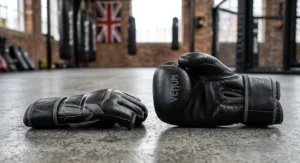
How to Choose Grappling Gear for Your Training Style
Choosing the right grappling gear comes down to matching padding, closure, and material to what you actually do most often in class, not to what looks most protective on the product page. Follow these steps:
- Identify your training split. If you spend more than 70% of your time on the ground, prioritise a thin, pre-curved grappling glove over a padded hybrid.
- Check the closure system. A single strap suits casual training; a dual-strap system like Hayabusa’s Dual-X matters more once sparring intensity increases.
- Match material to frequency. Genuine leather like the Fairtex FGV18 rewards frequent, long-term use; synthetic budget options suit occasional or trial-period training.
- Consider palm thickness deliberately. Thinner palms preserve grip feedback; thicker palms suit clinch-heavy or striking-inclusive sessions.
- Size down if reviews mention generous fit. Several products on this list, including the RDX T17, consistently run slightly large according to real buyer feedback.
- Budget for a second pair eventually. Most serious grapplers end up owning both a thin grappling glove and a padded MMA glove once training intensifies.
- Verify current pricing before buying, since Amazon adjusts prices regularly and today’s figure may not match tomorrow’s.
Practical Usage Guide: Setup, Break-In and Maintenance
Getting the most out of any new pair starts before your first session. On unboxing, loosen the wrist strap fully and check that the finger loops sit naturally against your knuckles without pinching — a common first-30-days mistake is training in a glove that’s genuinely the wrong size rather than adjusting or exchanging it early. For leather or microfibre gloves like the Hayabusa T3, expect a break-in period of several sessions before the material softens; reviewers consistently recommend flexing the glove by hand between sessions to speed this along rather than forcing it through hard sparring immediately.
Maintenance matters more than most beginners realise. Air-dry gloves fully between sessions rather than leaving them zipped in a kit bag — trapped moisture is the single biggest cause of premature foam breakdown and unpleasant odour across every glove on this list. Wipe down the palm and interior lining after sweaty sessions, and avoid direct sunlight or radiator drying, which can crack synthetic leather shells like those on the Liberlupus or Venum Challenger 3.0 far faster than gentle air drying. A basic wipe-and-air routine, done consistently, typically adds a full extra season of usable life to a mid-range glove.
Real-World Scenarios: Which Glove Fits Your Training Profile
Consider a university student training BJJ three evenings a week purely for fitness and self-defence, rarely sparring standing exchanges. For that profile, a thin grappling glove such as the Fairtex FGV18 — or simply training gloveless, as most gi BJJ does — makes far more sense than investing in padded MMA gear that will barely see use.
Now picture a hobbyist training MMA twice weekly, splitting time roughly evenly between striking pads and grappling drills, on a limited budget. This is precisely the buyer the RDX T17 was built for: enough padding to survive pad rounds, enough finger freedom to still function during grappling exchanges, at a price that doesn’t demand a second mortgage.
Finally, consider a committed amateur fighter sparring four or five times a week, preparing for actual competition. That level of frequency and intensity justifies the investment in the Hayabusa T3, where the durability, wrist support, and consistent foam performance under repeated hard use pay for themselves over the following year compared with replacing a budget glove every few months.
Common Mistakes When Buying Grappling or MMA Gloves
The most common mistake is buying based on brand recognition alone rather than matching padding level to actual training content — plenty of buyers pick a well-known MMA sparring glove for pure BJJ training, then wonder why their grip feels clumsy. A close second is ignoring sizing feedback in genuine reviews; several products here, including the Liberlupus and RDX T17, consistently run large according to aggregated buyer sentiment, yet shoppers routinely order their usual size and end up with a loose, unstable fit.
A third mistake is underestimating how quickly budget foam compresses under regular use, then feeling surprised when a £20 glove needs replacing within six months. That’s not necessarily bad value — it’s simply a trade-off that should be an informed decision rather than an unpleasant surprise. Finally, many buyers skip checking whether their gym or governing body has specific glove requirements for grading or competition, which can mean an otherwise perfectly good purchase turning out to be unusable on the mats that matter most.
Long-Term Cost and Maintenance
Looking at total cost of ownership rather than sticker price changes the calculation considerably. A £20 budget glove replaced every six to eight months of regular training works out to roughly £30-£40 per year, while a £100 premium glove like the Hayabusa T3, maintained properly, can realistically last two to three years of frequent use — putting its annual cost within a similar range despite the much higher upfront price. The genuine leather Fairtex FGV18, at a mid-premium price point, tends to land in between, particularly for grapplers who don’t put it through daily punishment.
The maintenance habits covered earlier — air drying, avoiding heat sources, wiping down after sweaty sessions — have a measurable effect on which side of that cost equation you land on. Skipping basic care routinely halves the realistic lifespan of even a well-made glove, which means the cheapest long-term option is very often not the cheapest glove on the shelf, but the mid-range product that’s actually looked after properly.
Safety, Regulations and Compliance for UK Grapplers
Glove choice isn’t purely a performance question — it has genuine safety implications that UK gyms and governing bodies take seriously. Thin fingers, poor wrist support, or ill-fitting straps are common contributors to the kind of hand and wrist sprains covered in NHS guidance on sprains and strains, which recommends protecting and resting an injured joint rather than training through it. Choosing a glove genuinely suited to your training intensity — rather than the cheapest available option — is one of the simplest ways to reduce that risk before it becomes a problem.
Regulated MMA competition typically mandates specific glove weights and open-finger designs, whereas most BJJ and grappling competitions either prohibit gloves entirely or leave the choice largely to individual preference, provided basic hygiene and safety standards are met. Always check your specific gym or federation’s rules before assuming any glove on this list is automatically competition-legal, since requirements vary between organisations and rule sets even within the UK.

Frequently Asked Questions
❓ Are grappling gloves and MMA gloves the same thing?
❓ Can I use MMA gloves for BJJ?
❓ What's the best glove for ground fighting on a budget?
❓ Do I need padded gloves for submission wrestling?
❓ How often should I replace my grappling or MMA gloves?
Conclusion
The grappling gloves vs MMA gloves question ultimately comes down to one honest question: what does your training actually look like week to week? A ground-fighting specialist chasing submissions gets far more value from a thin, pre-curved design like the Fairtex FGV18 than from anything padded, while a committed MMA sparring partner genuinely needs the protection a glove like the Hayabusa T3 provides. For anyone still figuring out which direction their training will take, hybrids such as the RDX T17 or Starpro F55 Fusion offer a sensible middle ground without locking you into a specialist purchase too early.
What matters most is buying based on real training content rather than marketing claims or brand prestige alone — the honest spec comparisons and aggregated review sentiment throughout this guide are there to help you do exactly that. Whichever glove you land on, proper sizing, a sensible break-in period, and basic maintenance will do more for its lifespan than any single spec on the page.
✨ Don’t Miss These Exclusive Deals!
🔍 Take your grappling and MMA training gear to the next level with the picks above. Click through to check current pricing and availability before your next session, and gear up with confidence for whatever the mats throw at you.
Recommended for You
- Best Grappling Gloves 2026: 7 Proven Picks for BJJ & MMA
- Gloves for MMA Sparring: 7 Safest Picks Tested for 2026
- Open Finger MMA Gloves: 7 Genuinely Tested Picks for 2026
Disclaimer: This article contains affiliate links. As an Amazon Associate, I earn from qualifying purchases. If you purchase products through these links, we may earn a small commission at no additional cost to you.
✨ Found this helpful? Share it with your friends! 💬🤗
