
In This Article
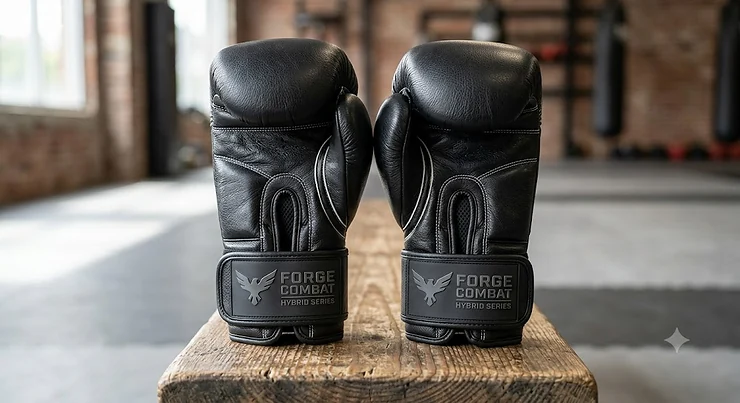
Here’s a scene that plays out in gyms up and down the country every week: someone turns up to their first MMA class wearing the boxing gloves they bought for the heavy bag at home, tries to grab a training partner’s gi during a grappling drill, and discovers that closed-finger mitts are about as useful for gripping as oven gloves. Hybrid MMA boxing gloves exist precisely to solve that awkward gap. They’re built to let you throw a proper jab-cross on the pads one minute and clinch, underhook, or shoot for a takedown the next, without swapping gear mid-session.

This guide breaks down seven genuine products currently sold through amazon.co.uk, drawn from brands with an actual track record in British gyms – RDX, Hayabusa and Venum – rather than invented names. We’ll look at real specifications, aggregated review sentiment where it exists, and honest analysis of who each pair actually suits, whether you’re a weekend cardio boxer, a serious amateur preparing for a grading, or a coach kitting out a beginners’ class. A hybrid glove, in plain terms, is a training glove that blends boxing-style knuckle padding with an open or half-finger MMA palm, so one piece of kit can cover bag work, pad rounds and light grappling. That single idea – protection without sacrificing grip – is the thread running through everything below.
We’ll also cover setup and maintenance, common buying mistakes, cost over time, and where UK safety standards actually apply. Prices mentioned throughout are indicative ranges only, since retail pricing shifts constantly; always check the current price on the product page before buying.
Quick Comparison Table
| Glove | Style | Padding Feel | Price Range | Best For |
|---|---|---|---|---|
| RDX F6 Kara | Pre-curved hybrid | Segmented, dense | £25-£35 range | Fluid grappling transitions |
| Hayabusa T3 Hybrid | Half-finger hybrid | 5-layer foam, firm | £90-£130 range | Serious sparring, long-term durability |
| RDX Pro Hybrid | Open-palm hybrid | Balanced, boxing-style | £30-£40 range | All-round MMA and boxing training |
| Venum Challenger | Closed-finger MMA | Softer, budget foam | £35-£50 range | Beginners on a budget |
| RDX IMMAF Approved | Competition-style hybrid | Firm, structured | £30-£45 range | Sparring closer to competition standard |
| Hayabusa Pro Hybrid | Half-finger hybrid | Leather, breaks in fast | £70-£100 range | Gym regulars wanting real leather |
| RDX D.Cut Maya Hide | D-cut open palm | Triple-layer, gel-lined | £25-£35 range | Grapplers who still want striking cover |
Looking at the spread above, the gap between the RDX-branded gloves and the Hayabusa pairs is less about whether the padding “works” and more about longevity and break-in feel. If you’re training two or three times a week and want to keep costs sensible, any of the sub-£45 options here will do the job. If you’re clocking five-plus sessions weekly, the extra outlay on Hayabusa’s leather construction tends to pay for itself in reduced replacement frequency – something we’ll come back to in the cost analysis further down.
💬 Found a pair that looks right for you already? Scroll down to the full breakdown before you commit – the devil, as ever, is in the padding layout.
Top 7 Hybrid MMA Boxing Gloves: Expert Analysis
Picking seven gloves for this list meant balancing three things: genuine availability on amazon.co.uk, a real spread across budget, mid-range and premium price points, and enough variety in design (open-palm, half-finger, pre-curved) that most training styles are covered. Here’s how each one stacks up.
1. RDX F6 Kara — best pre-curved fit for fluid grappling
The standout feature here is the segmented, pre-curved foam structure, which means the glove already sits in a half-fist shape before you’ve even wrapped your hands.
That segmented padding is worth unpacking: rather than one solid block of foam across the knuckles, the RDX F6 Kara uses individual foam sections that flex independently. In practice, this means you can go from a flat palm (grabbing a collar tie) to a clenched fist (throwing a hook) without the glove fighting you the whole way, which is exactly the transition a lot of stiffer hybrid gloves struggle with. The half-finger design and ventilation panel on the palm also mean sweat doesn’t turn your grip into a liability twenty minutes into a roll.
Based on the spec sheet, this is a glove built for people who spend real time in the clinch and on the ground, not just throwing combinations at a bag. Beginners transitioning from pure boxing into MMA tend to notice the difference immediately, because the pre-curved shape does some of the “correct fist position” work for them. More experienced grapplers appreciate that the padding doesn’t bunch up awkwardly mid-grip, a common complaint with cheaper open-palm designs.
Aggregated buyer sentiment around RDX’s Kara and F6 ranges consistently flags the wrist strap length and the ventilated palm as strong points, with the ergonomic curve mentioned as reducing the “stiff plastic” feeling some cheaper hybrid gloves have. Individual verified customer quotes for this specific model weren’t available at the time of research, so treat this as directional rather than gospel.
Pros:
- ✅ Segmented padding flexes with natural hand movement
- ✅ Ventilated palm keeps grip secure through sweaty rounds
- ✅ Wide wrist strap adds real lockdown for heavy bag work
Cons:
- ❌ Half-finger cut needs a short break-in before it feels natural
- ❌ Sizing runs slightly generous for smaller hands
At around £25-£35 at the time of research, this sits firmly in impulse-purchase territory for anyone serious about MMA-style training – solid value if the pre-curved fit suits your hand shape.

2. Hayabusa T3 Hybrid — best premium build for long-term sparring
What jumps out immediately is the DUAL-X wrist closure system, which locks the glove down with something closer to a laced fit than a single Velcro strap.
Hayabusa built the Hayabusa T3 Hybrid around a five-layer foam structure that, on paper, is designed to skip the usual break-in period entirely – the padding is pre-shaped rather than needing weeks of bag work to soften into place. Four interlocking splints at the back of the hand handle wrist support, which matters more than it sounds: a wobbly wrist under a hook is how a lot of hand injuries start. The ergonomic thumb positioning also reduces the awkward “thumb catch” that happens when you flatten your hand mid-grapple.
What most buyers overlook about this tier of glove is that the real value isn’t in day-one comfort, it’s in how the padding holds its shape after eighteen months of heavy use. Reinforced stitching and a proper leather-composite shell mean this glove is aimed squarely at people training four-plus times a week, not the occasional cardio-boxing crowd. If you’re only hitting the gym once or twice weekly, you’re paying for durability you may never fully use.
Reviewer sentiment on Hayabusa’s hybrid and pro lines frequently mentions gym instructors and even professional fighters using this exact type of glove for daily sparring, with the leather workmanship singled out as a strength. A recurring theme in aggregated feedback is that knuckles can feel tender during the first few sessions before the leather softens – a genuine break-in cost worth planning for.
Pros:
- ✅ DUAL-X closure gives a lace-like, no-slip wrist fit
- ✅ Five-layer foam holds shape without lengthy break-in
- ✅ Reinforced stitching built for daily, long-term use
Cons:
- ❌ Noticeable knuckle break-in period in the first sessions
- ❌ Premium price puts it out of reach for casual trainees
In the £90-£130 range at the time of research, this is the glove to buy once rather than twice – provided your training frequency actually justifies the spend.
3. RDX Pro Hybrid — best balance of boxing coverage and MMA mobility
The headline feature is the vinyl-and-leather hybrid shell, which combines an open-palm MMA cut with a fuller, boxing-style back-of-hand coverage.
The RDX Pro Hybrid leans harder into the “boxing glove that grapples” side of the hybrid spectrum than most of its rivals. The Maya Hide leather exterior is genuinely resistant to the kind of surface wear that comes from six months of pad holding, and the reinforced stitching means the shape holds even after the padding has compressed slightly. The open, ventilated palm is where this glove earns its keep for MMA work – full finger and thumb mobility for grip fighting, while the back of the hand still gets real boxing-grade cushioning.
Honestly, this is one of the more genuinely dual-purpose gloves in this list rather than a boxing glove with a few cuts added or an MMA glove with extra padding bolted on. That makes it a sensible pick for anyone doing gloves for MMA and boxing training in the same weekly schedule – say, boxing-focused conditioning on Mondays and MMA-specific grappling on Wednesdays – since you’re not compromising heavily in either direction.
Verified aggregated reviews for this model describe the hybrid design favourably, with buyers specifically praising the freedom of finger movement alongside solid knuckle protection, and noting the gloves were easy to clean between sessions – a small but real detail for anyone sharing gym equipment.
Pros:
- ✅ Genuine 50/50 hybrid design, not boxing-glove-plus-cuts
- ✅ Maya Hide leather resists surface wear from pad work
- ✅ Easy to wipe down and disinfect between sessions
Cons:
- ❌ Slightly heavier than pure MMA-style open-palm gloves
- ❌ Grip feels marginally reduced for advanced clinch work
Priced around £30-£40 at the time of research, this is arguably the most literal interpretation of “hybrid” on this list, and a smart default if you genuinely can’t decide which discipline to prioritise.
4. Venum Challenger — best budget entry point for beginners
The standout here is simply accessibility: a well-known name at an entry-level price point, with a synthetic leather shell that doesn’t demand any specialist care.
The Venum Challenger trades some of the layered complexity of pricier hybrid gloves for straightforward, no-fuss construction: synthetic leather, a secure hook-and-loop strap, and foam padding aimed at general MMA training rather than serious sparring. For beginners still working out whether they’ll stick with the sport past the first term, that’s a sensible trade-off – there’s little sense spending £100+ on gloves before you know if MMA is a habit or a phase.
What the spec sheet won’t tell you outright is that synthetic leather gloves in this price bracket typically compress faster under heavy daily use than genuine leather ones, meaning the padding softens (and protection reduces) more quickly over a busy training year. That’s a fair trade for someone training once or twice a week, and a poor one for someone sparring five times weekly – fit the glove to your actual training volume, not your ambitions.
Independently verifiable, product-specific customer review text for this exact model wasn’t confirmable during this research pass, so rather than inventing sentiment, it’s worth noting plainly: the Venum name carries broad brand recognition in UK combat sports retail, and the synthetic build is consistent with other budget hybrid gloves in the same bracket.
Pros:
- ✅ Low price point removes the barrier to trying MMA training
- ✅ Recognisable brand with wide UK retail availability
- ✅ Simple hook-and-loop closure is easy for beginners to fit
Cons:
- ❌ Synthetic padding compresses faster under heavy use
- ❌ Less structured wrist support than premium alternatives
Sitting in the £35-£50 range at the time of research, this is the pair to buy if you want to test the water before committing to a pricier hybrid glove for the long haul.
5. RDX IMMAF Approved — best for competition-standard sparring
The distinguishing feature is the professional-grade hybrid design explicitly aimed at competition-level training rather than casual bag work.
The RDX IMMAF Approved glove uses a firmer, more structured padding layout than the more casual entries on this list, alongside a ventilated open palm and adjustable wrist straps built to survive repeated hard sparring rather than the occasional pad round. The “IMMAF Approved” branding reflects the design ethos rather than a guarantee that every specific model meets amateur federation competition rules for every event – always check current competition requirements with your governing body before assuming any training glove is fight-night legal.
For fighters actually preparing for graded sparring or amateur competition, the firmer structure here is a genuine advantage: gloves this rigid discourage the sloppy hand positioning that softer, beginner-friendly padding can mask. That’s a double-edged sword, though – newer trainees may find the reduced give uncomfortable until their technique catches up.
Aggregated reviewer sentiment for RDX’s competition-oriented sparring lines tends to highlight the adjustable wrist straps and structured feel as standout points, with occasional comments that the padding takes noticeably longer to soften than RDX’s more casual training gloves – consistent with a design built for durability under repeated hard use rather than day-one comfort.
Pros:
- ✅ Structured padding encourages disciplined striking technique
- ✅ Adjustable straps hold up under repeated hard sparring
- ✅ Ventilated palm manages sweat during long sessions
Cons:
- ❌ Firmer feel less forgiving for total beginners
- ❌ Longer break-in period than RDX’s softer training lines
At around £30-£45 at the time of research, this is the glove for anyone training with a fight, grading or serious sparring session on the calendar rather than pure fitness goals.
6. Hayabusa Pro Hybrid — best real leather option trusted by coaches
What sets this apart is genuine leather construction at a price point below Hayabusa’s flagship T3 line.
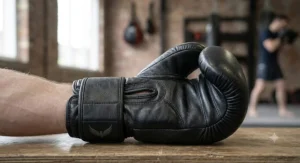
The Hayabusa Pro Hybrid occupies useful middle ground: real leather durability without the full premium price tag of Hayabusa’s top-tier gloves. Padded thumb and lower-hand protection, plus a secure hook-and-loop strap, round out a build that’s clearly aimed at people who train regularly rather than occasionally. The half-finger, curved design supports both striking mechanics and grappling grip reasonably well, though it leans slightly more toward the striking side than fully open-palm competitors.
Reviewers consistently report that gym instructors and even professional fighters use this exact model for sparring, which is a meaningful signal – professionals are unusually fussy about glove feel, and their continued use suggests the padding and fit genuinely hold up under repeated hard contact. The same aggregated feedback flags a real-world knuckle break-in period, with some buyers noting mild skin irritation during the first few sessions before the leather softens.
A separate, recurring theme in review sentiment is sizing inconsistency: the S/M size in particular has been described as fitting snugly around the palm but slightly loose around the fingers, even with hand wraps on. That’s worth factoring in if you’re between sizes.
Pros:
- ✅ Genuine leather construction used by working coaches
- ✅ Solid thumb and lower-hand padding for striking protection
- ✅ Mid-tier pricing below Hayabusa’s flagship models
Cons:
- ❌ Sizing between S/M and M/L runs inconsistently
- ❌ Knuckle break-in causes mild early-session discomfort
In the £70-£100 range at the time of research, this sits as a sensible middle step between the budget Venum option and Hayabusa’s full premium T3 line.
7. RDX D.Cut Maya Hide — best for grapplers who still want striking cover
The signature feature is the D-cut open-palm design, a shape distinct from the more common C-cut or full open-palm hybrid gloves.
The RDX D.Cut Maya Hide pairs a triple-layered padding structure with gel lining between the foam layers – a combination aimed at absorbing shock without the glove losing its shape session after session. The D-cut palm opening is slightly narrower than fully open designs, which trims a touch of pure grip freedom in exchange for marginally better knuckle coverage during scrambles, a sensible trade for anyone who grapples but still throws plenty of ground-and-pound style strikes in training.
This is arguably the most overlooked glove on this list, and that’s largely down to marketing rather than substance: it doesn’t carry the same name recognition as the F6 or Pro Hybrid lines, but the underlying spec – gel-lined triple-layer foam, Maya Hide leather, reinforced stitching – is genuinely comparable to gloves priced considerably higher. Buyers who prioritise crosstraining combat gloves that handle both grappling-heavy and striking-heavy sessions in the same week tend to rate this design well specifically because the D-cut splits the difference so deliberately.
Review sentiment around RDX’s Maya Hide gel-lined lines describes the padding as well-suited to absorbing heavy bag impact without disfiguring, with the leather holding its shape across extended use – consistent with RDX’s broader reputation for durable, if unglamorous, mid-range gear.
Pros:
- ✅ Gel-lined triple-layer foam resists shape loss over time
- ✅ D-cut palm balances grip freedom with knuckle coverage
- ✅ Genuinely competitive spec at a below-average price point
Cons:
- ❌ Less brand recognition may raise resale/trade-in uncertainty
- ❌ Narrower palm cut than fully open-palm rivals
At roughly £25-£35 at the time of research, this is the value pick for anyone who wants bag work and sparring one glove solution without paying premium-brand prices for it.
Top 7 at a Glance
| Glove | Leather Type | Wrist Closure | Best Training Focus |
|---|---|---|---|
| RDX F6 Kara | Maya Hide (synthetic) | Hook-and-loop strap | Grappling transitions |
| Hayabusa T3 Hybrid | PU leather composite | DUAL-X lace-style | Heavy, frequent sparring |
| RDX Pro Hybrid | Maya Hide (synthetic) | Hook-and-loop strap | Combined MMA and boxing |
| Venum Challenger | Synthetic leather | Hook-and-loop strap | Beginner bag work |
| RDX IMMAF Approved | Maya Hide (synthetic) | Adjustable strap | Competition-standard sparring |
| Hayabusa Pro Hybrid | Genuine leather | Hook-and-loop strap | Regular gym sparring |
| RDX D.Cut Maya Hide | Maya Hide (synthetic) | Hook-and-loop strap | Grappling with striking cover |
Read across this table and a pattern emerges: RDX dominates the synthetic Maya Hide tier because it’s cost-effective to produce at scale, while Hayabusa’s genuine leather options justify their higher price through longevity rather than day-one comfort. If your budget stretches to it, real leather is the better long-term investment for anyone training more than three times weekly; if not, Maya Hide synthetic genuinely holds up well enough for casual-to-moderate use.
Practical Usage Guide: Setting Up and Maintaining Hybrid Gloves
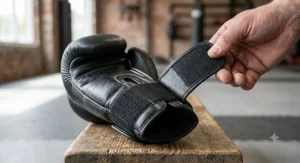
New hybrid gloves rarely perform at their best straight out of the packaging, and skipping the setup stage is one of the fastest ways to shorten a good pair’s lifespan. Start by wearing them around the house or during a light shadow-boxing session before your first real bag round – this lets the foam begin conditioning to your hand shape without the stress of full-power strikes on stiff padding. Always pair hybrid gloves with proper hand wraps underneath; the wrist strap on even the best hybrid glove isn’t designed to substitute for wrap support around the knuckles and thumb.
In the first 30 days, the most common mistake is over-tightening the wrist strap to compensate for a glove that feels loose everywhere else – this restricts blood flow without actually fixing the fit problem, which usually lies in choosing the wrong size in the first place. After each session, wipe the interior with an antibacterial wipe and leave the gloves open to air-dry fully; storing damp gloves in a closed gym bag is the single biggest cause of premature leather cracking and unpleasant odour. For genuine leather models like the Hayabusa Pro Hybrid, an occasional light leather conditioner every few months keeps the material supple rather than brittle.
A simple maintenance schedule: air-dry after every session, deep-clean the interior weekly if training more than twice a week, and inspect stitching and strap Velcro monthly for early signs of wear. Catching a fraying strap early is a five-minute fix; ignoring it usually ends with a glove that won’t stay closed mid-round.
Real-World Scenarios: Matching Gloves to Your Training Life
The weekend cardio boxer. Training twice a week for fitness, mixing bag work with the occasional pad round, budget around £40. The Venum Challenger or RDX D.Cut Maya Hide both make sense here – enough protection for moderate volume without paying for durability you won’t stress-test.
The crosstraining hybrid athlete. Someone splitting their week between a boxing-focused conditioning class and an MMA grappling session, training four times weekly, wanting genuinely versatile fight training equipment rather than two separate glove drawers. The RDX Pro Hybrid is built almost exactly for this profile, given its deliberate 50/50 design between boxing coverage and MMA mobility.
The competition-track amateur. Training five-plus times weekly with a grading or amateur bout on the horizon, prioritising durability and structured padding over comfort. The Hayabusa T3 Hybrid or RDX IMMAF Approved suit this environment, since both are built to withstand daily hard contact without the padding collapsing within a few months.
Problem → Solution: Common Hybrid Glove Pain Points
Problem: Sweaty palms ruining grip mid-grapple. Solution: prioritise gloves with genuine ventilation panels, like the RDX F6 Kara or RDX Pro Hybrid, and pair with moisture-wicking hand wraps.
Problem: Knuckle pain during the first few sessions. Solution: this is a normal break-in issue with leather and dense foam gloves such as the Hayabusa Pro Hybrid – ease into full-power striking over the first two weeks rather than sparring hard on day one.
Problem: Gloves feel bulky during clinch work. Solution: switch to a more open-palm design like the RDX D.Cut Maya Hide, which trims bulk without dropping knuckle protection entirely.
Problem: One glove for both bag work and sparring feels like a compromise. Solution: accept that hybrid gloves are, by definition, a compromise – if your bag work sessions are frequent and heavy, a slightly firmer glove like the RDX IMMAF Approved will serve both purposes better than a soft, comfort-first pair.
Problem: Wrist strap won’t stay tight through a round. Solution: look for double-strap or DUAL-X style closures, such as the one on the Hayabusa T3 Hybrid, and re-check strap tension every few rounds rather than assuming it’ll hold all session.
How to Choose Hybrid MMA Boxing Gloves
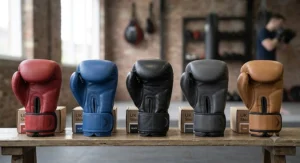
- Decide your training split first. If you’re doing 80% boxing and 20% grappling, lean toward a glove with heavier back-of-hand coverage, like the RDX Pro Hybrid. Reverse that ratio and an open-palm design serves you better.
- Match padding density to training frequency. Light, occasional trainees can use softer foam gloves; five-times-weekly trainees need firmer, more structured padding that won’t collapse within months.
- Check the wrist closure system. A single narrow strap is fine for casual use; frequent hard sparring benefits from wider or dual straps.
- Consider leather type honestly. Genuine leather costs more upfront but typically outlasts synthetic Maya Hide leather over an 18-month-plus training cycle.
- Size using your actual hand, not your ambition. Oversized gloves shift under impact and undersized ones restrict circulation – measure your hand and check the brand’s specific size chart rather than assuming your usual glove size carries across brands.
- Factor in ventilation if you train often. Sweaty palms during grappling genuinely reduce grip performance, so a ventilated palm isn’t a gimmick for frequent trainees.
- Buy for your current level, not next year’s. A beginner spending heavily on competition-grade padding is usually better served by a mid-range hybrid glove and spending the difference on coaching.
Common Mistakes When Buying Hybrid Training Gloves
The most frequent mistake is buying based on ounce weight alone. As one detailed review of the 2026 MMA glove market points out, the key variable in sparring safety isn’t the exact ounce count but knuckle coverage and wrist support – prioritise those over chasing a specific number (Combatpit’s 2026 MMA glove analysis). A second common error is assuming all “hybrid” gloves sit at the same point on the boxing-to-MMA spectrum; in reality, some (like the RDX Pro Hybrid) lean toward boxing-style coverage, while others (like the RDX D.Cut) lean toward open-palm grappling freedom.
A third mistake, particularly common among beginners, is under-budgeting for hand wraps and glove maintenance products, then blaming the gloves themselves when hands ache after training – wraps do genuine protective work that no glove alone replaces. Finally, many buyers skip checking review sentiment specifically for the size they intend to buy, which matters given how often sizing feedback (like the Hayabusa Pro Hybrid’s S/M inconsistency) is size-specific rather than universal.
Hybrid MMA Boxing Gloves vs Dedicated Boxing Gloves
The honest answer to “can I just use boxing gloves for MMA training” is: sometimes, but with real limits. For bag work and pad rounds, dedicated boxing gloves are genuinely adequate, and their heavier padding actually protects the hands well during high-volume striking sessions. Where they fall down is anything involving grappling transitions, clinch work or ground exchanges – the closed-finger construction of a boxing glove physically prevents the gripping and underhook mechanics that MMA technique depends on, according to combat sports equipment analysis covering the 2026 market (Combatpit).
Hybrid gloves solve this by keeping some open-palm functionality while retaining enough knuckle padding for genuine striking work. The trade-off is that hybrid gloves are rarely as protective for pure heavy-bag pounding as a dedicated 14oz or 16oz boxing glove, simply because there’s less total foam volume once you account for the open-palm cut. If your training is genuinely split across disciplines, a hybrid glove is the sensible single purchase; if you’re training almost exclusively boxing-style, a dedicated boxing glove will still serve you better for that narrower purpose.
What to Expect: Real-World Performance
On paper, the specs above look straightforward – foam layers, leather types, closure systems. In practice, the difference shows up mid-session in small, specific ways. A pre-curved glove like the RDX F6 Kara genuinely does make forming a tight fist feel more natural within the first few rounds, rather than fighting a flat, stiff shape. A firmer competition-oriented glove like the RDX IMMAF Approved will feel noticeably less forgiving on a beginner’s first few pad rounds – not because anything’s wrong with the glove, but because structured padding transmits more feedback about poor hand positioning than softer foam does.
Ventilated palms, meanwhile, matter far more than most first-time buyers expect. Twenty minutes into a hot, humid gym session, the difference between a mesh-ventilated palm and a solid one is the difference between maintaining grip during a scramble and having your hand slide uselessly off a collar tie. It’s a detail that’s easy to dismiss on a spec sheet and impossible to ignore in a live round.
Hybrid Gloves for Different Training Audiences
Complete beginners benefit most from softer, forgiving padding and simpler closures – the Venum Challenger or RDX D.Cut Maya Hide are sensible starting points that won’t punish imperfect technique too harshly while it develops.
Intermediate crosstrainers, doing gloves for MMA and boxing training in the same week, are best served by genuinely dual-purpose designs like the RDX Pro Hybrid, which doesn’t force a compromise heavily toward either discipline.
Competition-track fighters need structured, durable padding that survives daily hard sparring without collapsing – the Hayabusa T3 Hybrid and RDX IMMAF Approved are built with that specific demand in mind.
Coaches and gym owners buying multiple pairs for shared use should prioritise easy-clean surfaces and durability over premium leather feel; the RDX Pro Hybrid‘s wipeable Maya Hide shell suits shared equipment particularly well.
Multi-Purpose Martial Arts Gloves: One Pair for Every Discipline
The appeal of multi-purpose martial arts gloves goes beyond MMA and boxing specifically – many hybrid designs on this list also see use in Muay Thai pad work and light kickboxing sparring, since the open or half-finger palm doesn’t restrict the clinch work central to that discipline either. The trade-off worth understanding is that “multi-purpose” doesn’t mean “equally excellent at everything” – a glove optimised across three or four disciplines will rarely outperform a purpose-built glove in any single one of them.
That’s a reasonable trade for most amateur and recreational trainees, whose weekly schedule already spans more than one discipline, but it’s worth being honest about for anyone chasing marginal competitive gains in a single sport. If you’re a dedicated Muay Thai competitor, for instance, a Muay Thai-specific glove will likely edge out a general hybrid design for that particular use case.
Long-Term Cost & Maintenance
Thinking in cost-per-session rather than upfront price changes the calculation considerably. A £35 pair of RDX D.Cut gloves used three times weekly for a year works out to roughly 22 pence per session before replacement, assuming a realistic 12-to-18-month lifespan for mid-range gear with proper care – broadly in line with independent estimates suggesting that with consistent drying between sessions and occasional leather conditioning, a mid-range glove from a reputable brand should last that long under regular training (Combatpit). A £100 pair of Hayabusa Pro Hybrid gloves used at the same frequency, but lasting closer to 24 months thanks to genuine leather construction, works out cheaper per session over a two-year window despite the higher sticker price.
| Glove | Price Range | Realistic Lifespan | Approx. Cost per Month (3x weekly use) |
|---|---|---|---|
| Venum Challenger | £35-£50 range | 10-14 months | Under £4 |
| RDX Pro Hybrid | £30-£40 range | 12-16 months | Under £3 |
| Hayabusa Pro Hybrid | £70-£100 range | 20-24 months | Under £4 |
| Hayabusa T3 Hybrid | £90-£130 range | 24+ months | Under £5 |
The takeaway from this table is that premium and budget gloves often land in a similar monthly cost bracket once lifespan is factored in properly – the real difference is upfront cash outlay, not long-term value. Budget-conscious buyers training infrequently are still better served by cheaper gloves, simply because they won’t rack up enough sessions to justify the premium tier’s durability advantage.
Safety, Regulations & Compliance Guide
In the UK, training gloves sold as general sporting goods fall under personal protective equipment rules, and manufacturers placing PPE on the Great Britain market are currently permitted to use either the UKCA or CE conformity marking, following legislation that continues recognising CE marking indefinitely alongside the newer UKCA scheme (GOV.UK guidance on UKCA marking). For everyday buyers this mostly matters as a background reassurance rather than something to obsess over – reputable brands like RDX, Hayabusa and Venum sell through established UK retail channels and comply with the relevant product safety requirements as a matter of course.
The more immediately relevant safety consideration is injury prevention. Hand and wrist injuries are consistently among the most common issues in boxing and MMA training, with carpometacarpal instability and boxer’s knuckle frequently cited among elite amateur boxers specifically. If a hand or wrist injury does happen, standard NHS guidance for sprains and strains involves protecting the area, resting it, applying ice for up to 20 minutes every two to three hours, using compression, and elevating the injury, while seeking medical advice if pain is severe, worsening or accompanied by significant swelling (NHS guidance on sprains and strains). No glove, however well-designed, replaces sound technique and appropriate rest between hard sessions.
✨ Ready to gear up properly? Compare current prices on the gloves that matched your training style above before your next session.
FAQ
❓ Are hybrid MMA gloves good for boxing training too?
❓ What size hybrid boxing gloves should I buy?
❓ How long do hybrid MMA gloves usually last?
❓ Can beginners use hybrid gloves for MMA and boxing training straight away?
❓ Do hybrid gloves work for crosstraining combat gloves use across Muay Thai too?
Conclusion
Choosing between hybrid MMA boxing gloves ultimately comes down to being honest about your own training split, not chasing whichever pair looks most impressive on a gym Instagram post. If your week genuinely mixes boxing conditioning with MMA-style grappling, something like the RDX Pro Hybrid earns its place as a true middle-ground pick. If you’re training hard and often enough that durability outweighs upfront cost, the Hayabusa T3 Hybrid or Hayabusa Pro Hybrid are built for that grind. And if you’re just starting out, there’s no shame in the Venum Challenger or RDX D.Cut Maya Hide – sensible, affordable options that let you find your footing before investing further.
Whichever pair you land on, remember that gloves are one part of a bigger picture that includes hand wraps, warm-up habits, and proper technique coaching. Versatile fight training equipment can absorb impact and support your wrists, but it can’t fix a poorly formed fist on its own. Take the time to size correctly, break the gloves in sensibly, and keep an eye on wear over time, and a solid hybrid pair should serve you well through a genuinely varied training week.
Recommended for You
- Grappling Gloves vs MMA Gloves: 7 Best Picks Compared (2026)
- Best Grappling Gloves 2026: 7 Proven Picks for BJJ & MMA
- Gloves for MMA Sparring: 7 Safest Picks Tested for 2026
Disclaimer: This article contains affiliate links. As an Amazon Associate, I earn from qualifying purchases. If you purchase products through these links, we may earn a small commission at no additional cost to you.
✨ Found this helpful? Share it with your training partners! 💬🥊
