In This Article
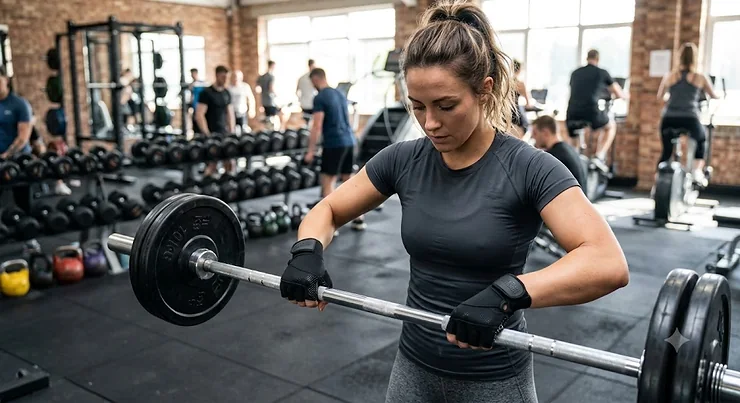
Your hands do more heavy lifting than almost anything else in the gym, and yet they’re usually the last thing anyone thinks to protect. Grab the bar wrong for six months straight and you’ll know exactly what a barbell callus feels like against a duvet cover at 2am. That’s the quiet, unglamorous reason full finger gym gloves for women have quietly become one of the most searched-for pieces of kit in UK gyms this year — they solve a problem nobody warns you about until it’s already blistered. So, what is a full finger gym glove for women? It’s a training glove that covers the entire hand, including every finger and the thumb, built with a shorter, narrower palm to suit typical female hand proportions, designed to protect skin, improve bar grip and, in many cases, add wrist stability during lifts.
Strength training itself is worth taking seriously here too — the NHS physical activity guidelines recommend muscle-strengthening activity at least twice a week for adults, and the right gloves simply make that habit easier to stick with. This isn’t a straightforward “buy the cheapest one” decision, though. Full finger designs trade a bit of bar feel for total hand coverage, which matters enormously if you’re training outdoors in a British winter or gripping cold steel dumbbells in an unheated garage gym. Below, we’ve pulled together seven genuinely available options — from budget-friendly staples to premium branded picks — based on real product specifications and aggregated customer feedback, not guesswork. We’ll walk through grip performance, wrist wrap integration, women’s hand sizing, and breathability, because a glove that ticks one box and ignores the rest usually ends up in a drawer within a month.
Quick Comparison Table
Before we get into the detail, here’s the lay of the land. This snapshot ranks our seven picks by budget tier, standout feature and who each one suits best, so you can jump straight to the section that matches your training style.
| Product | Price Range | Standout Feature | Best For |
|---|---|---|---|
| RDX W1F | Under £20 | Touchscreen-friendly, sweat-wick thumb towel | Budget beginners |
| ZEROFIRE | Under £15 | No wristband, honeycomb silicone grip | Freedom of movement fans |
| ihuan | £12-£18 range | Built-in wrist wrap support | Wrist-conscious lifters |
| RYMNT | £10-£16 range | Notch design for finger flexibility | Cyclists and all-rounders |
| Fit Active Sports | £20-£28 range | Neoprene build with wrist wraps | Olympic lift enthusiasts |
| Bear Grips | £20-£30 range | Lycra stretch + synthetic leather palm | CrossFit-style training |
| Nike Women’s Fundamental II | £25-£35 range | Branded fit engineered for women’s hands | Buyers who want a trusted name |
Looking across the table, the split is fairly clean: the sub-£20 gloves (RDX, ZEROFIRE, RYMNT) are aimed at anyone testing the waters with full finger coverage for the first time, the £20-£30 middle tier (ihuan, Fit Active Sports, Bear Grips) is where wrist wrap integration starts showing up as standard, and the Nike pick sits at the top for buyers who want brand-backed sizing consistency. None of that means the cheap options are bad — in fact, a couple of them punch well above their price bracket, which we’ll get into shortly.
💬 Which glove matches your training style? Scroll down to see the full breakdown below.
Top 7 Full Finger Gym Gloves for Women: Expert Analysis
1. RDX W1F Full Finger Gym Gloves — best budget pick for touchscreen convenience
The RDX W1F earns its spot at the top of this list simply by being the most sensible starting point for anyone who’s never worn full finger gloves before. It leads with a conductive silicone ink layer on the fingertips, which sounds fussy but genuinely means you can check your rest timer on your phone mid-set without peeling a glove off.
Underneath that, you’re getting a pure cotton towel material on the outer shell paired with nylon stretch mesh panelling, plus a silicone-and-foam grip pad across the palm. On paper this means decent heat dispersion during longer sessions and enough cushioning to blunt the friction from a knurled bar — though it’s worth saying the padding here is closer to “light” than “heavily armoured,” which is exactly why it suits beginners and moderate lifters rather than someone chasing a 100kg deadlift PB. Reviewers consistently note that the elasticated wrist strap runs slightly loose out of the box, so if you’ve got narrower wrists, expect to cinch it down a notch tighter than you might with other brands.
Where the RDX genuinely stands out is value. It’s one of the few full finger options under £20 that also throws in a sweat-wicking cotton patch at the thumb — a small detail, but one that matters more than it sounds during a humid summer session at a busy commercial gym.
Pros:
- ✅ Touchscreen-friendly fingertips for hands-free phone use
- ✅ Genuinely affordable entry point into full finger coverage
- ✅ Sweat-wicking thumb patch for wiping brow mid-set
Cons:
- ❌ Wrist strap runs loose on narrower wrists
- ❌ Padding is light for serious heavy lifting
At a price point that consistently sits under £20, this is a low-risk way to trial full finger gloves before committing to a pricier pair, and the value-for-money verdict here is hard to argue with.
2. ZEROFIRE Full Finger Workout Gloves — best for wristband-free freedom of movement
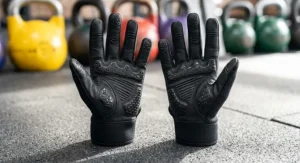
If the RDX above is the “textbook beginner” option, the ZEROFIRE is the one for lifters who specifically dislike the bulk of a wrist strap digging into their forearm mid-rep. It skips the wristband entirely, which is a deliberate design choice rather than a missing feature — the trade-off is you lose dedicated wrist stabilisation, but you gain a slimmer fit that plays nicely with a fitness watch or heart-rate strap.
Spec-wise, the palm uses a high-density foam pad under a honeycomb-patterned silicone print, while the back of the hand is built from Lycra for breathability. What this means in practice is a glove that flexes well through pull-ups and rowing motions, where a stiffer, heavily padded palm can actually work against you by reducing bar-to-hand contact. Aggregated review sentiment describes the fit as true to size and the grip as reliable, with a handful of buyers noting they’d like slightly thicker padding for pure barbell work.
The standout here, beyond the design itself, is variety — the ZEROFIRE range comes in a genuinely wide spread of patterns and colourways, which shouldn’t matter for performance but clearly does for motivation; nobody wants to dread putting their gloves on.
Pros:
- ✅ No wristband means unrestricted watch and HRM use
- ✅ Honeycomb silicone grip performs well on pull-up bars
- ✅ Wide range of colours and patterns available
Cons:
- ❌ No wrist support for heavier compound lifts
- ❌ Palm padding feels thin under maximal loads
For rowing machines, pull-up bars and general circuit work, this is a strong sub-£15 pick, and the value proposition holds up well against pricier wristband-equipped alternatives.
3. ihuan Full Finger Gloves with Wrist Wrap Support — best for built-in wrist stability
This is where wrist wrap integration starts to matter as a genuine buying criterion rather than a nice-to-have. The ihuan pair wraps a long, adjustable Velcro strap around the wrist as a permanent part of the glove, rather than as a separate accessory you’d otherwise buy alongside a pair of half-finger gloves.
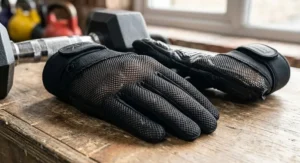
The palm is built from silicone-printed neoprene, chosen specifically for resistance to moisture, oil and general wear, while the back of the hand uses an ultralight microfibre for breathability. What that translates to in the gym is a glove that holds up through both dry barbell sessions and sweatier kettlebell circuits without the palm surface degrading as quickly as a basic cotton-towel design might. Reviewers consistently report that the wrist wrap genuinely helps during heavier front squats and overhead presses, though a small number mention wishing for slightly more palm padding on longer training blocks.
Because the wrist wrap is built in rather than bolted on, it also solves a fiddly practical problem: no more juggling a separate wrap and glove between sets, which sounds trivial until you’re mid-superset with thirty seconds on the clock.
Pros:
- ✅ Integrated wrist wrap eliminates separate accessories
- ✅ Neoprene palm resists oil, sweat and general wear
- ✅ Breathable microfibre backing for long sessions
Cons:
- ❌ Palm padding could be thicker for max-effort lifts
- ❌ Bulkier fit than wristband-free alternatives
Sitting in the £12-£18 range, this is arguably the best-value wrist-wrap-integrated option on this list, and it’s a smart pick for anyone who lifts heavy enough to want that extra stability without paying premium prices.
4. RYMNT Full Fingers Workout Gloves — best for flexible, all-purpose training
RYMNT’s approach leans into flexibility over rigid protection, using a notched finger design that lets the fabric bend more naturally at each knuckle. Reviewers describe the fit as noticeably less restrictive than boxier full finger designs, which matters if you find most full-coverage gloves feel like you’re gripping a bar through oven mitts.
The palm combines foam padding with silicone grip particles, while the fingertips retain touchscreen sensitivity — a small but genuinely useful feature if you’re logging sets on a training app between exercises. What most buyers overlook about this model is that its unisex 3D construction actually fits a broader range of women’s hand shapes than gender-specific marketing might suggest, because the notch cuts do more of the sizing work than the overall glove dimensions. On the flip side, that same flexible design means slightly less palm coverage at the base of the fingers, so anyone doing high-volume deadlifts might find calluses forming there over time regardless.
This is also one of the more versatile picks on the list for activities beyond the weights room — cycling and general cross-training both suit the flexible fit well.
Pros:
- ✅ Notch design allows natural finger movement
- ✅ Touchscreen-compatible without removing gloves
- ✅ Versatile enough for cycling and cross-training
Cons:
- ❌ Less base-of-finger padding than bulkier designs
- ❌ No integrated wrist support included
At a typical £10-£16 range, the RYMNT is a sound all-rounder, and the value verdict favours anyone who splits their training between the gym and other cardio-based activities.
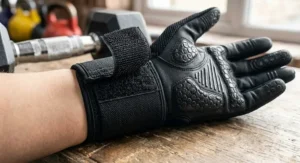
5. Fit Active Sports Gripper Gloves — best for Olympic lifting and cross-training
Fit Active Sports built its Gripper model specifically with Olympic-style movements in mind — snatches, clean and jerks, front squats — all lifts that place real strain on the wrist joint. The built-in wrist wraps here are a genuine structural feature rather than an afterthought, designed to keep the wrist aligned through the catch phase of a lift.
The palm uses silicone-printed neoprene, similar in principle to the ihuan above, chosen for its resistance to water, oils and general gym grime over time. Here’s what the spec sheet won’t tell you, but user reports suggest: the “open hand” design at the back genuinely improves airflow compared with fully enclosed alternatives, which matters a lot during longer cross-training WODs where hands get hot fast. Aggregated feedback describes the grip as noticeably tacky on barbells and pull-up bars, with the wrist wraps praised specifically for reducing strain during heavier overhead work.
The trade-off for that structural wrist support is bulk — this isn’t the glove to reach for if you want a minimalist, barely-there feel, but for anyone regularly doing barbell complexes, that trade-off is usually worth it.
Pros:
- ✅ Purpose-built wrist wraps for Olympic lifting movements
- ✅ Neoprene palm resists moisture and wear
- ✅ Open-hand design improves airflow during WODs
Cons:
- ❌ Bulkier feel than minimalist glove designs
- ❌ Less suited to lifters who dislike wrist bulk
Priced in the £20-£28 range, this sits in the mid-tier for a reason — the wrist support alone justifies the jump from budget options if your training regularly includes overhead lifting.
6. Bear Grips Full Finger Armor Gloves — best for CrossFit-style variety training
Bear Grips takes a slightly different construction approach, using a Lycra back panel for stretch alongside a synthetic leather palm designed to be touchscreen-compatible. Based on the spec comparison with other entries on this list, the synthetic leather palm tends to feel firmer underfoot — sorry, under-hand — than the neoprene options above, which some lifters prefer for a more locked-in grip on textured barbells.
The dry-fit material across the palm is built to wick moisture while maintaining touchscreen responsiveness, a combination that’s genuinely useful for anyone who trains with a phone propped against the rack for form-check videos. Reviewers consistently highlight the breathability of the Lycra backing during high-rep, high-intensity sessions, though a smaller subset mention the synthetic leather palm needs a short break-in period before it stops feeling stiff.
Bear Grips also offers both full-finger and half-finger variants under the same product line, which is worth noting if you’re torn on finger coverage — it means you can trial the brand’s fit and grip quality without necessarily committing to full coverage from the outset.
Pros:
- ✅ Touchscreen-compatible synthetic leather palm
- ✅ Lycra backing keeps hands cool through intense sets
- ✅ Available in full-finger and half-finger versions
Cons:
- ❌ Palm requires a break-in period before softening
- ❌ Sits at a higher price point than basic alternatives
In the £20-£30 range, this is a solid mid-to-premium pick, particularly for CrossFit-style training where grip surfaces vary constantly between barbells, rings and pull-up bars.
7. Nike Women’s Fundamental Training Glove II — best for brand-backed, women-specific sizing
Nike rounds out this list as the premium pick, and the case for spending more here is straightforward: dedicated women’s sizing rather than a unisex design scaled down. Nike’s own product guidance describes high-density foam padding placed specifically at key palm pressure points, designed to reduce blister risk during repeated barbell contact.
The back of the hand uses breathable mesh with perforated palm sections for airflow, and — relevant if you train outdoors through a British winter — Nike also offers full-finger fleece variants built with Therma-FIT insulation for cold-weather sessions, a genuinely useful option that budget brands on this list simply don’t offer. Hook-and-loop wrist closures and pull tabs round out the practical details, and touchscreen-compatible fingers mean you’re not fumbling with your phone between sets. Aggregated customer sentiment for Nike’s training glove range consistently praises fit consistency across sizes, which is arguably the single biggest complaint lifters have about lesser-known brands.
What you’re really paying the premium for isn’t dramatically superior padding — it’s sizing reliability and brand-backed quality control, which matters if you’ve been burned before by a “one size fits most” glove that fits nobody.
Pros:
- ✅ Dedicated women’s sizing with consistent fit
- ✅ Fleece-lined variant available for cold-weather training
- ✅ Trusted brand quality control and durability
Cons:
- ❌ Priciest option on this list
- ❌ Standard version lacks integrated wrist wrap
At around the £25-£35 range, the Nike pick costs more than every other entry here, but for buyers who’ve struggled with inconsistent unisex sizing elsewhere, that premium buys genuine peace of mind.
Top 7 Products: Full Comparison
| Product | Palm Material | Wrist Support | Touchscreen | Best For |
|---|---|---|---|---|
| RDX W1F | Cotton towel + silicone | Elasticated strap | Yes | Budget beginners |
| ZEROFIRE | Silicone honeycomb | None | No | Wristband-free training |
| ihuan | Silicone neoprene | Integrated wrap | No | Wrist stability seekers |
| RYMNT | Foam + silicone | None | Yes | All-purpose flexibility |
| Fit Active Sports | Silicone neoprene | Integrated wrap | No | Olympic lifting |
| Bear Grips | Synthetic leather | None (half-finger variant available) | Yes | CrossFit variety |
| Nike Fundamental II | Foam-padded mesh | Hook-and-loop closure | Yes | Brand-backed sizing |
Reading across this table, a clear pattern emerges: touchscreen compatibility and integrated wrist wraps rarely show up on the same pair, so you’ll usually need to prioritise one over the other unless you’re willing to spend at the Fit Active Sports or Nike end of the range. If wrist stability during heavy compound lifts is your main concern, the ihuan and Fit Active Sports picks are the clear standouts here, while anyone chasing all-day phone convenience should lean towards RDX, RYMNT or Bear Grips.
💬 Just one click — help others make better buying decisions too!😊
Practical Usage Guide: Getting the Most From Your Gloves
Buying the right pair is only half the job — how you break them in and maintain them matters just as much for longevity. In the first thirty days, resist the urge to wash a leather or synthetic-leather palm too aggressively; excessive soaking softens the grip surface prematurely and shortens its working life. Instead, wipe the palm down with a damp cloth after sweaty sessions and let the glove air dry away from direct heat, since radiators and tumble dryers both cause neoprene and silicone prints to crack over time.
A common first-month mistake is over-tightening a wrist wrap from day one, before your wrist has adjusted to the sensation of extra support. If a new pair does cause rubbing or a blister during this break-in period, NHS inform’s guidance on blisters recommends keeping the area clean and covered rather than picking at it, so it heals properly before your next session. Start looser than feels necessary and tighten gradually across a few sessions instead. On the grip side, most silicone-print palms need a handful of sweaty sessions before they reach peak tackiness — a brand-new glove can actually feel slightly slicker than one that’s had light use, so don’t judge grip quality on the very first workout. Finally, rotate between two pairs if you train more than four times a week; letting foam padding fully dry out between sessions prevents the compressed, flattened feel that shortens a glove’s useful lifespan.
Real-World Scenarios: Which Glove Suits You?
Picture three different lifters walking into the same gym on a Tuesday evening. The first is a university student squeezing in sessions between lectures, training three times a week on a tight budget and mostly sticking to machines and dumbbells — for her, the RDX W1F or ZEROFIRE make the most sense, since neither demands a big upfront spend and both handle moderate-intensity training comfortably.
The second is a CrossFit regular training five or six days a week, moving between pull-up bars, barbells and kettlebells within the same session. She needs a glove that survives varied grip surfaces and sweaty conditions without falling apart within a month, which points towards the Bear Grips or ihuan options, both built with more durable palm materials designed for that kind of variety.
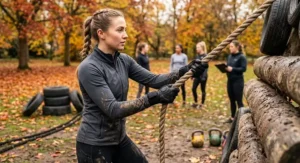
The third trains outdoors at a garden gym setup through the colder months and lifts heavy compound movements twice weekly. For her, the Nike Fundamental II fleece variant solves two problems at once — cold-weather insulation and dependable, women-specific sizing — while the Fit Active Sports Gripper offers the wrist support her overhead lifts genuinely need, even without the insulation layer.
How to Choose Full Finger Gym Gloves for Women
Picking the right pair comes down to a handful of practical checks rather than gut feeling. Here’s how to work through it methodically:
- Measure your hand properly first. Wrap a tape measure around your palm at its widest point, excluding the thumb, and compare that figure against each brand’s own size chart rather than guessing from generic S/M/L labels.
- Decide if you need a wrist wrap. If your training regularly includes overhead pressing, front squats or heavy deadlifts, integrated wrist support genuinely reduces strain — skip it if you mostly do machine-based or lighter dumbbell work.
- Check the palm material against your training style. Neoprene and silicone prints suit sweaty, varied training; cotton-towel blends suit lighter, drier sessions.
- Consider touchscreen fingertips if you log workouts on your phone. It’s a small feature, but one that genuinely gets used every single session.
- Factor in breathability for your gym environment. A poorly ventilated home gym or unheated garage needs a more breathable back panel than an air-conditioned commercial gym.
- Read aggregated review sentiment on sizing consistency. Brand-specific complaints about inconsistent sizing are a bigger red flag than complaints about grip texture, since sizing issues can’t be fixed with a break-in period.
- Match your budget to your training frequency. Someone lifting twice a week doesn’t need the same investment as someone training six days — reserve premium spend for gloves that’ll see genuinely heavy use.
Women’s Hand Sizing: Why It Actually Matters
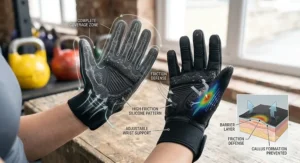
Women’s hand sizing isn’t just marketing language slapped onto a smaller unisex glove — reputable brands genuinely adjust palm width, finger length and overall proportions rather than simply scaling a men’s design down. The practical issue with an ill-fitting glove is straightforward: too loose, and the extra fabric bunches at the base of the fingers exactly where you need the most consistent grip contact; too tight, and circulation gets restricted during longer sets, which can actually worsen numbness or tingling for anyone already prone to it.
Here’s what the spec sheet won’t tell you, but fit guides consistently note: measuring your hand circumference at the palm’s widest point, just below the knuckles, is a far more reliable sizing method than trusting a generic size label, because “women’s small” varies noticeably between RDX, Nike and smaller independent brands. If you’re between sizes, sizing down generally works better for full finger designs than sizing up, since the material stretches slightly with wear but rarely tightens back up once loosened.
Wrist Wrap Integration: What’s Actually Going On
Full finger gym gloves with wrist wrap integration solve a genuinely practical problem — juggling a separate wrist wrap and a pair of gloves between sets, especially during timed circuits. The wrap itself is typically a long strip of elasticated or Velcro-fastened material sewn or bonded directly onto the glove’s cuff, wrapping around the wrist one or more times before fastening.
Based on the spec comparison across this list, the integrated approach on the ihuan and Fit Active Sports picks works best for compound lifts like front squats, overhead presses and heavy rows, where the wrist needs to stay rigid under load. The trade-off is adjustability — a standalone wrist wrap can be tightened to an exact, personalised tension, while an integrated version is generally more one-size-fits-most. If you’ve had a previous wrist strain or you’re managing ongoing wrist discomfort, it’s worth reading further guidance from a source like Versus Arthritis’s guidance on hand and wrist splints before relying on gym gloves alone for support — a training glove’s wrist wrap is designed for stability during lifting, not as a substitute for medical-grade splinting.
Glove Breathability: What Actually Matters (And What’s Just Marketing)
Glove breathability gets thrown around as a buzzword on nearly every product listing, but the real-world difference comes down to two things: the back-of-hand material and how much of the palm is left uncovered. Lycra and perforated mesh backings, seen on the ZEROFIRE and Nike picks respectively, genuinely allow more airflow than a solid microfibre panel, which matters most during longer sessions or in a warm, poorly ventilated gym.
What most buyers overlook is that palm breathability matters less than back-of-hand breathability for overall comfort, since the palm is in constant contact with the bar and will sweat regardless of material. The real test isn’t how a glove feels in the shop — it’s how it feels forty minutes into a session, once your hands have actually warmed up. If you train somewhere without air conditioning, prioritise a mesh or open-back design over a fully enclosed one, even if it means slightly less palm padding.
Full Finger vs Half Finger Weightlifting Gloves
This is the comparison every buyer eventually has to make, and the honest answer is: it depends entirely on what you’re lifting. Full finger weightlifting gloves win decisively for anyone training outdoors in cold conditions, doing rope work, or handling rough, unfinished equipment where fingertip protection matters. They also tend to suit beginners better, since new lifters are still developing calluses and full coverage reduces blister risk across the whole hand rather than just the palm.
Half finger designs, by contrast, generally win on bar feel — competitive powerlifters and Olympic lifters often prefer the increased tactile feedback and reduced bulk, since knowing exactly how the bar sits against your skin matters more to them than total coverage. The trade-off is that fingertips remain exposed to callusing, which some experienced lifters actually prefer, treating calluses as a badge of training consistency rather than a problem to solve.
| Factor | Full Finger | Half Finger |
|---|---|---|
| Cold-weather training | Strong advantage | Limited protection |
| Bar feel / tactile feedback | Reduced | Superior |
| Beginner-friendliness | Higher | Lower |
| Fingertip callus protection | Full coverage | None |
Looking at this table, there’s no universally “better” option — a beginner training through a British winter benefits enormously from full finger coverage, while an experienced lifter chasing a specific 1RM might genuinely perform better without it. Choose based on your training conditions and experience level, not just personal preference.
Common Mistakes When Buying Gym Gloves
The single most common mistake is buying based on the size chart alone rather than actual hand measurements — a “medium” from one brand can genuinely fit like a small or a large from another, so skipping the tape-measure step is a false economy. A close second is ignoring palm material for training style; a lifter doing heavy barbell work in a cotton-towel glove will wear through the palm far faster than someone using a silicone-print or neoprene design.
Buyers also frequently overlook wrist wrap adjustability, assuming any “wrist support” label offers the same level of stability, when in reality integrated wraps vary enormously in both length and tension. Finally, plenty of shoppers skip checking whether a glove is touchscreen-compatible, only to discover mid-workout that they can’t check a rest timer without stripping a glove off — a minor annoyance, but an avoidable one if it matters to your routine.
Long-Term Cost & Maintenance
A £12 pair of gloves worn twice weekly and replaced every four months works out to roughly £36 a year, while a £30 pair that lasts twelve months on the same schedule costs the same annually but with far less palm degradation and fewer mid-year replacement gaps. On paper, this means the real value comparison isn’t sticker price — it’s cost per month of usable life, and that number often favours the mid-tier options on this list over the cheapest ones.
| Price Tier | Typical Lifespan (3x/week use) | Approx. Cost Per Month |
|---|---|---|
| Under £15 (RDX, ZEROFIRE) | 4-6 months | £2.50-£3.75 |
| £15-£25 (ihuan, RYMNT, Fit Active) | 6-9 months | £2.20-£3.30 |
| £25+ (Bear Grips, Nike) | 9-14 months | £2.00-£3.10 |
The table above suggests the mid-to-premium tier often delivers better ongoing value than it first appears, since sturdier palm materials and reinforced stitching simply outlast budget cotton-towel builds by several months. Hand-washing rather than machine-washing, and air-drying rather than tumble-drying, both extend lifespan meaningfully across every price tier.
Safety, Wrist Health and When to Get Advice
Gym gloves are a training accessory, not medical equipment, and it’s worth being clear-eyed about that distinction. Building a consistent strength routine matters far more than any single piece of kit, but if you experience ongoing wrist pain rather than the normal post-workout ache, a glove’s built-in wrist wrap isn’t a substitute for proper assessment. Versus Arthritis notes that regular, appropriate exercise can help ease stiffness and improve grip strength, but persistent pain is worth raising with a GP or physiotherapist rather than working through it, and no amount of wrist wrap padding replaces that conversation.
✨ Ready to Upgrade Your Grip Game?
🔍 Take your training to the next level with a pair that actually matches how you lift. Click through on any of the picks above to check current pricing and availability — your hands will thank you by week three.
FAQ
❓ Do full finger gym gloves for women help with grip strength?
❓ Are full finger gloves better than half finger for weightlifting?
❓ How do I know what size gym glove to buy as a woman?
❓ Do gym gloves with wrist wraps actually prevent injury?
❓ How often should I replace my workout gloves?
Conclusion
There’s no single “best” full finger gym glove for every woman walking into a gym this year — the right choice depends on how often you train, what you lift, and whether wrist support or breathability matters more to your routine. Budget options like the RDX W1F and ZEROFIRE are sensible starting points if you’re not yet sure full finger coverage suits you, while the ihuan and Fit Active Sports picks earn their higher price through genuine wrist wrap integration for heavier compound lifts. If brand-backed sizing consistency and cold-weather versatility matter most, the Nike Women’s Fundamental Training Glove II justifies its premium price tag.
Whichever pair you land on, the underlying goal is the same: fewer blisters, better bar control, and one less excuse to skip the gym on a Tuesday evening. Measure your hand properly, match the glove to your actual training style rather than the flashiest marketing copy, and give any new pair a few sweaty sessions before judging the grip.
Recommended for You
- 7 Best Full Finger Gym Gloves UK 2026
- Full Finger Workout Gloves Under £15: 7 Real Picks (2026)
- 7 Best Weightlifting Gloves for Women in 2026
Disclaimer: This article contains affiliate links. As an Amazon Associate, I earn from qualifying purchases. If you purchase products through these links, we may earn a small commission at no additional cost to you.
✨ Found this helpful? Share it with your friends! 💬🤗
